Social Predation by a Nudibranch Mollusc
K Otter, S Gamidova, P S Katz

TL;DR
This study shows that the nudibranch Berghia stephanieae hunts in groups to eat sea anemones, without fixed roles or simple cues for gathering.
Contribution
The study reveals social predation in Berghia stephanieae with fluid group dynamics and no fixed roles or known aggregation cues.
Findings
Berghia stephanieae consistently preys on sea anemones in groups, even when food is abundant.
Group formation does not rely on slime trails, injured prey, or conspecific feeding cues.
Social feeding occurs without stable roles or changes based on hunger levels.
Abstract
Social predation is a common strategy used by predators to subdue and consume prey. Animals that use this strategy have diverse methods of finding each other, organizing behaviors, and capturing prey. There is wide variation in the extent to which these behaviors are coordinated and in the stability of individual roles. This study characterizes social predation by the nudibranch mollusc, Berghia stephanieae, which is a specialist predator that eats only the sea anemone, Exaiptasia diaphana. A combination of experimental and modeling approaches established that Berghia consistently preys upon E. diaphana in groups, even when resources are abundant. However, this preference for social foraging does not appear to be a fixed personality trait, as individuals did not exhibit stable roles such as leader or follower. Instead, the population exhibited fission–fusion dynamics with temporary…
Genes, proteins, chemicals, diseases, species, mutations and cell lines named across the full text — each resolved to its canonical identifier and authoritative record.
Click any figure to enlarge with its caption.
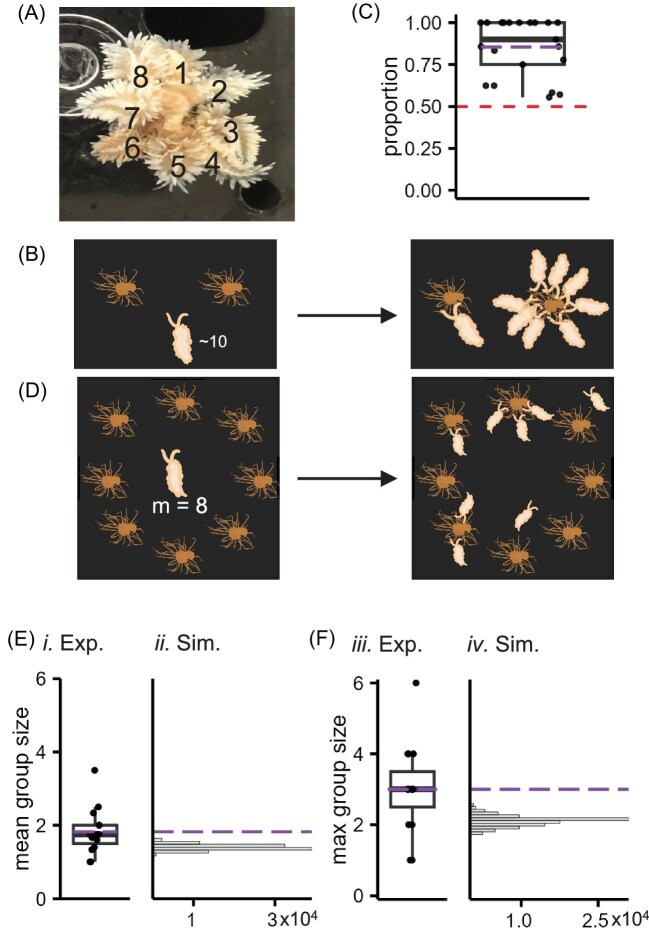 Figure 1
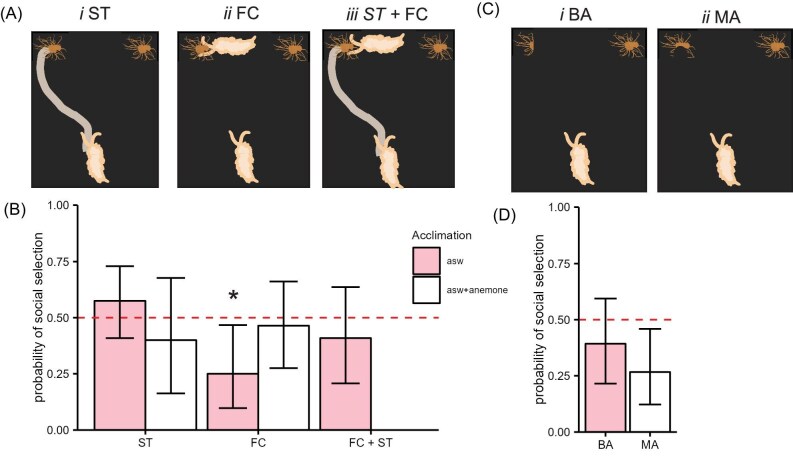 Figure 2
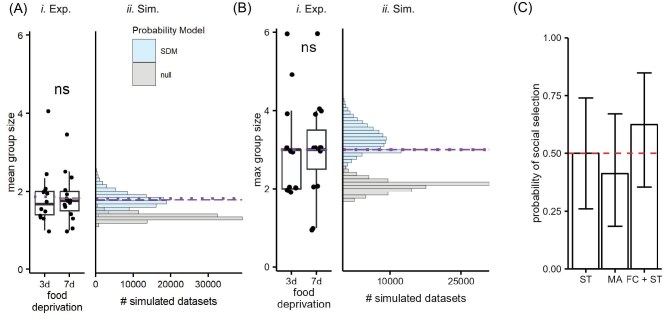 Figure 3
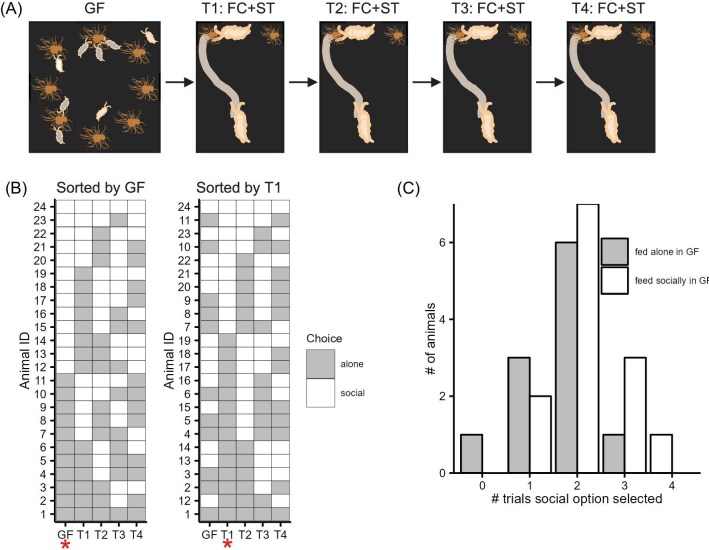 Figure 4
Peer Reviews
No public reviews on file for this paper yet. If you reviewed it on a platform where reviews are public (OpenReview, ICLR, NeurIPS, ICML), you can paste yours below so the community can read it here.
Videos
No videos yet. Explain this paper in a talk, walkthrough, or lecture? Add one.
Taxonomy
TopicsCephalopods and Marine Biology · Marine Biology and Ecology Research · Slime Mold and Myxomycetes Research