Synthesis and Properties of [3]Rotaxanes with Two Oligo(para‐phenylene) Axles
Misuzu Ohta, Ayano Okuda, Kayori Takahashi, Shoichi Hosoya, Yusuke Yoshigoe, Shinichi Saito

TL;DR
Researchers synthesized [3]rotaxanes with oligo(para-phenylene) axles and studied their properties, including aggregation behavior and spectroscopic characteristics.
Contribution
The novel synthesis of [3]rotaxanes with two oligo(para-phenylene) axles using a larger macrocyclic Ni complex and their controlled aggregation behavior.
Findings
[3]rotaxanes with two oligo(para-phenylene) axles were synthesized in good yields using a larger macrocycle.
The aggregation of octa(para-phenylene) derivatives was suppressed by the presence of the macrocycle in the rotaxanes.
Photophysical studies showed that aggregation influences the properties of oligo(para-phenylene) structures.
Abstract
Oligo(para‐phenylene) (PPn) is a π‐conjugated compound where phenylene units are directly connected at the 1,4‐positions. Utilizing the catalytic activity of the macrocyclic dihydrodibenzophenanthroline‐Ni complex, we succeeded in the synthesis of [3]‐ and [2]rotaxanes with PPn axles by biaryl coupling. The size of the macrocycle was critical to synthesize [3]rotaxanes, which consist of two oligo(para‐phenylene) axles, in good yields. The relationship between the length of the PPn structure on the 1H NMR spectra of the rotaxanes was studied. The aggregation of a PP8 derivative was suppressed by the presence of the macrocycle in the rotaxanes. A [3]rotaxane could be considered as a model compound of an aggregated PPn, and the photophysical studies disclosed the influence of the aggregation on the properties of PPn. [3]‐ and [2]rotaxanes with oligo(para‐phenylene) axles were synthesized…
Genes, proteins, chemicals, diseases, species, mutations and cell lines named across the full text — each resolved to its canonical identifier and authoritative record.
Click any figure to enlarge with its caption.
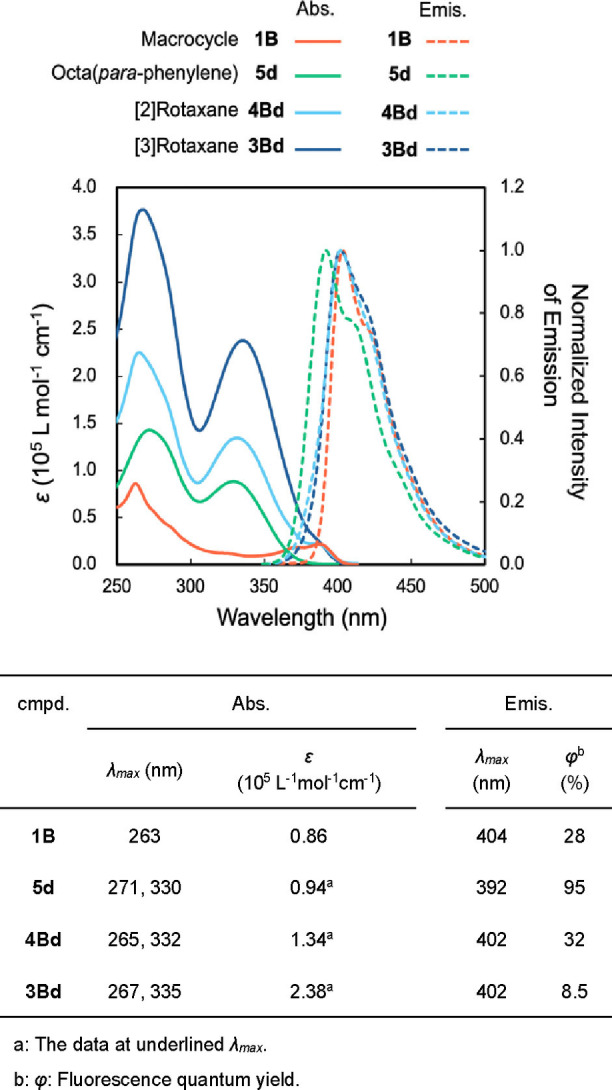 Figure 1
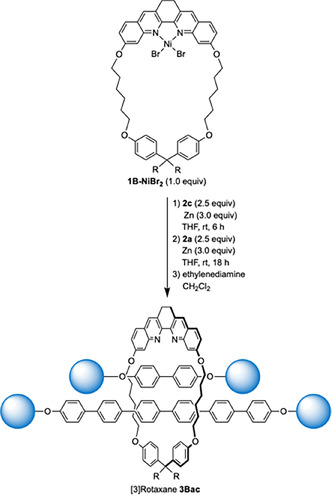 Figure 2
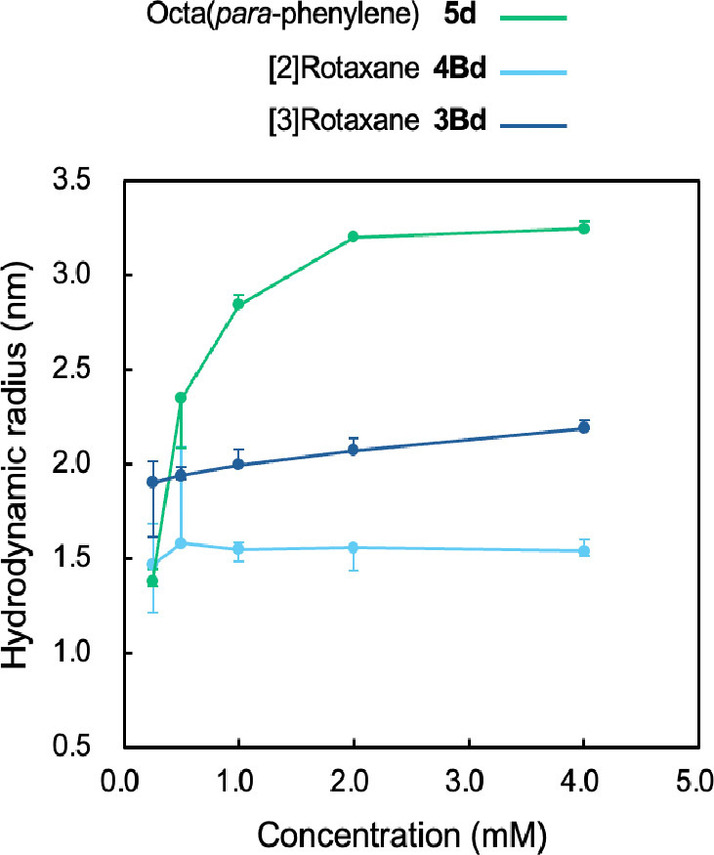 Figure 3
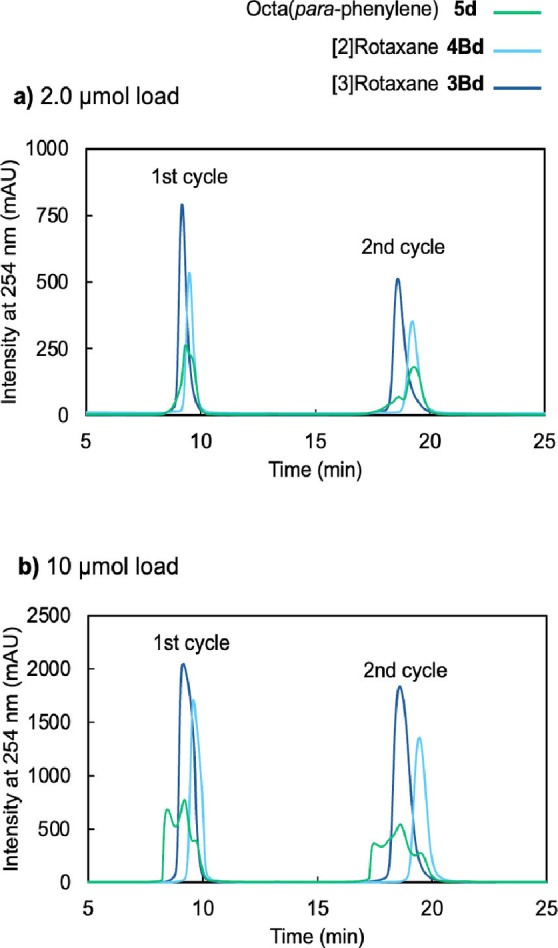 Figure 4
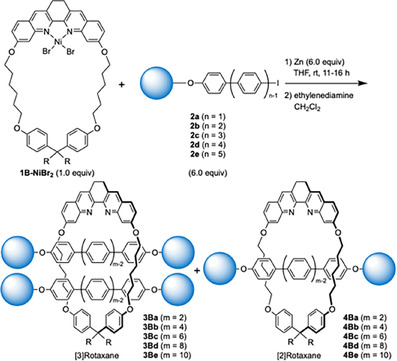 Figure 5
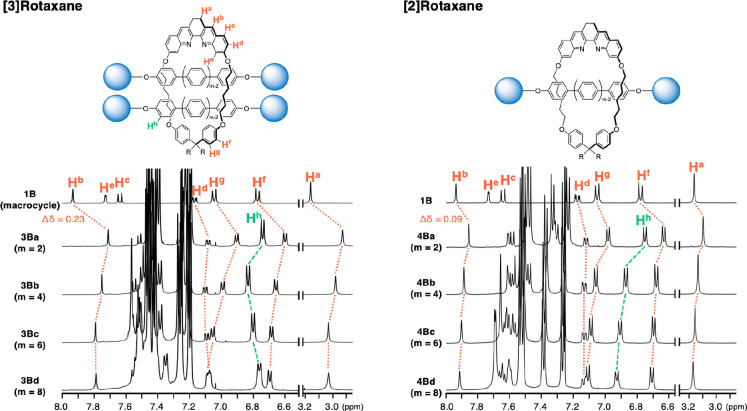 Figure 6
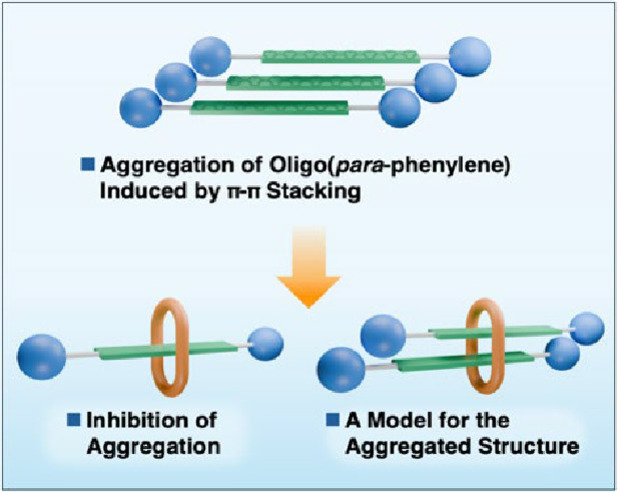 Figure 7
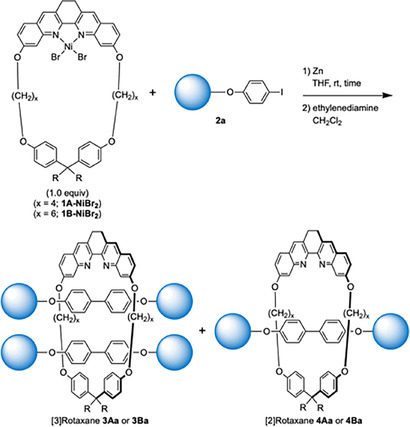 Figure 8
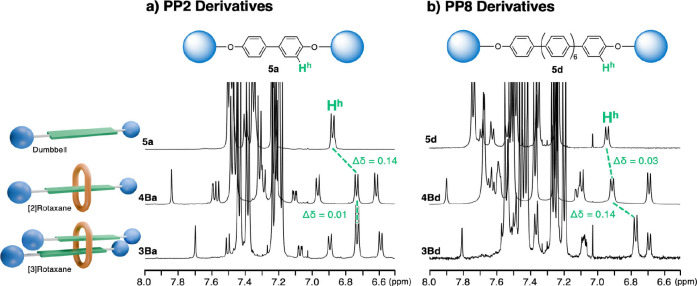 Figure 9
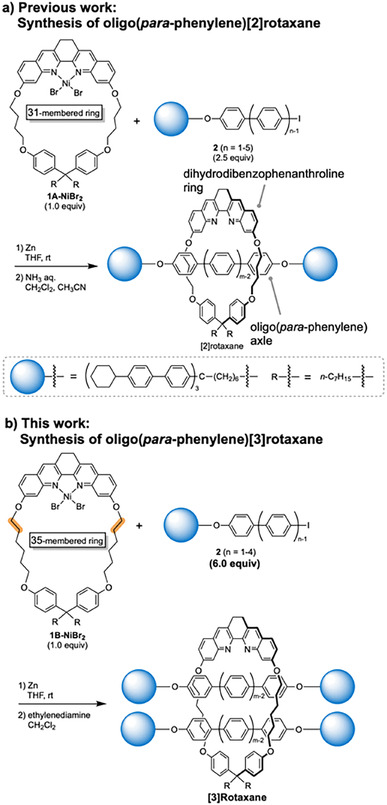 Figure 10
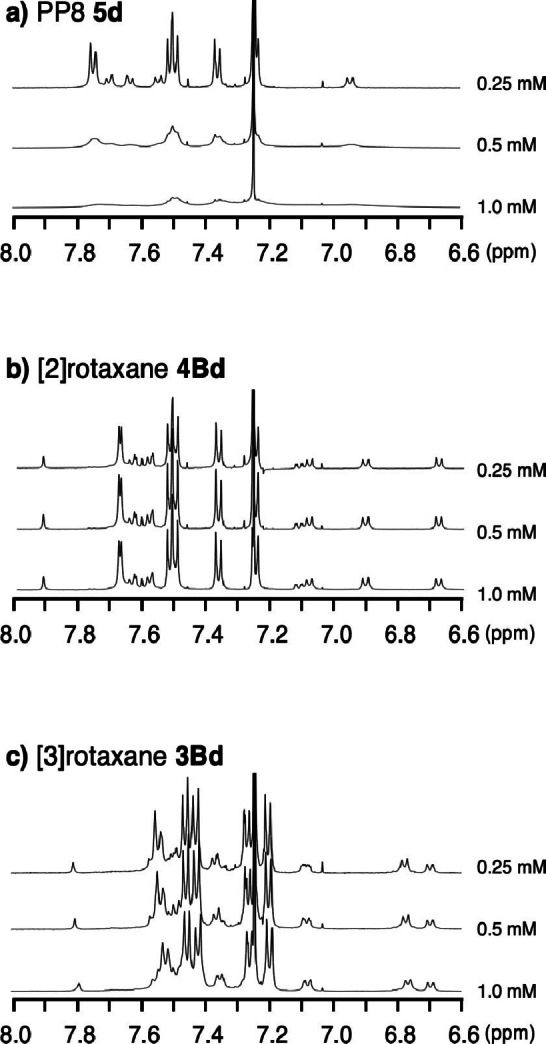 Figure 11
Peer Reviews
No public reviews on file for this paper yet. If you reviewed it on a platform where reviews are public (OpenReview, ICLR, NeurIPS, ICML), you can paste yours below so the community can read it here.
Videos
No videos yet. Explain this paper in a talk, walkthrough, or lecture? Add one.
Taxonomy
TopicsSupramolecular Chemistry and Complexes · Surface Chemistry and Catalysis · Porphyrin and Phthalocyanine Chemistry