Extraction Processes, Bioaccessibility, Antioxidant Capacity, and Potential Prebiotic Effect of Co‐Product Extracts From Fruits of the Spondias Genus
Ivania Samara dos Santos Silva Morais, Lucas Monteiro Bezerra Pinheiro, Fernanda Pereira Santos, Marcos dos Santos Lima, Karina Maria Olbrich dos Santos, Carolina Lima Cavalcanti de Albuquerque, Haissa Roberta Cardarelli

TL;DR
This study compares methods to extract beneficial compounds from Spondias fruits, finding that ultrasound-assisted extraction yields the best antioxidant and prebiotic properties.
Contribution
The study introduces ultrasound-assisted extraction as a superior method for obtaining bioactive compounds with prebiotic potential from Spondias fruit co-products.
Findings
Ultrasound-assisted extraction achieved the highest antioxidant capacity and total phenolic content across all Spondias fruit extracts.
Seriguela extract showed the best prebiotic activity, with high probiotic viability and a significant prebiotic score.
Some phenolic compounds, like epicatechin gallate and gallic acid, showed high bioaccessibility after in vitro digestion.
Abstract
This study evaluated which extraction methods among agitation (ethanol and water, 60 min), ultrasonic bath–assisted (ethanol and water, 15 min), and supercritical fluid extraction (CO₂ and ethanol, 40°C, 15 Mpa) would be superior for producing co‐product extracts from seriguela (Spondias purpurea), caja (Spondias mombin), and umbu‐caja (Spondias spp.). The bioaccessibility of phenolic compounds and potential prebiotic effects were also investigated. The in vitro prebiotic effect of the extracts was tested using Lactobacillus acidophilus (La‐3), Bifidobacterium animalis subsp. lactis (BB‐12), and Lactiplantibacillus plantarum (CNPC004) through cell viability and pH monitoring over 48 h, along with their prebiotic score against an enteric mixture (Escherichia coli). Ultrasonic bath–assisted extraction achieved the highest antioxidant capacity and total phenolic content across all…
Genes, proteins, chemicals, diseases, species, mutations and cell lines named across the full text — each resolved to its canonical identifier and authoritative record.
Click any figure to enlarge with its caption.
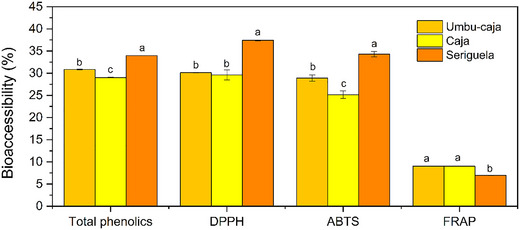 Figure 1
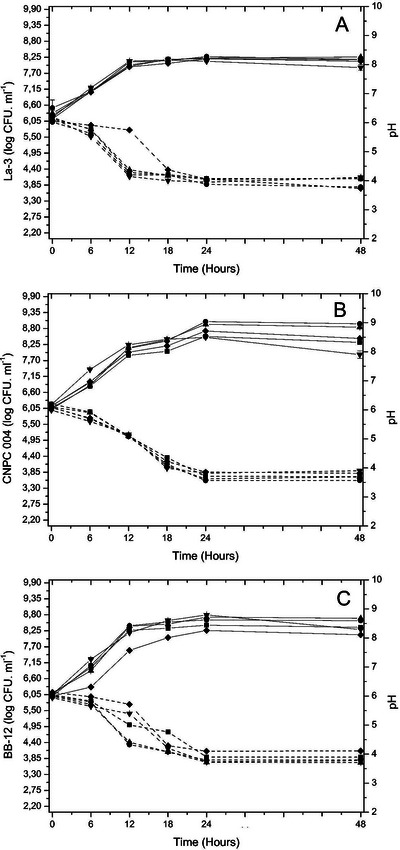 Figure 2
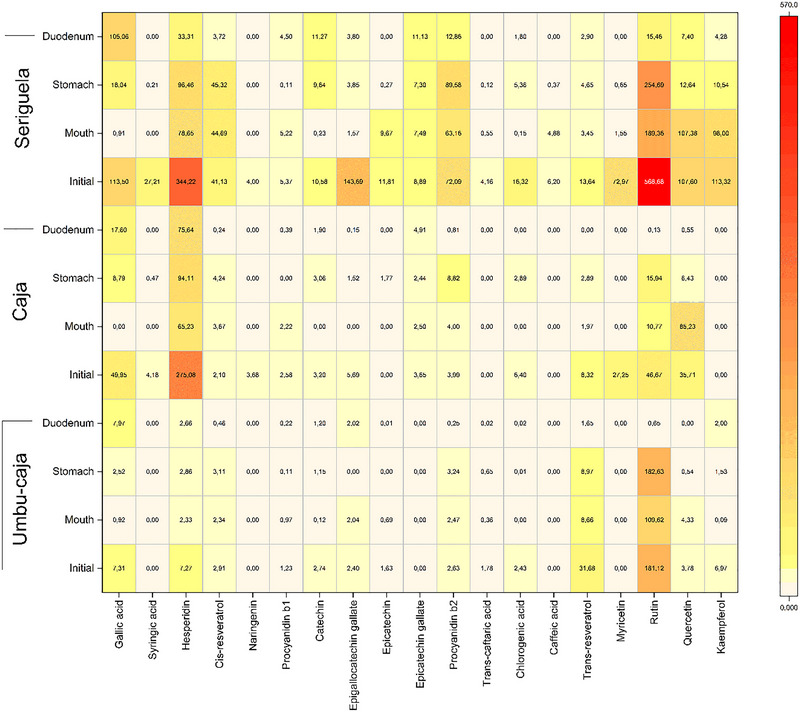 Figure 3
Peer Reviews
No public reviews on file for this paper yet. If you reviewed it on a platform where reviews are public (OpenReview, ICLR, NeurIPS, ICML), you can paste yours below so the community can read it here.
Videos
No videos yet. Explain this paper in a talk, walkthrough, or lecture? Add one.
Taxonomy
TopicsMicrobial Metabolites in Food Biotechnology · Phytochemicals and Antioxidant Activities · Natural Antidiabetic Agents Studies