A Right Turn in Diagnosis: Highlighting the Importance of TAPSE in Isolated Right Ventricular Myocardial Infarction
Vasudha Dinesh, Arun A. Mohanan, Amaravathi Uthayakumar, Vinodha Chandrashekar

TL;DR
This case report highlights how TAPSE can detect right ventricular dysfunction in a rare heart attack type that doesn't show typical ECG signs.
Contribution
The first known case report demonstrating the clinical utility of TAPSE in diagnosing isolated right ventricular myocardial infarction.
Findings
TAPSE was significantly reduced at 1 cm in a patient with isolated RVMI despite normal wall motion on ECG.
Right-sided ECG and POCUS were critical in identifying RV dysfunction when standard ECG findings were atypical.
The case emphasizes the importance of using TAPSE and cardiac POCUS in emergency settings for early RVMI detection.
Abstract
Isolated right ventricular myocardial infarction (RVMI) is a rare but significant clinical entity that can present with atypical findings on a standard electrocardiograph (ECG). We present the case of a 65-year-old man with a history of chronic smoking and alcohol use who presented to the emergency department with acute chest pain. An initial ECG showed ST-segment elevation in lead V1 and depression in leads I, aVL, and V2-V6, which did not meet ST-segment elevation myocardial infarction (STEMI) criteria. A right-sided ECG revealed ST-segment elevation in V3R-V6R, concerning for RVMI. Notably, cardiac point of care ultrasound (POCUS) demonstrated normal left ventricular (LV) function without LV or right ventricular (RV) regional wall motion abnormalities (RWMA). However, tricuspid annular plane systolic excursion (TAPSE) was significantly reduced at 1 cm, indicating RV dysfunction…
Genes, proteins, chemicals, diseases, species, mutations and cell lines named across the full text — each resolved to its canonical identifier and authoritative record.
Click any figure to enlarge with its caption.
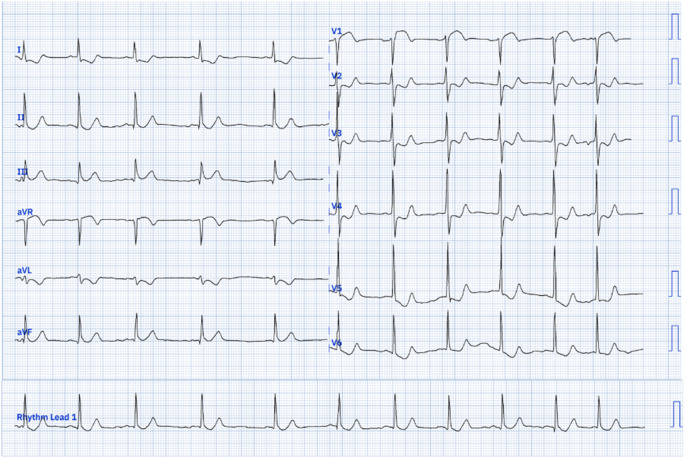 Figure 1
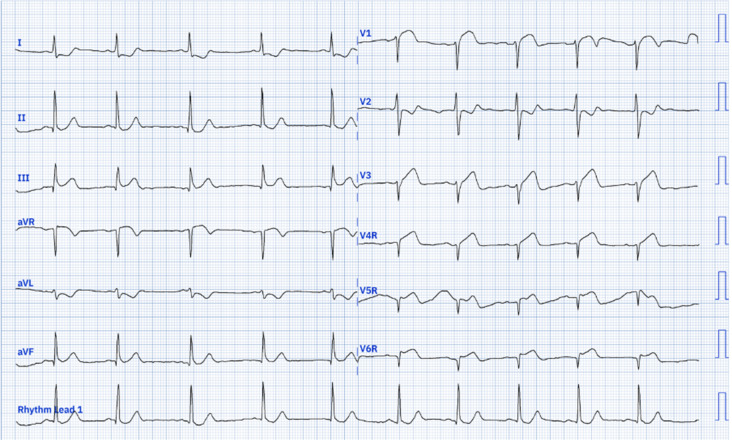 Figure 2
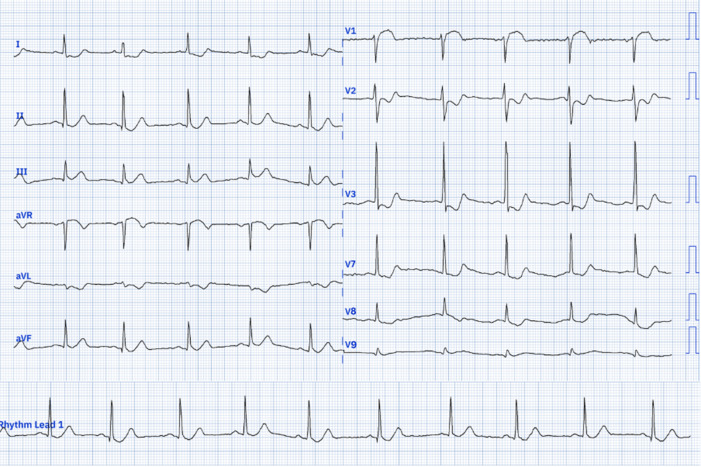 Figure 3
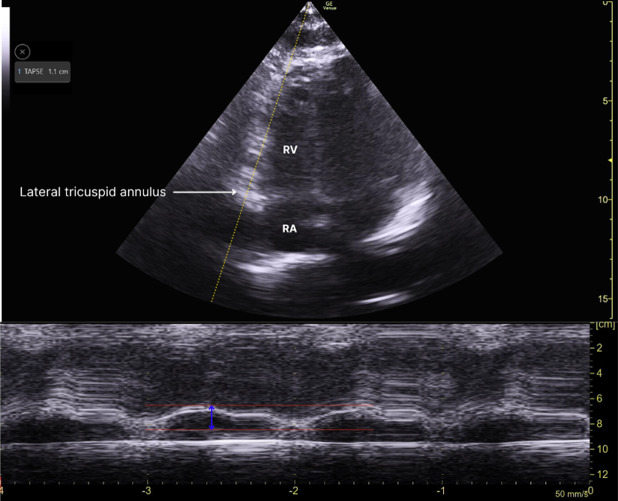 Figure 4
Peer Reviews
No public reviews on file for this paper yet. If you reviewed it on a platform where reviews are public (OpenReview, ICLR, NeurIPS, ICML), you can paste yours below so the community can read it here.
Videos
No videos yet. Explain this paper in a talk, walkthrough, or lecture? Add one.
Taxonomy
TopicsCardiovascular Effects of Exercise · Magnetic Properties and Applications · Cardiac Arrhythmias and Treatments