Gene expression profiles of angiogenesis markers and microRNA-128 from the secretome of umbilical cord mesenchymal stem cells from Macaca fascicularis
Hieronimus Adiyoga Nareswara Utama, Sela Septima Mariya, Ratih Rinendyaputri, Alvian Dumingan, Yoggi Ramadhani Purwaningtyas, Putri Retno Intan, Gita Iftitah Renitia, Hasta Handayani Idrus, Wireni Ayuningtyas, Rachmawati Noverina, Fathul Huda, Ahmad Faried, Sunarno Sunarno

TL;DR
This study shows that low oxygen conditions increase the production of healing-related molecules in stem cells from macaque umbilical cords, which could help treat ischemic stroke.
Contribution
The study identifies optimal hypoxic conditions to enhance the expression of angiogenic and anti-apoptotic markers in UC-MSC secretomes.
Findings
Hypoxia significantly increased VEGF, MCP-1, and miRNA-128 expression in UC-MSC secretomes.
MMP-2 expression was highest under normoxic conditions and reduced under hypoxia.
miRNA-128 was predominantly secreted under hypoxic conditions.
Abstract
Angiogenesis and anti-apoptosis play crucial roles in ischemic stroke recovery. The mesenchymal stem cell (MSC) secretome, rich in bioactive molecules, presents a promising therapeutic avenue. However, optimizing the culture conditions to enhance the expression of angiogenic markers remains a challenge. This study examines the effect of hypoxic preconditioning on the expression of vascular endothelial growth factor (VEGF), monocyte chemoattractant protein-1 (MCP-1), matrix metalloproteinase-2 (MMP-2), and microRNA (miRNA-128) in the secretome of umbilical cord-derived MSCs (UC-MSCs) from Macaca fascicularis. UC-MSCs were cultured under normoxic (21% O2) and hypoxic conditions (1%, 3%, and 5% O2) for 48 h. The secretome was isolated, and reverse transcription-quantitative polymerase chain reaction was used to quantify the expression of VEGF, MCP-1, MMP-2, and miRNA-128. Expression…
Genes, proteins, chemicals, diseases, species, mutations and cell lines named across the full text — each resolved to its canonical identifier and authoritative record.
Click any figure to enlarge with its caption.
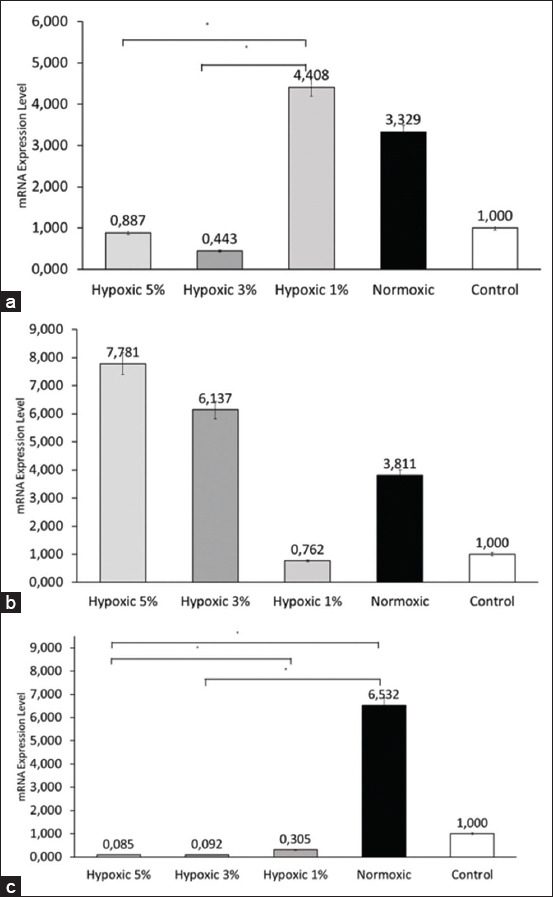 Figure 1
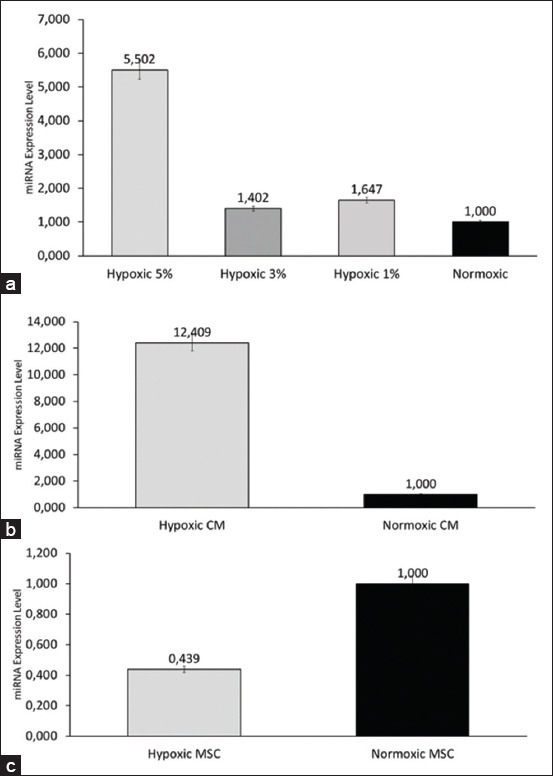 Figure 2
Peer Reviews
No public reviews on file for this paper yet. If you reviewed it on a platform where reviews are public (OpenReview, ICLR, NeurIPS, ICML), you can paste yours below so the community can read it here.
Videos
No videos yet. Explain this paper in a talk, walkthrough, or lecture? Add one.
Taxonomy
TopicsMesenchymal stem cell research · MicroRNA in disease regulation · Circular RNAs in diseases