Cognitive Resilience for the Prevention of Mild Cognitive Impairment in Subjective Cognitive Decline: A Monte Carlo Simulation of a Digital Therapeutic Targeting Dementia Risk Factors
Shaheen E Lakhan

TL;DR
A digital therapeutic targeting dementia risk factors may significantly reduce cognitive decline in people with early signs of memory issues.
Contribution
A Monte Carlo simulation demonstrates how multi-risk-factor modification via a digital therapeutic could delay mild cognitive impairment in subjective cognitive decline.
Findings
65% of simulated patients remained cognitively stable after five years with the digital therapeutic.
Addressing multiple risk factors like physical inactivity and hypertension led to significant outcome improvements.
The simulation showed a 40% reduction in MCI progression compared to untreated populations.
Abstract
Introduction Subjective cognitive decline (SCD) is an early marker of neurodegenerative disease and a target for preventative interventions. With advances in smartphone-based clinical interventions and understanding of modifiable risk factors for cognitive decline, this simulation study aimed to estimate the potential benefits of a prescription digital therapeutic (PDT) with multi-risk-factor modification on the cognitive trajectory of individuals with SCD. We constructed a Monte Carlo simulation to model progression to mild cognitive impairment (MCI) over a five-year period. Methods A virtual cohort of 10,000 patients with SCD was simulated over five years. Baseline annual risk of progression to MCI was set at 10%. A PDT was assumed to yield a 30% relative risk reduction, modulated by adherence levels (70% full, 20% partial, 10% none). Additionally, 14 modifiable dementia risk…
Genes, proteins, chemicals, diseases, species, mutations and cell lines named across the full text — each resolved to its canonical identifier and authoritative record.
Click any figure to enlarge with its caption.
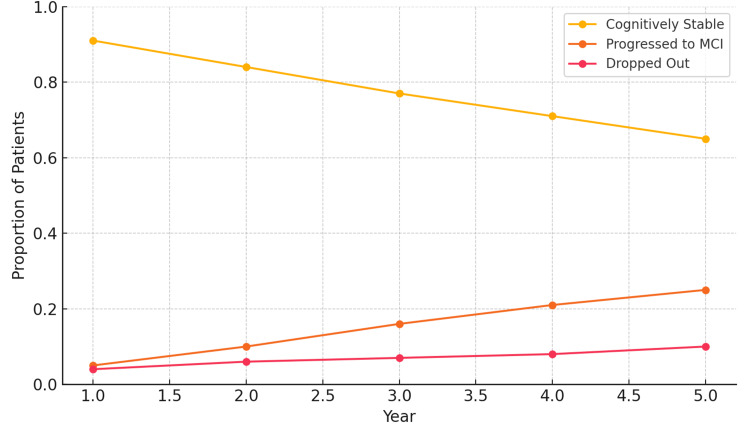 Figure 1
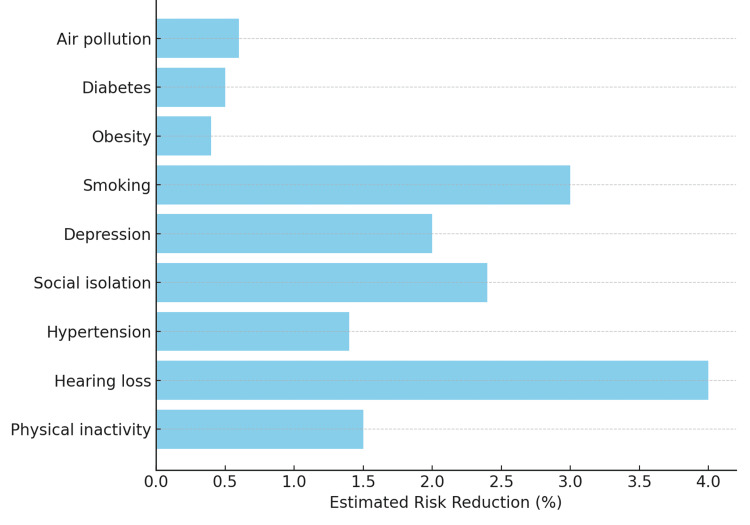 Figure 2
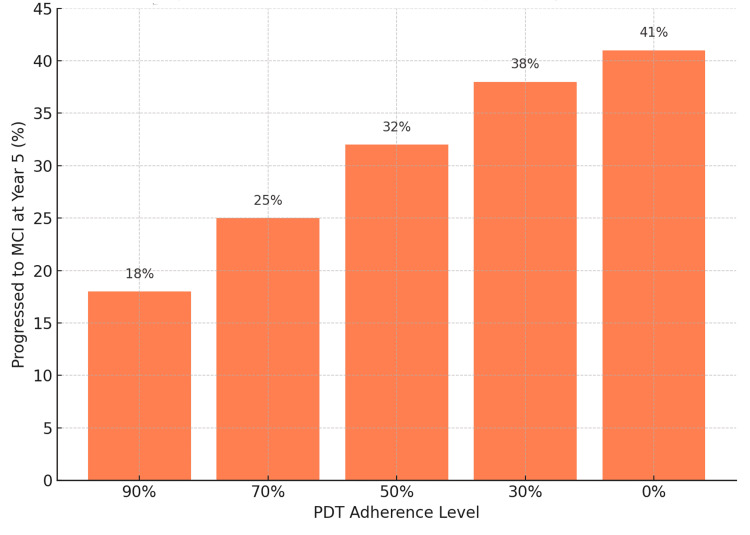 Figure 3
Peer Reviews
No public reviews on file for this paper yet. If you reviewed it on a platform where reviews are public (OpenReview, ICLR, NeurIPS, ICML), you can paste yours below so the community can read it here.
Videos
No videos yet. Explain this paper in a talk, walkthrough, or lecture? Add one.
Taxonomy
TopicsDementia and Cognitive Impairment Research · Functional Brain Connectivity Studies · Stroke Rehabilitation and Recovery