Predicting cognitive change using functional, structural, and neuropsychological predictors
Laurie Décarie-Labbé, Samira Mellah, Isaora Z Dialahy, Pierre Bellec, Pierre Bellec, Sylvie Belleville, Christian Bocti, Frédéric Calon, Howard Chertkow, Louis Collins, Stephen Cunnane, Simon Duchesne, Pierrette Gaudreau, Serge Gauthier, Sébastien S Hébert, Carol Hudon

TL;DR
This study explores how brain activation, along with structural and neuropsychological measures, can predict cognitive decline in people at risk for Alzheimer's disease.
Contribution
The study demonstrates that brain activation is a strong predictor of cognitive decline and improves prediction when combined with other measures.
Findings
Functional activation predicted cognitive change with 87.6% accuracy and 98.7% specificity.
Multimodal models combining functional, structural, and neuropsychological data improved sensitivity and explanatory power.
Hyperactivation may serve as an early marker for Alzheimer's disease progression.
Abstract
To effectively address Alzheimer’s disease, it is crucial to understand its earliest manifestations, underlying mechanisms and early markers of progression. Recent findings of very early brain activation anomalies highlight their potential for early disease characterization and predicting future cognitive decline. Our objective was to evaluate the value of brain activation—both individually and in combination with structural and neuropsychological measures—for predicting cognitive change. The study included 105 individuals from the Consortium for the Early Identification of Alzheimer’s Disease–Quebec cohort who exhibited subjective cognitive decline or mild cognitive impairment. Cognitive decline was assessed by calculating the slope of Montreal Cognitive Assessment scores using regression models across successive assessments, and individuals were characterized as either decliners or…
Genes, proteins, chemicals, diseases, species, mutations and cell lines named across the full text — each resolved to its canonical identifier and authoritative record.
Click any figure to enlarge with its caption.
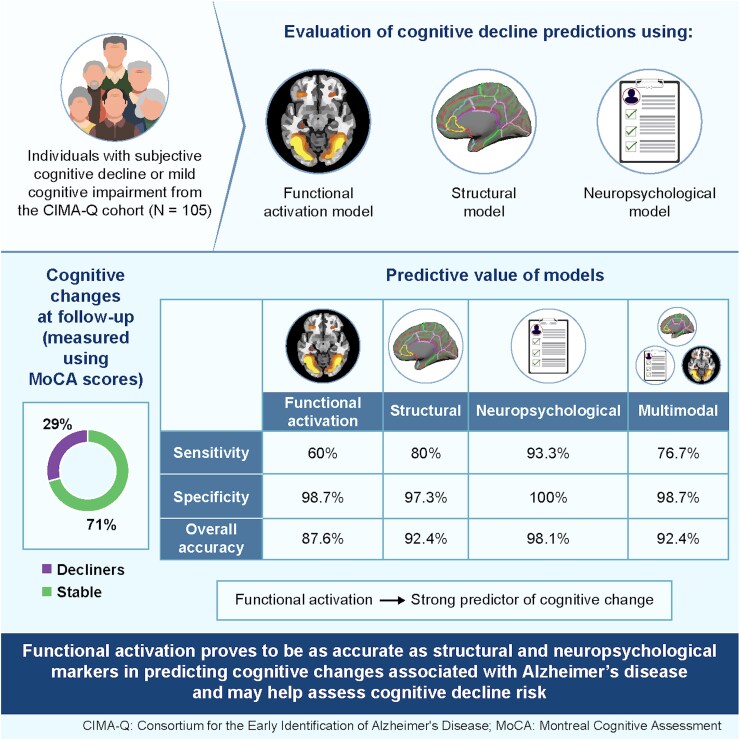 Figure 1
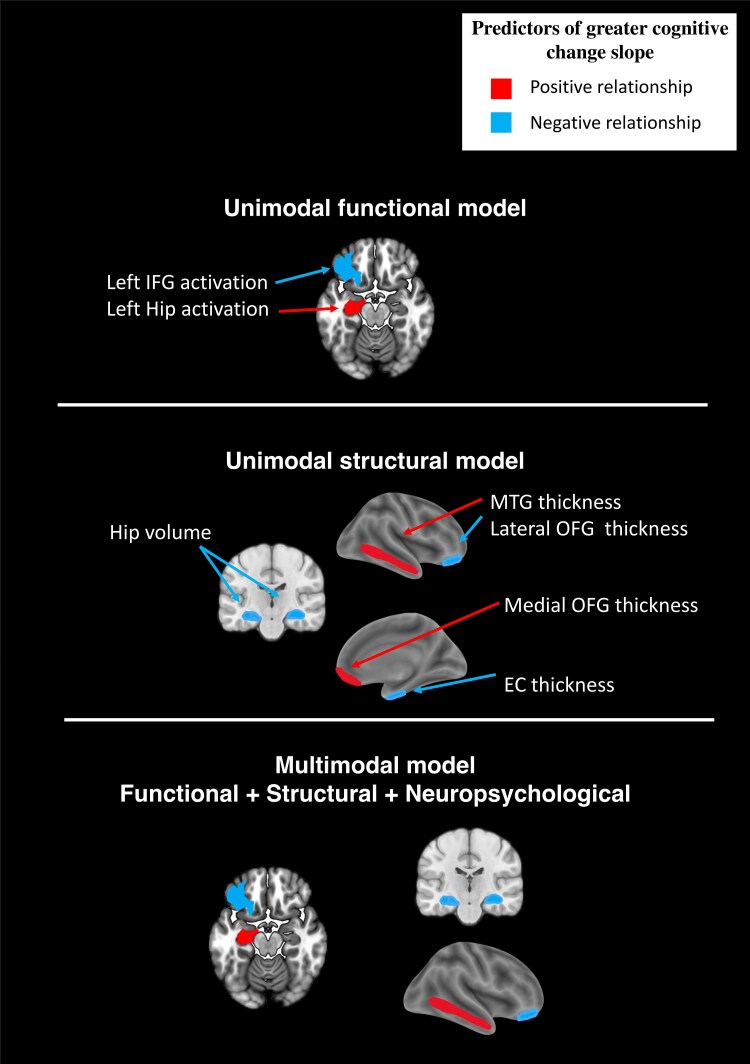 Figure 2
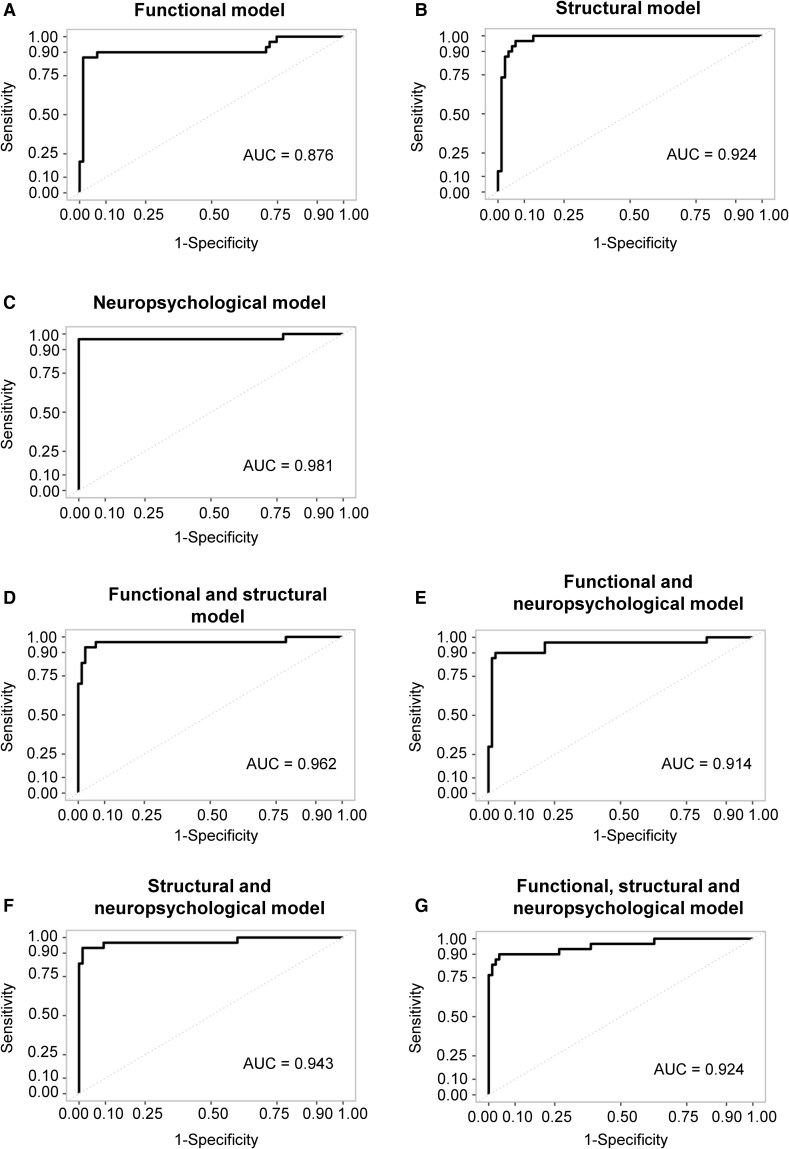 Figure 3
Peer Reviews
No public reviews on file for this paper yet. If you reviewed it on a platform where reviews are public (OpenReview, ICLR, NeurIPS, ICML), you can paste yours below so the community can read it here.
Videos
No videos yet. Explain this paper in a talk, walkthrough, or lecture? Add one.
Taxonomy
TopicsDementia and Cognitive Impairment Research · Functional Brain Connectivity Studies · Memory and Neural Mechanisms