Exploring the Reversible Equilibrium State between 3CS and 3CSS in a Ru(phen)–Naphthalene Diimide Dyad
Lorena Maria Borges Pereira, Diego França de Oliveira, Marco Antonio Tiburcio, Gabriel H. Ribeiro, Carlos André Ferreira Moraes, Flávio Olimpio Sanches Neto, Ademir João Camargo, Leonardo De Boni, Otaciro Rangel Nascimento, Manoel G. P. Homem, Rose Maria Carlos

TL;DR
This paper studies how a ruthenium-naphthalene diimide complex balances fast and slow charge-separated states after light exposure, revealing insights into electron transfer dynamics.
Contribution
The study reveals a reversible equilibrium between 3CS and 3CSS states in a Ru(phen)–naphthalene diimide dyad, supported by experimental and computational methods.
Findings
The dyad exhibits a thermal equilibrium between 3CS and 3CSS states with forward and reverse decay times of 10 ps and 140 ps.
Marcus theory is supported with parameters −ΔGCS = 0.279 eV, λ = 0.49 eV, and HDA = 0.28 eV.
Abstract
This study explores the dynamics of charge separation (CS) and recombination in the photoinduced electron transfer of the [Ru(phen)2(pNDIp)]2+ dyad, focusing on the thermal equilibrium between rapid charge separation (CS) and the slower charge-separated state (CSS). The pNDIp component is a naphthalene diimide linked to one of the phen ligands, providing nearly unrestricted orthogonal freedom between the {[Ru(phen)3]2+} and {pNDIp} units. The investigation employs steady-state and time-resolved spectroscopic techniques, electrochemical methods, and DFT/TD-DFT computational calculations. The results show that selective excitation of the {[Ru(phen)3]2+} at 450 nm partially quenches the 3MLCT emission due to thermal equilibrium with the 3CSS state, 3{Ru3+(phen•–)2(pNDIp)} ⇌ 3{Ru3+(phen)2(pNDIp•–)}. This equilibrium is attributed to a combination of nonradiative forward (τCT = 10 ps) and…
Genes, proteins, chemicals, diseases, species, mutations and cell lines named across the full text — each resolved to its canonical identifier and authoritative record.
Click any figure to enlarge with its caption.
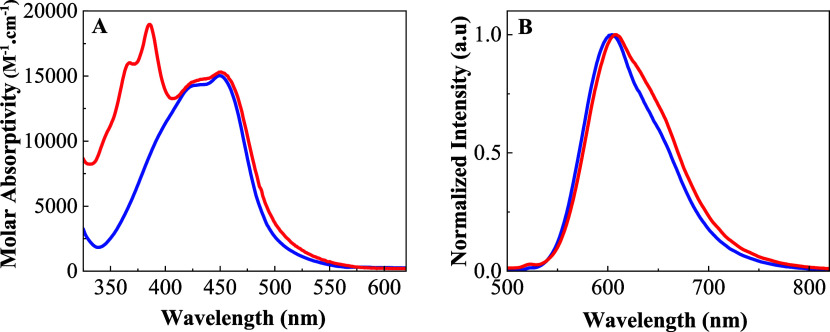 Figure 1
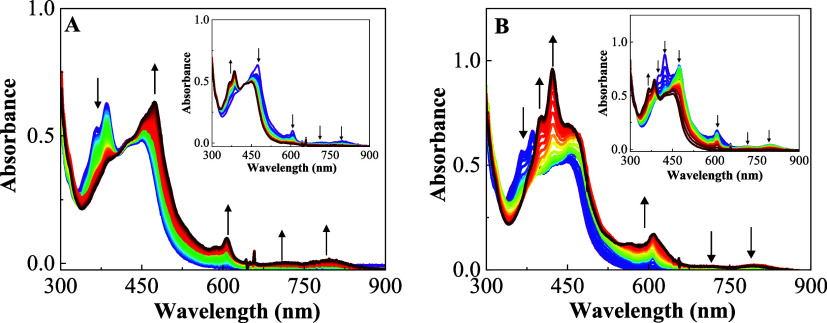 Figure 2
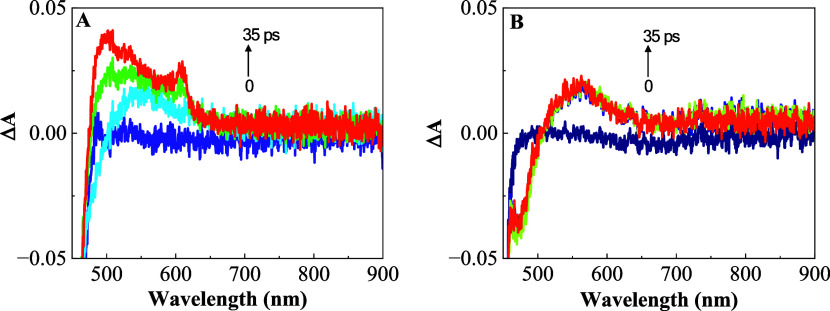 Figure 3
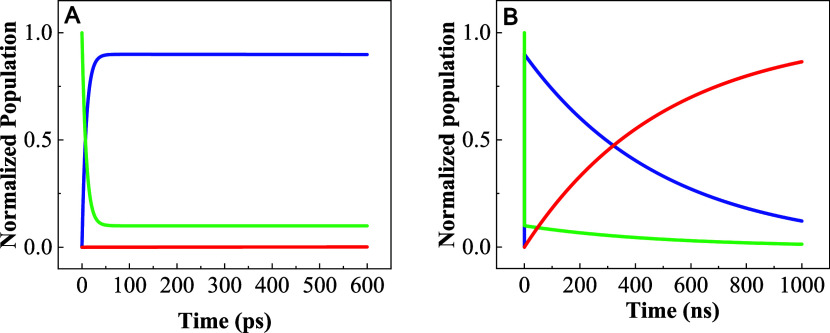 Figure 4
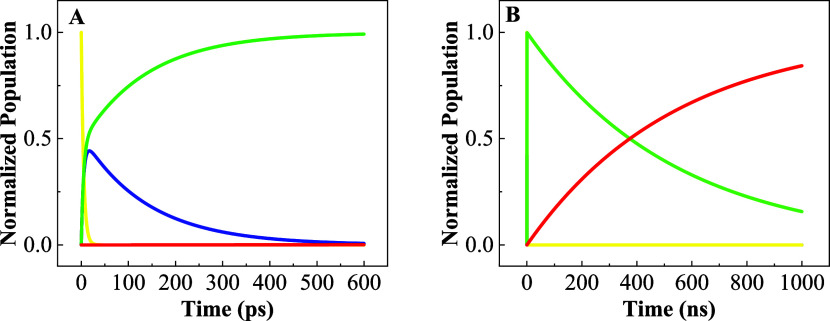 Figure 5
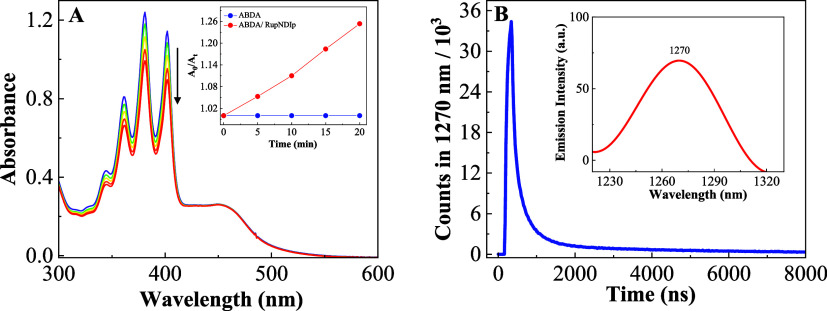 Figure 6
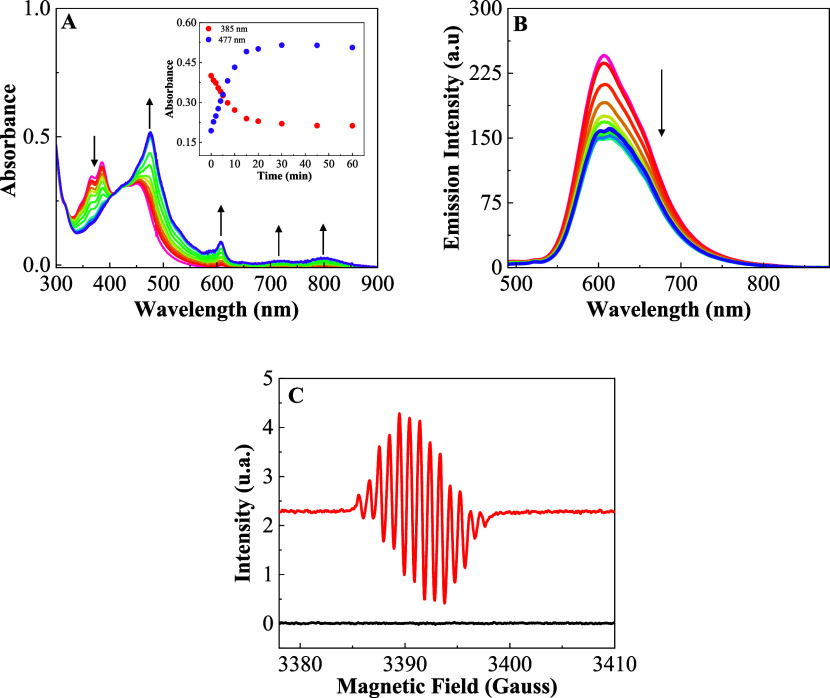 Figure 7
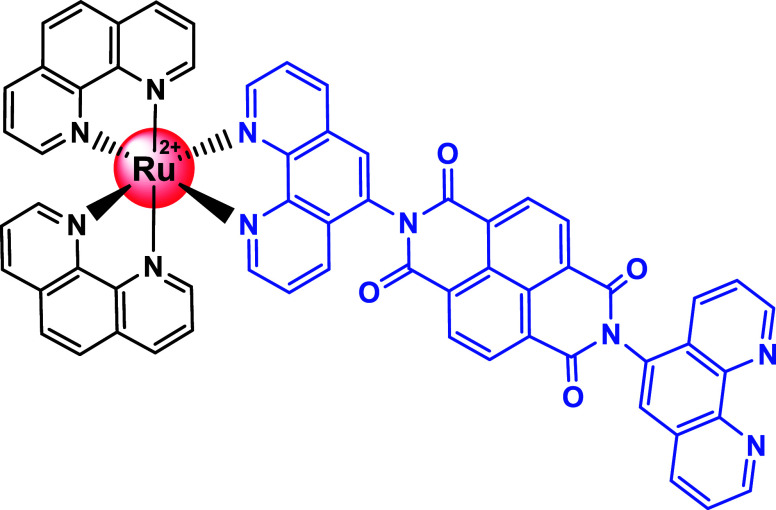 Figure 8
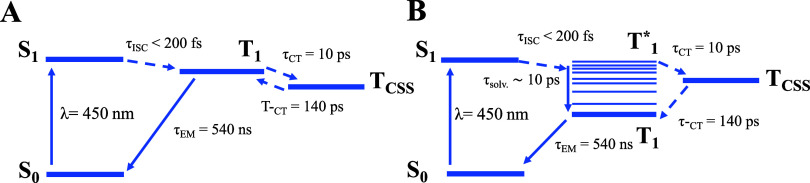 Figure 9
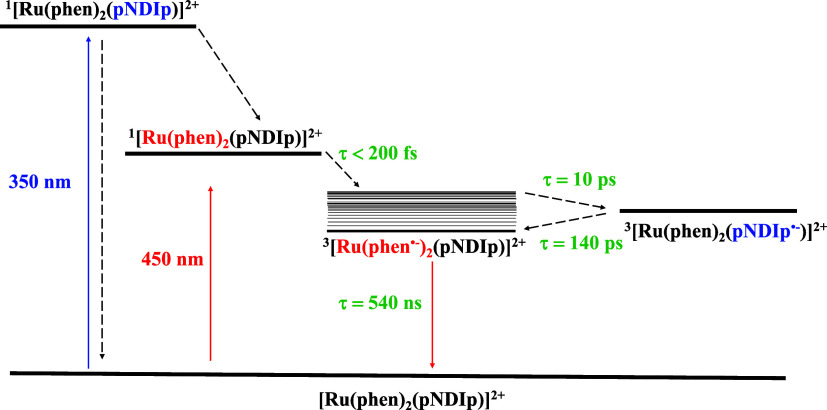 Figure 10
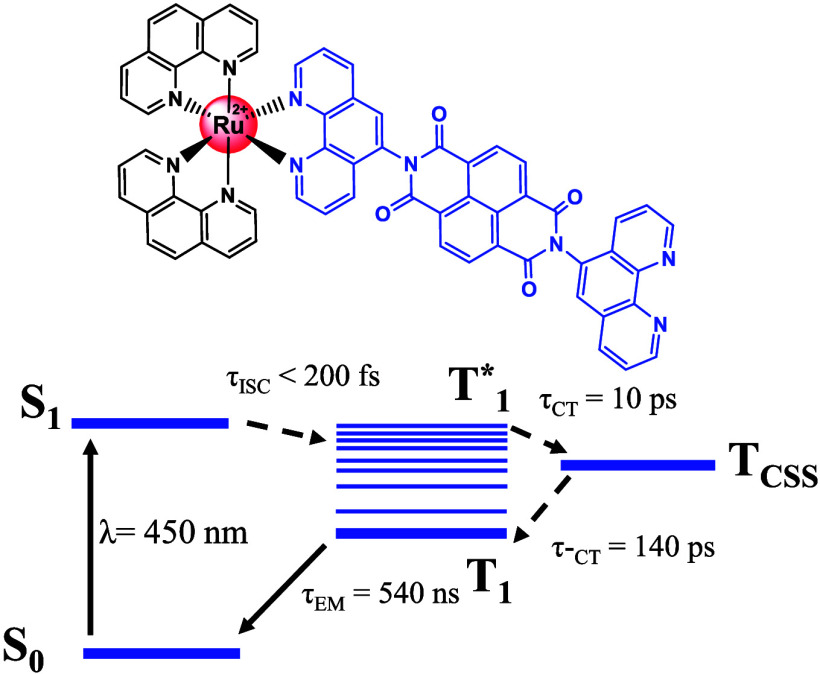 Figure 11
 Figure 12
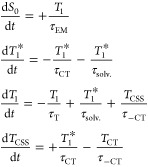 Figure 13
Peer Reviews
No public reviews on file for this paper yet. If you reviewed it on a platform where reviews are public (OpenReview, ICLR, NeurIPS, ICML), you can paste yours below so the community can read it here.
Videos
No videos yet. Explain this paper in a talk, walkthrough, or lecture? Add one.
Taxonomy
TopicsMolecular Junctions and Nanostructures · Organic Light-Emitting Diodes Research · Organic Electronics and Photovoltaics