Frank’s Sign: A Clinical Predictor of Ischaemic Strokes
Annie Renju, Aravinth Sivagnanaratnam

TL;DR
This study finds that a diagonal earlobe crease, known as Frank’s sign, is associated with ischaemic strokes and could help identify at-risk patients.
Contribution
The study demonstrates that Frank’s sign is a significant predictor of ischaemic stroke, even in patients without cardiovascular disease.
Findings
Frank’s sign was significantly associated with ischaemic strokes in a hospital-based study.
The association remained significant after excluding patients with pre-existing cardiovascular disease.
Frank’s sign may help clinicians identify individuals at risk of stroke.
Abstract
Frank’s sign is a diagonal crease on the earlobe and has been linked to cardiovascular disease. This prospective observational study aimed to assess the association between Frank’s sign and ischaemic strokes. Conducted over three months in a UK district general hospital, the study analysed data from 137 consecutive patients admitted to stroke and elderly care wards. Patient records included demographic and medical history data, and physical examinations identified the presence of Frank’s sign. Statistical analysis using the chi-squared test demonstrated a significant association between ischaemic strokes and Frank’s sign, even after excluding patients with pre-existing cardiovascular disease. These findings suggest Frank’s sign could serve as a clinical predictor for ischaemic stroke. Recognizing this sign may help healthcare providers identify at-risk individuals and implement…
Genes, proteins, chemicals, diseases, species, mutations and cell lines named across the full text — each resolved to its canonical identifier and authoritative record.
Click any figure to enlarge with its caption.
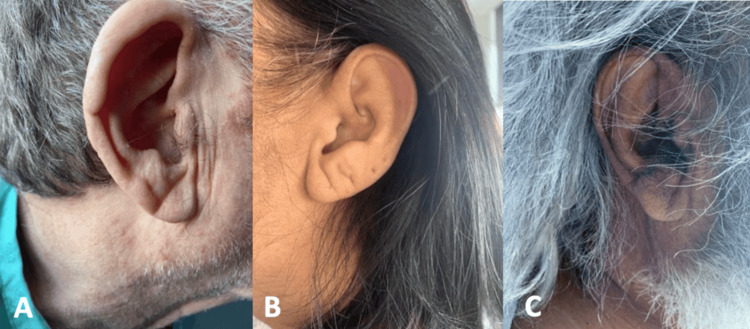 Figure 1
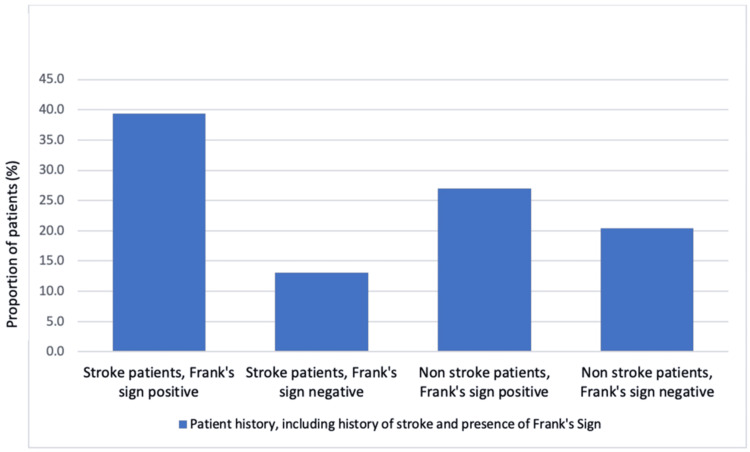 Figure 2
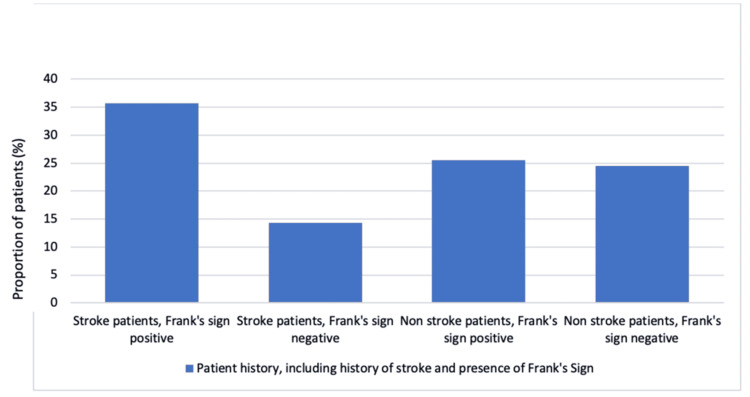 Figure 3
Peer Reviews
No public reviews on file for this paper yet. If you reviewed it on a platform where reviews are public (OpenReview, ICLR, NeurIPS, ICML), you can paste yours below so the community can read it here.
Videos
No videos yet. Explain this paper in a talk, walkthrough, or lecture? Add one.
Taxonomy
TopicsFacial Nerve Paralysis Treatment and Research · Cerebral Venous Sinus Thrombosis · Trigeminal Neuralgia and Treatments