Pharmacokinetics and bioequivalence assessment of two prucalopride formulations in healthy Chinese women: a randomized, open-label, two-period, two-sequence, self-crossover study
Xiangxin Huang, Ying Wang, Bei Li, Xiaoqun Shen, Xuexia Tao, Wenwen Zheng, Qi Luo, Lei Xiong, Lin Wang, Shufan Cai

TL;DR
This study found that a generic and branded prucalopride formulation are bioequivalent and similarly safe in healthy Chinese women.
Contribution
The study provides new evidence on the bioequivalence and safety of prucalopride formulations in a specific demographic.
Findings
The 90% confidence intervals for bioequivalence parameters were within the 80%-125% range.
No significant differences in adverse events were observed between the formulations.
Pharmacokinetic parameters were similar in both fasted and fed states.
Abstract
This study aimed to evaluate the pharmacokinetic (PK) bioequivalence of generic and branded prucalopride formulations. Twenty-four healthy female subjects were enrolled in both fasted and fed trials, with each subject receiving either the test (generic) or reference (branded) formulation after an overnight fast. Blood samples were collected up to 72 h post-administration. Plasma concentrations of prucalopride were quantified using ultra-performance liquid chromatography–tandem mass spectrometry (UPLC-MS), and the corresponding PK parameters were subsequently calculated. Clinical safety data were monitored throughout the trial period. All 24 subjects completed both the fasted and fed trials. No significant differences were found in the PK data between the test and reference formulations for either the fasted or fed states. The Wilcoxon signed-rank test of Tmax revealed no significant…
Genes, proteins, chemicals, diseases, species, mutations and cell lines named across the full text — each resolved to its canonical identifier and authoritative record.
Click any figure to enlarge with its caption.
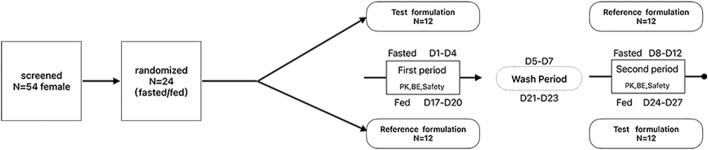 Figure 1
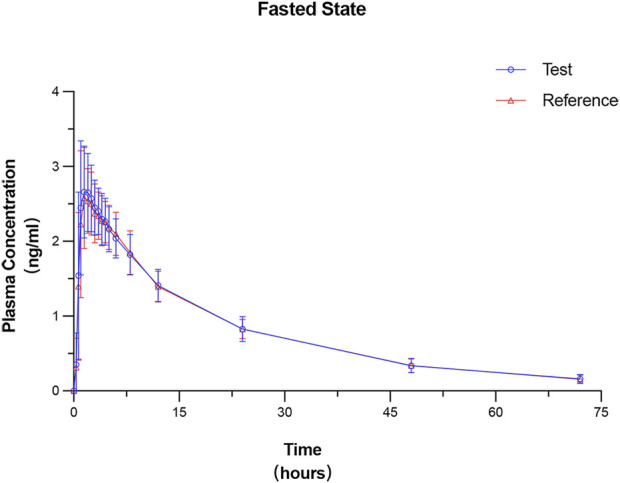 Figure 2
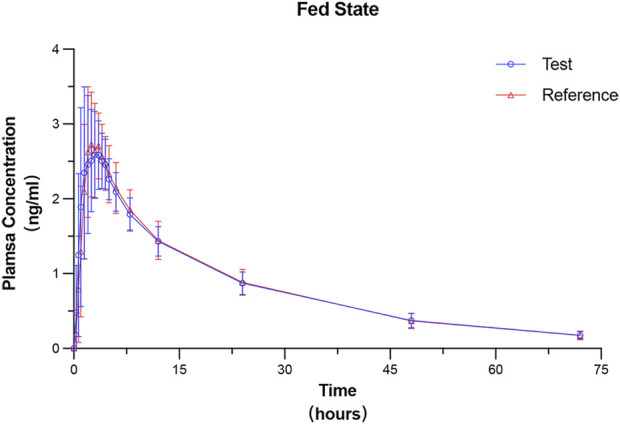 Figure 3
Peer Reviews
No public reviews on file for this paper yet. If you reviewed it on a platform where reviews are public (OpenReview, ICLR, NeurIPS, ICML), you can paste yours below so the community can read it here.
Videos
No videos yet. Explain this paper in a talk, walkthrough, or lecture? Add one.
Taxonomy
TopicsGastrointestinal motility and disorders · Morinda citrifolia extract uses · Pharmacology and Obesity Treatment