A de novo deletion underlying spinal muscular atrophy: implications for carrier testing and genetic counseling
Maria M Zwartkruis, Mirjam S de Pagter, Demi Gommers, Marije Koopmans, Cecile P E Ottenheim, Joris V Kortooms, Mirjan Albring, Martin G Elferink, Renske I Wadman, Fay-Lynn Asselman, Inge Cuppen, W Ludo van der Pol, Marcel R Nelen, Gijs W van Haaften, Ewout J N Groen

TL;DR
A new genetic deletion causing spinal muscular atrophy is identified, highlighting the need for improved carrier testing and counseling.
Contribution
The first nucleotide-level resolved SMA-causing deletion is reported, revealing complexities in carrier testing.
Findings
A 1.4 Mb de novo deletion encompassing SMN1 and SMN2 was identified in an SMA patient.
Advanced genetic testing revealed a silent carrier father and a deletion between mother and child.
The case highlights the limitations of current carrier tests and the need for improved genetic counseling.
Abstract
Spinal muscular atrophy (SMA) is an autosomal recessive disease most commonly caused by homozygous deletion of the SMN1 gene. Parents of affected children are typically carriers, with a recurrence risk of 25% for future pregnancies. Their close relatives have up to 50% chance of being carriers. Carriers typically possess a single copy of the SMN1 gene; however, some parents carry two copies of SMN1. Current standard diagnostic carrier tests are unable to distinguish between silent carriers with two copies on one chromosome (2 + 0 genotype) and non-carriers (1 + 1 genotype), where a de novo deletion occurred. This distinction is crucial for recurrence risk assessment, which highlights the unsolved challenge to carrier testing and genetic counseling. We combined microsatellite marker analysis, SMN copy number analysis, Sanger sequencing, long-read sequencing and de novo assembly to…
Genes, proteins, chemicals, diseases, species, mutations and cell lines named across the full text — each resolved to its canonical identifier and authoritative record.
Click any figure to enlarge with its caption.
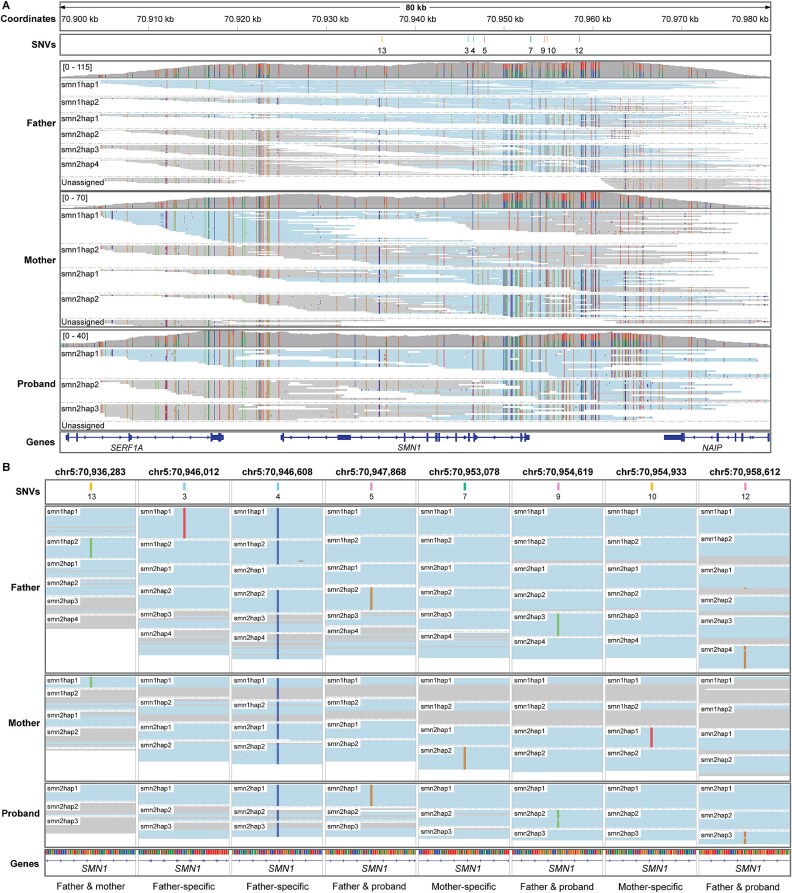 Figure 1
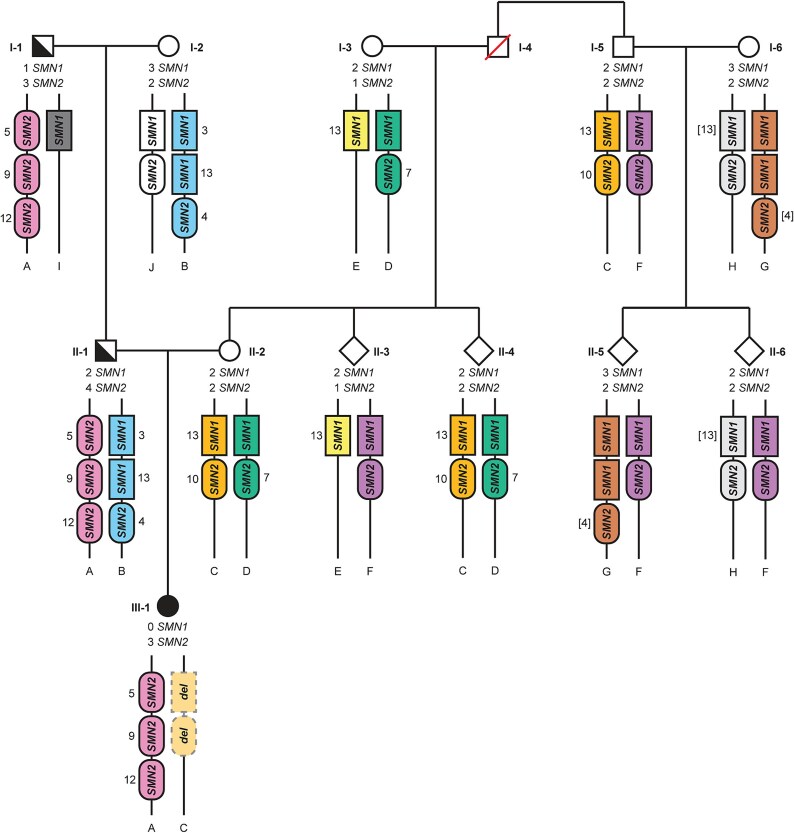 Figure 2
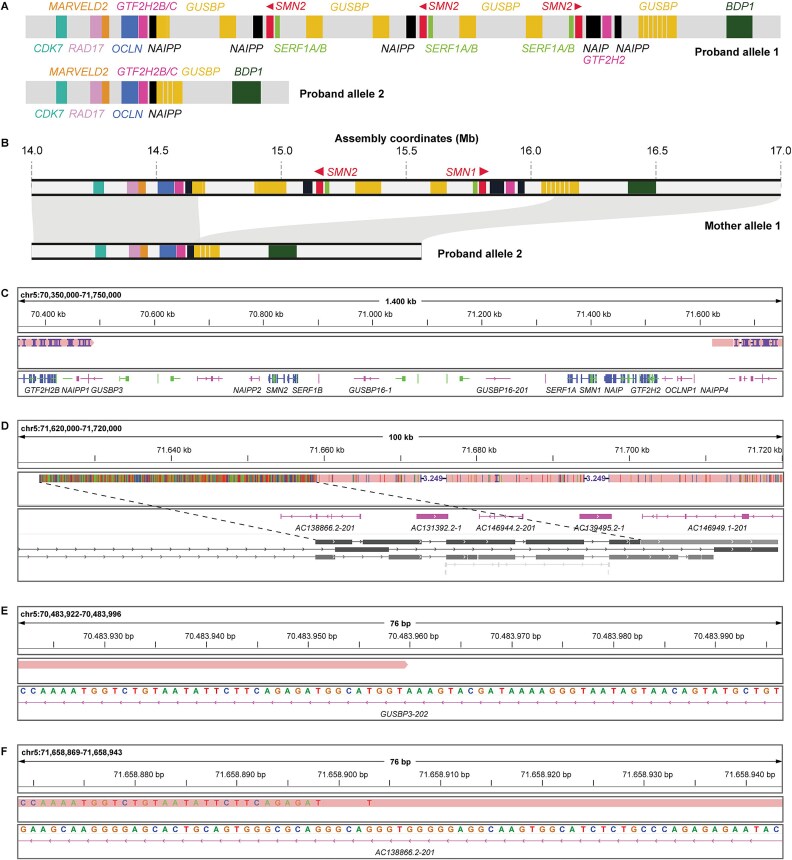 Figure 3
Peer Reviews
No public reviews on file for this paper yet. If you reviewed it on a platform where reviews are public (OpenReview, ICLR, NeurIPS, ICML), you can paste yours below so the community can read it here.
Videos
No videos yet. Explain this paper in a talk, walkthrough, or lecture? Add one.
Taxonomy
TopicsNeurogenetic and Muscular Disorders Research · RNA modifications and cancer · Congenital Anomalies and Fetal Surgery