Wilhelm Keller MD (1818–1877) and the emergence of xenobiochemistry
Stephen Mitchell, Rosemary Waring

TL;DR
This paper explores the early history of xenobiotic metabolism, focusing on Wilhelm Keller's role in its development.
Contribution
The paper highlights Wilhelm Keller's pioneering but under-recognized contributions to the field of xenobiochemistry.
Findings
Wilhelm Keller was involved in early experiments on xenobiotic metabolism.
The paper identifies a gap in historical knowledge about Keller's work.
The discovery of hippuric acid excretion from benzoic acid marked the start of xenobiotic metabolism as a field.
Abstract
Although there had been many previous inklings, the field of xenobiotic metabolism (as we know it today) began with an experiment reported in the 1841 literature proclaiming that the ingestion of benzoic acid led to the subsequent excretion of hippuric acid in human urine. A metabolic transformation undertaken by a living organism. One worker involved in the early stages of this discovery was Wilhelm Keller, although very little information about him is readily available. Hopefully, this article will go some way to counter this dearth and also highlight Keller's pioneering contribution in the development of the fields of drug metabolism and xenobiochemistry.
Genes, proteins, chemicals, diseases, species, mutations and cell lines named across the full text — each resolved to its canonical identifier and authoritative record.
Click any figure to enlarge with its caption.
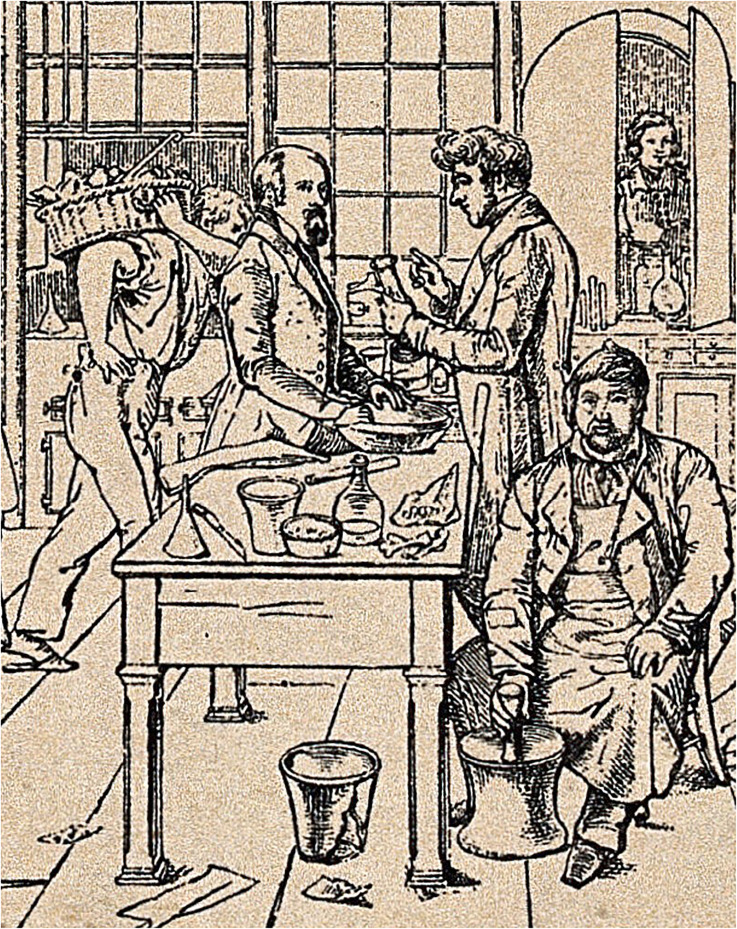 Figure 1
Peer Reviews
No public reviews on file for this paper yet. If you reviewed it on a platform where reviews are public (OpenReview, ICLR, NeurIPS, ICML), you can paste yours below so the community can read it here.
Videos
No videos yet. Explain this paper in a talk, walkthrough, or lecture? Add one.
Taxonomy
TopicsMetabolism and Genetic Disorders · Genetic Neurodegenerative Diseases · Amino Acid Enzymes and Metabolism