Origin of the inhomogeneous nanoscale resistivity in chromium doped V2O3
Johannes Mohr, Yudi Wang, Xiaoyu Xu, Ruilin Wang, Dirk J. Wouters, Rainer Waser, Joyeeta Nag, Daniel Bedau

TL;DR
This study finds that inhomogeneous resistivity in chromium-doped V2O3 thin films is caused by amorphous regions at grain boundaries, not by dopant or oxygen distribution.
Contribution
The study identifies amorphous grain boundaries as the source of resistivity inhomogeneity in doped V2O3 films.
Findings
Amorphous or poorly crystallized regions at grain boundaries cause inhomogeneous resistivity.
Dopant and oxygen distributions are homogeneous and do not affect conductivity inhomogeneity.
No qualitative differences were found between doped and undoped films or different oxygen stoichiometries.
Abstract
Chromium doped V2O3 polycrystalline thin films typically consist of conductive grains separated by insulating grain boundaries. We investigate the origin of the spatially inhomogeneous resistivity in these films and find no qualitative differences between doped and undoped films, or for different oxygen stoichiometries. By a combination of conductive atomic force microscopy, high-resolution transmission electron microscopy and nanoscale elemental mapping, we show that the inhomogeneity is due to the formation of amorphous or poorly crystallized regions at the grain boundaries. Both the distribution of the dopants and the local oxygen stoichiometry appear to be very homogeneous, and therefore do not contribute to the inhomogeneous conductivity. The online version contains supplementary material available at 10.1038/s41598-025-99892-y.
Genes, proteins, chemicals, diseases, species, mutations and cell lines named across the full text — each resolved to its canonical identifier and authoritative record.
Click any figure to enlarge with its caption.
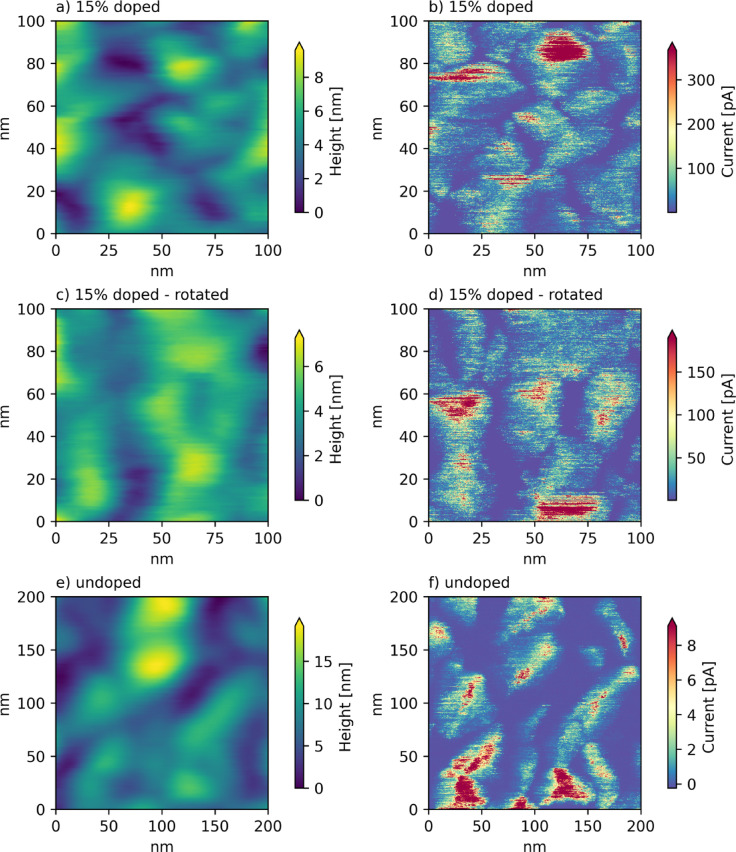 Figure 1
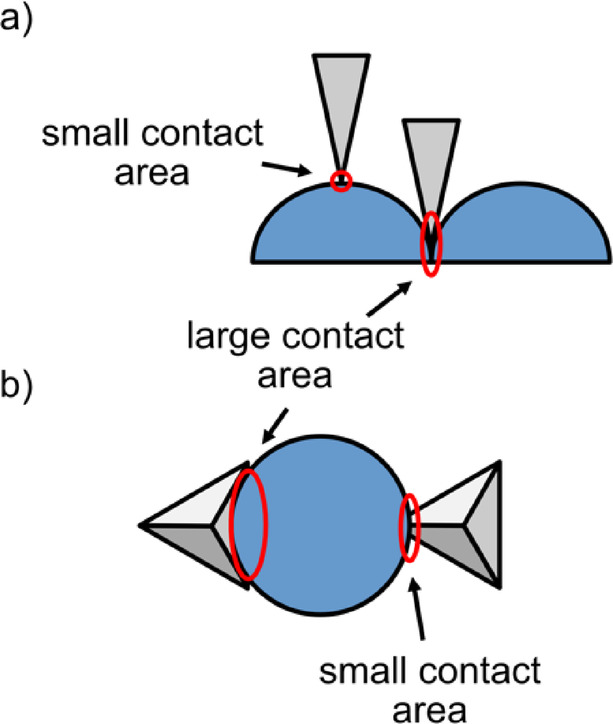 Figure 2
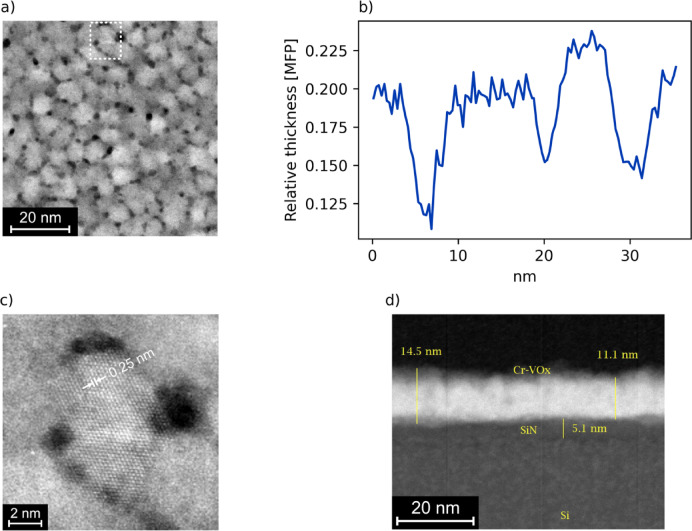 Figure 3
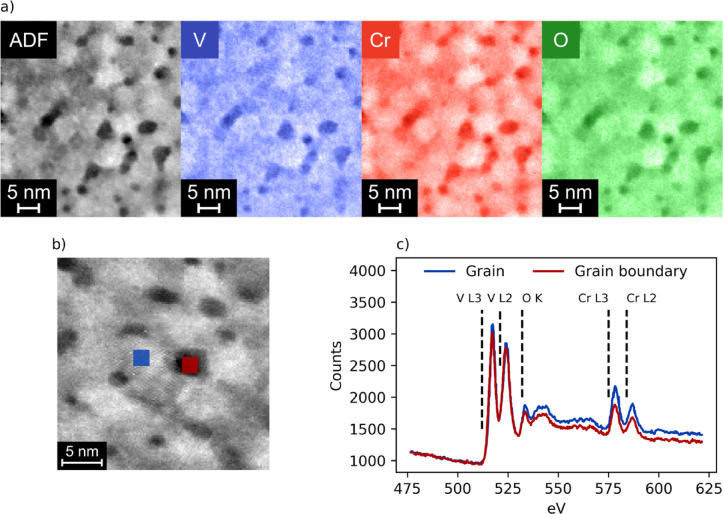 Figure 4
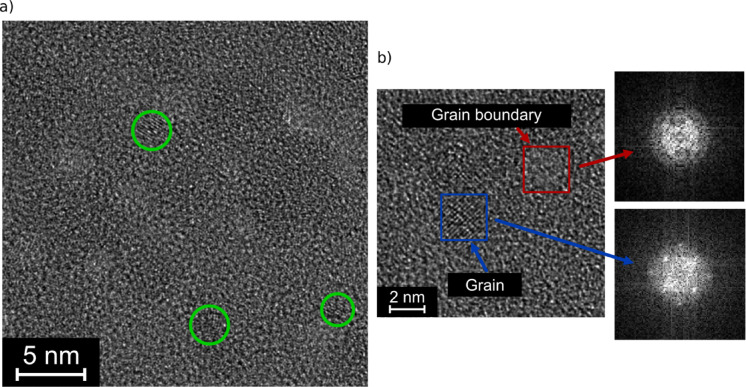 Figure 5
Peer Reviews
No public reviews on file for this paper yet. If you reviewed it on a platform where reviews are public (OpenReview, ICLR, NeurIPS, ICML), you can paste yours below so the community can read it here.
Videos
No videos yet. Explain this paper in a talk, walkthrough, or lecture? Add one.
Taxonomy
TopicsTransition Metal Oxide Nanomaterials · Advanced Memory and Neural Computing · Electronic and Structural Properties of Oxides