Correction: CoVox: A dataset of contrasting vocalizations
Camila Bruder, Pauline Larrouy-Maestri

Abstract
Genes, proteins, chemicals, diseases, species, mutations and cell lines named across the full text — each resolved to its canonical identifier and authoritative record.
Click any figure to enlarge with its caption.
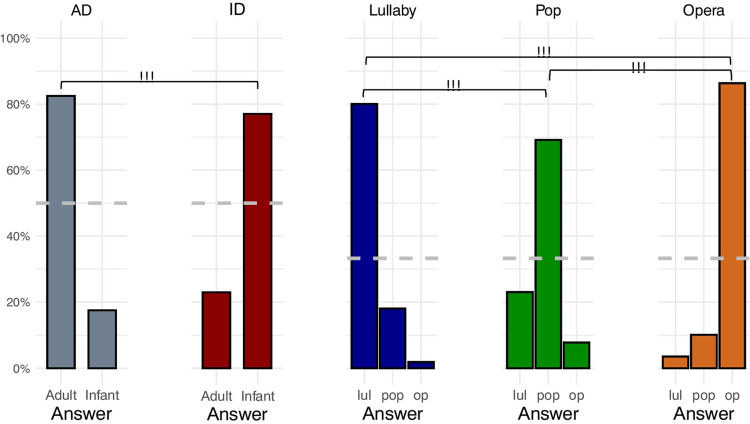 Figure 1
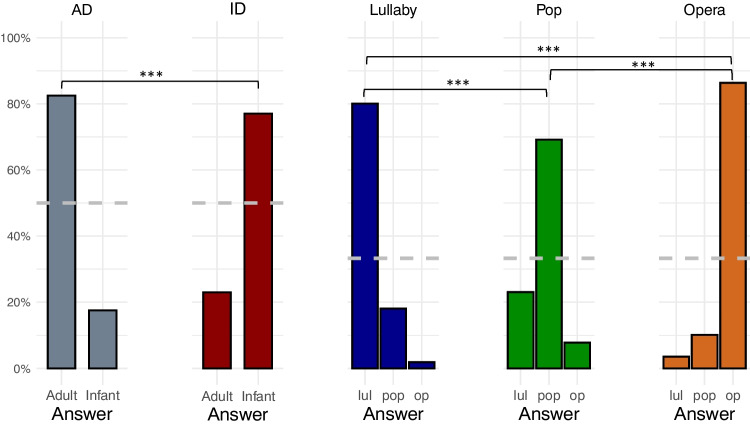 Figure 2
Peer Reviews
No public reviews on file for this paper yet. If you reviewed it on a platform where reviews are public (OpenReview, ICLR, NeurIPS, ICML), you can paste yours below so the community can read it here.
Videos
No videos yet. Explain this paper in a talk, walkthrough, or lecture? Add one.
Taxonomy
TopicsLanguage and cultural evolution · Computational and Text Analysis Methods · Media, Religion, Digital Communication
Correction: Behavior Research Methods (2025) 57:142
10.3758/s13428-025-02664-9
The original online version of this article was revised: Fig. 3 was mistakenly not updated as requested by the author in the original version of the article. Figure 3 has been updated.
Incorrect Figure 3. Fig. 3Classification of styles in the validation experiment. Note. In each plot, the y-axis depicts the proportion of given responses in trials with different styles of vocalization. The dashed gray horizontal line represents chance-level performance (33% for singing performances and 50% for speech performances). AD adult-directed speech, ID infant-directed speech, lul lullaby, op opera. * p < 0.05; ** p < 0.01;*** p < 0.001
Correct Figure 3 Fig. 3. Classification of styles in the validation experiment. Note. In each plot, the y-axis depicts the proportion of given responses in trials with different styles of vocalization. The dashed gray horizontal line represents chance-level performance (33% for singing performances and 50% for speech performances). AD adult-directed speech, ID infant-directed speech, lul lullaby, op opera. * p < 0.05; ** p < 0.01;*** *p *< 0.001