Endoscopic septotomy of rectal transmural septum perpetuating a rectal leak
Pedro Marílio Cardoso, Guilherme Macedo, Eduardo Rodrigues-Pinto

Abstract
Genes, proteins, chemicals, diseases, species, mutations and cell lines named across the full text — each resolved to its canonical identifier and authoritative record.
Click any figure to enlarge with its caption.
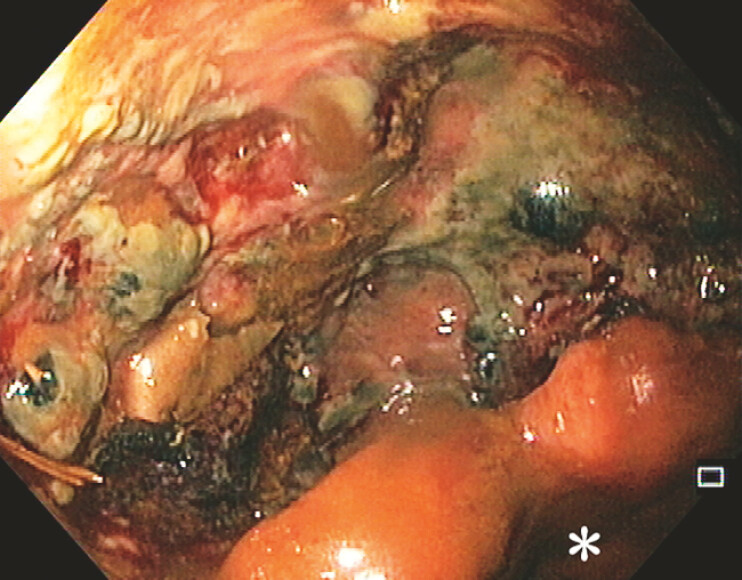 Fig. 1
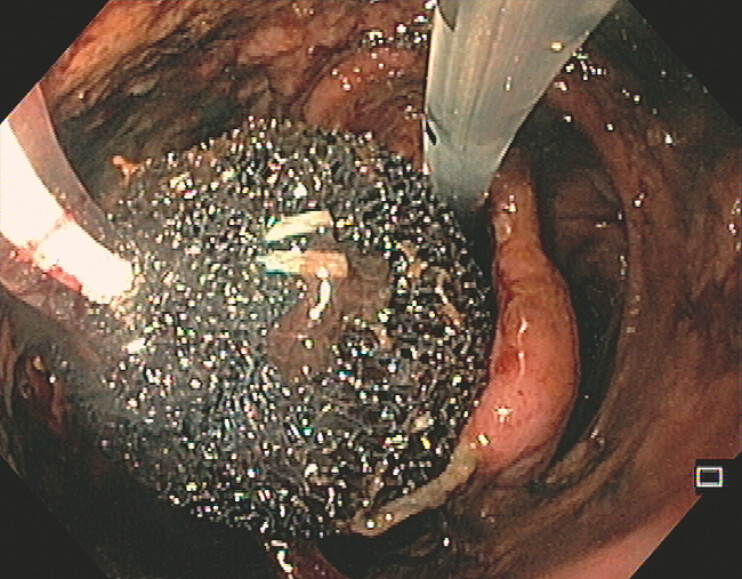 Fig. 2
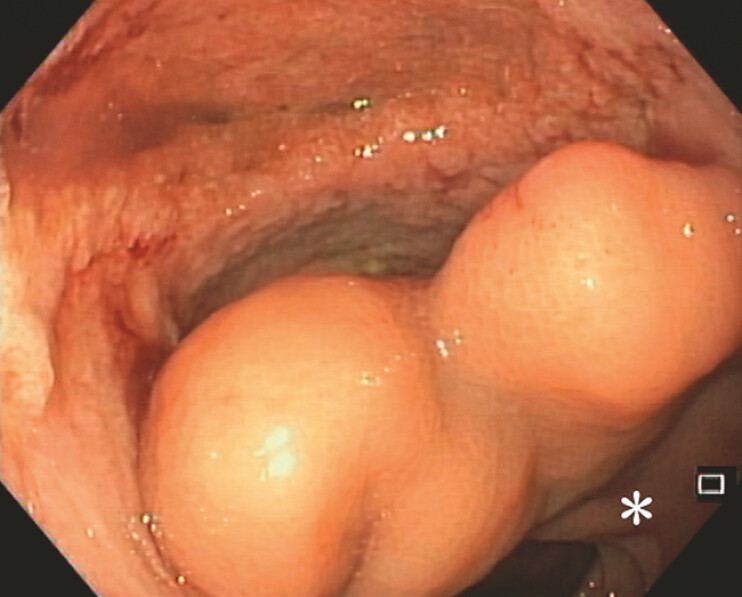 Fig. 3
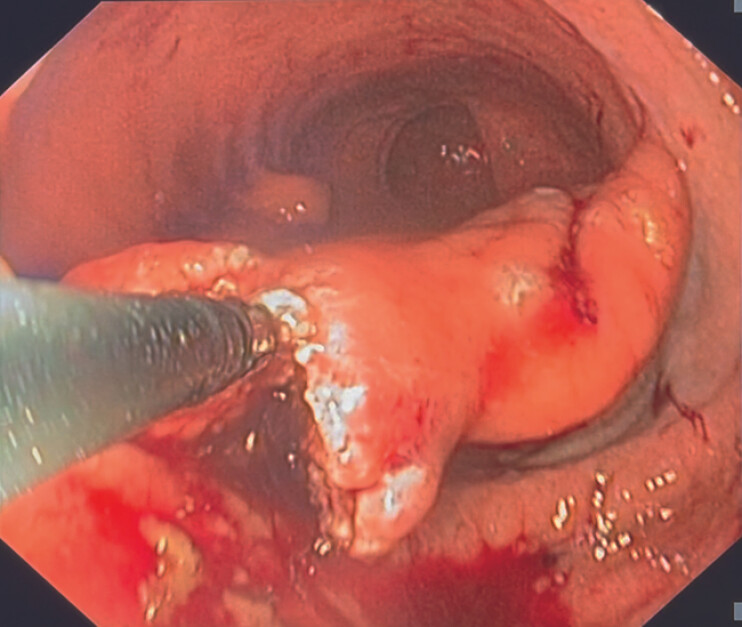 Fig. 4
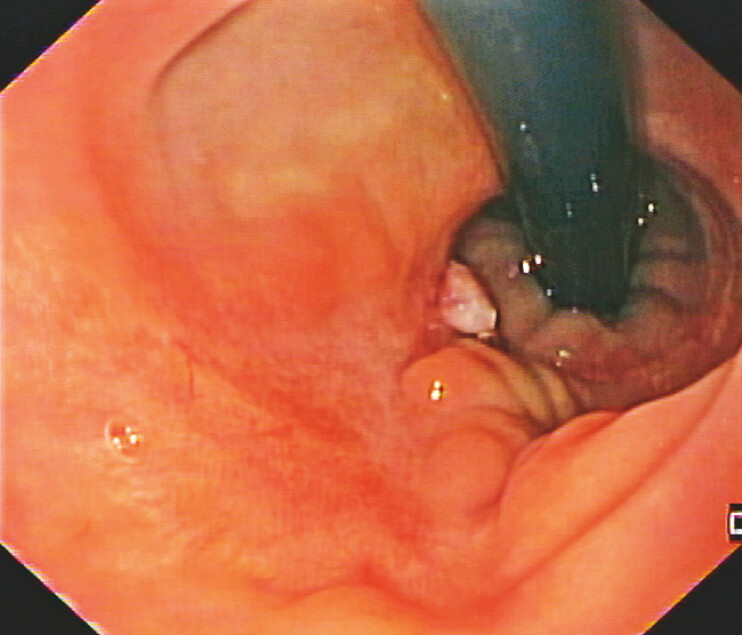 Fig. 5
Peer Reviews
No public reviews on file for this paper yet. If you reviewed it on a platform where reviews are public (OpenReview, ICLR, NeurIPS, ICML), you can paste yours below so the community can read it here.
Videos
No videos yet. Explain this paper in a talk, walkthrough, or lecture? Add one.
Taxonomy
TopicsEsophageal and GI Pathology · Abdominal Surgery and Complications · Gastrointestinal disorders and treatments
A 58-year-old woman with a past medical history of rectocele underwent a Stapled Transanal Resection of the Rectum (STARR) procedure, which was complicated by a staple line leak. After a protective ileostomy, endoscopy revealed a leak involving half of the luminal circumference, with a 9 cm long associated collection ( Fig. 1 ). Three sessions of intracavitary endoscopic vacuum therapy were performed, including two simultaneous foams (EndoSponge, Boston Scientific) ( Fig. 2 ). Despite the improvement of endoscopic findings, leak and collection dimensions persisted, with the development of a proximal communication between the collection and the rectal lumen, configurating a double lumen, due to the presence of a transmural wall septum between the collection and the rectum ( Fig. 3 ). Endoscopic septotomy of the transmural septum was then performed with a grasping-type scissor (ClutchCutter, Fujifilm) ( Video 1 , Fig. 4 ). Additional hotsnare polipectomy of the cut septum was performed, with the placement of two detachable snares on each edge of the residual septum to prevent delayed bleeding. The patient was discharged 1 week later with improved clinical status. The bowel was reconstructed 3 months later. Endoscopy evaluation 6 months later revealed a completed re-epithelialization of the collection with leak resolution ( Fig. 5 ).
*Leak involving half of the luminal circumference; rectal lumen.
Vacuum therapy with two intracavitary sponges.
*Endoscopic improvement of leak cavity with granulation tissue; rectal lumen.
Endoscopic septotomy of the transmural septum.
Retroflexion endoscopic view showing completed re-epithelialization of the collection and leak resolution.
Endoscopic septotomy of rectal transmural septum perpetuating a rectal leak.Video 1
Treatment of gastrointestinal leaks can be challenging, frequently requiring a multimodality approach, often during a prolonged period of time 1 . Improvement of leak drainage by equalization of the pressures between the rectum and the collection, similar to endoscopic septotomy in chronic gastric sleeve leaks 2 , may allow a faster resolution of the collection. To the best of our knowledge, this is the first report of a lower tract septotomy.
Endoscopy_UCTN_Code_CPL_1AJ_2AG
The reference list from the paper itself. Each links out to its DOI / PubMed record.
- 1Medas R Rodrigues-Pinto E Technical Review on Endoscopic Treatment Devices for Management of Upper Gastrointestinal Postsurgical Leaks Gastroenterol Res Pract 2023129.712555 E 610.1155/2023/9712555 PMC 1027949937342388 · doi ↗ · pubmed ↗
- 2Campos JM Ferreira FC Teixeira AF Septotomy and Balloon Dilation to Treat Chronic Leak After Sleeve Gastrectomy: Technical Principles Obes Surg 2016261992199310.1007/s 11695-016-2256-327299918 · doi ↗ · pubmed ↗