Diversity and function of soluble heterodisulfide reductases in methane-metabolizing archaea
Xingyu Lyu, Hang Yu, Yahai Lu

TL;DR
This study explores the diversity and evolution of a key protein in methane-metabolizing archaea, revealing how it adapts to different anaerobic environments.
Contribution
The study identifies new types and functional variations of HdrA, a protein central to methane metabolism, and their implications for energy conservation.
Findings
HdrA diversified into 28 classes and four major types, with new types II and III showing distinct structural and functional features.
Type II HdrA is linked to a gene cluster involving F420H2 as an electron donor, while type III HdrA includes a GltD domain and may use NADH.
The functional flexibility of HdrA helps methane-metabolizing archaea adapt to diverse anaerobic environments.
Abstract
Soluble heterodisulfide reductase subunit A (HdrA) is an ancient protein central to energy metabolism, facilitating the recycling of intermediates in methane metabolism and performing flavin-based electron bifurcation for energy conservation. In this study, we investigated the functional diversity and evolutionary dynamics of HdrA in methane-metabolizing archaea. An analysis of 1,152 HdrA sequences from 624 genomes revealed that HdrA diversified through internal domain modifications, resulting in 28 distinct classes and 4 major types (types I, Ia, II, and III). Functional genes in HdrA gene clusters revealed variations in mid-potential electron donors, including NADH, F420H2, H2, and formate. Two major types of HdrA have not previously been studied in detail. Type II HdrA resulted from a fusion of two different classes of type I HdrA. Particularly, a consistent gene cluster containing…
Genes, proteins, chemicals, diseases, species, mutations and cell lines named across the full text — each resolved to its canonical identifier and authoritative record.
Click any figure to enlarge with its caption.
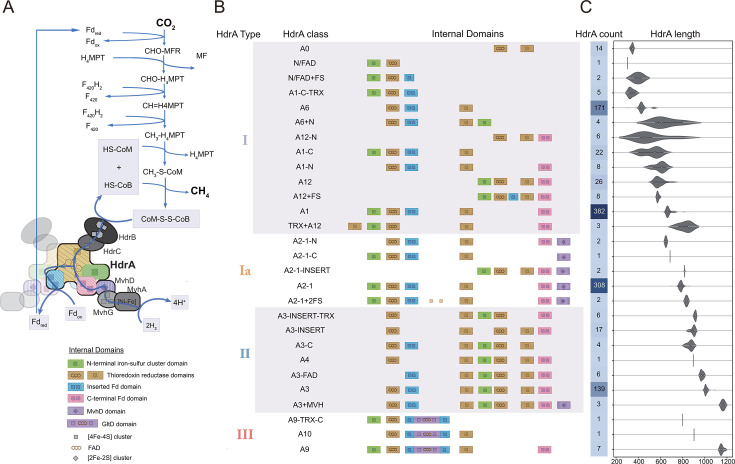 Figure 1
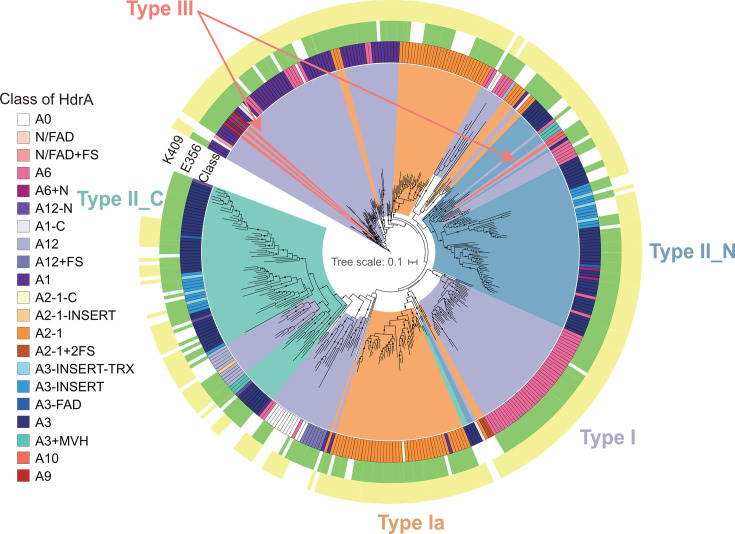 Figure 2
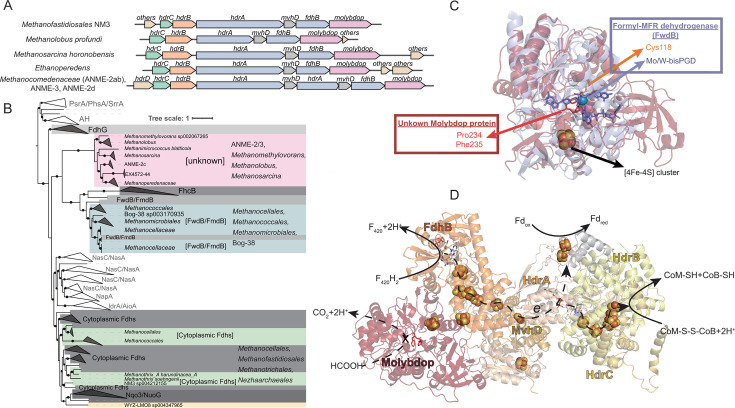 Figure 3
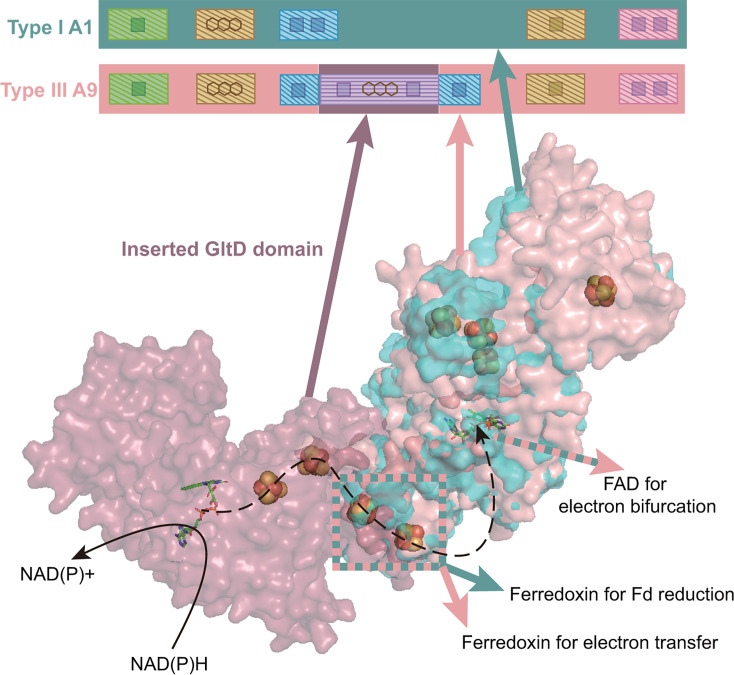 Figure 4
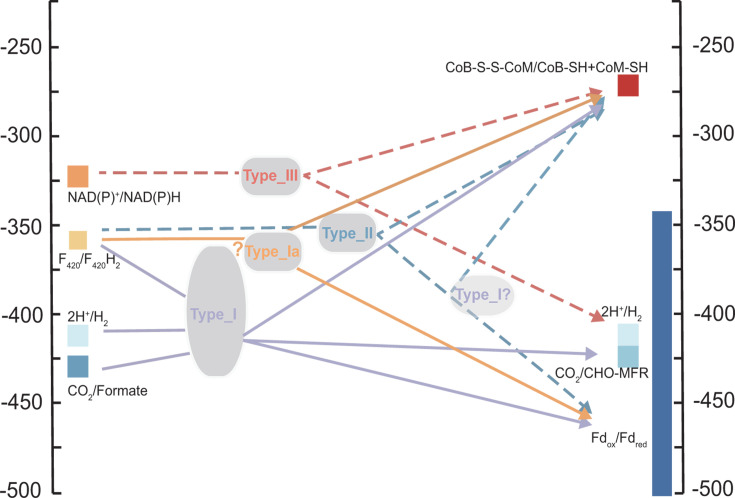 Figure 5
Peer Reviews
No public reviews on file for this paper yet. If you reviewed it on a platform where reviews are public (OpenReview, ICLR, NeurIPS, ICML), you can paste yours below so the community can read it here.
Videos
No videos yet. Explain this paper in a talk, walkthrough, or lecture? Add one.
Taxonomy
TopicsMethane Hydrates and Related Phenomena · Microbial Community Ecology and Physiology · Microbial bioremediation and biosurfactants