The effect of molnupiravir and nirmatrelvir on SARS-CoV-2 genome diversity in severe models of COVID-19
Rebekah Penrice-Randal, Eleanor G. Bentley, Parul Sharma, Adam Kirby, I'ah Donovan-Banfield, Anja Kipar, Daniele F. Mega, Chloe Bramwell, Joanne Sharp, Andrew Owen, Julian A. Hiscox, James P. Stewart

TL;DR
This study examines how molnupiravir and nirmatrelvir affect SARS-CoV-2 diversity in immunocompromised mice, finding that these drugs reduce viral load and mutations.
Contribution
The study is the first to assess the impact of molnupiravir and nirmatrelvir on SARS-CoV-2 genome diversity in severe immunocompromised models.
Findings
Molnupiravir and nirmatrelvir reduced viral load and pathological changes in immunocompromised mice.
Molnupiravir increased transition/transversion ratios, indicating mutagenic effects consistent with its mechanism.
Combination therapy improved viral clearance and reduced the risk of persistent infection and intra-host evolution.
Abstract
Immunocompromised individuals are susceptible to severe coronavirus disease 2019 and potentially contribute to the emergence of variants with altered pathogenicity due to persistent infection. This study investigated the impact of immunosuppression on severe acute respiratory syndrome coronavirus 2 (SARS-CoV-2) infection in K18-hACE2 mice and the effectiveness of antiviral treatments in this context during the first 7 days of infection. Mice were immunosuppressed using cyclophosphamide and infected with a B lineage of SARS-CoV-2. Molnupiravir and nirmatrelvir, alone and in combination, were administered, and viral load and viral sequence diversity were assessed. Treatment of infected but immunocompromised mice with both compounds either singly or in combination resulted in decreased viral loads and pathological changes compared to untreated animals. Treatment also abrogated infection of…
Genes, proteins, chemicals, diseases, species, mutations and cell lines named across the full text — each resolved to its canonical identifier and authoritative record.
Click any figure to enlarge with its caption.
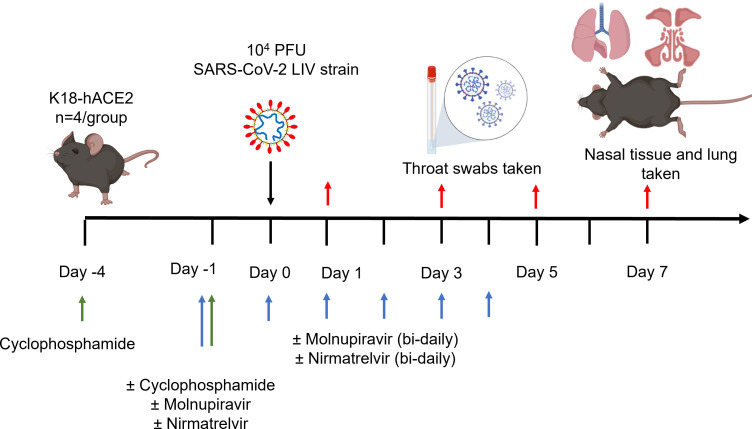 Figure 1
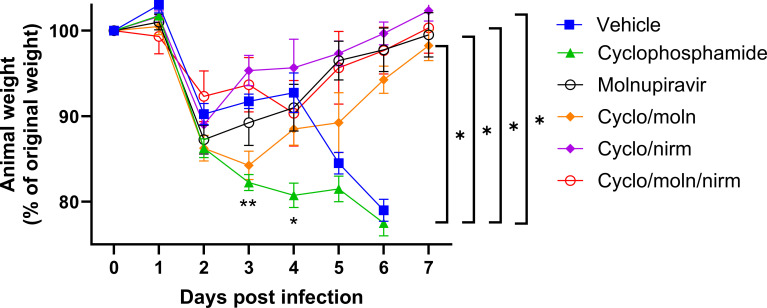 Figure 2
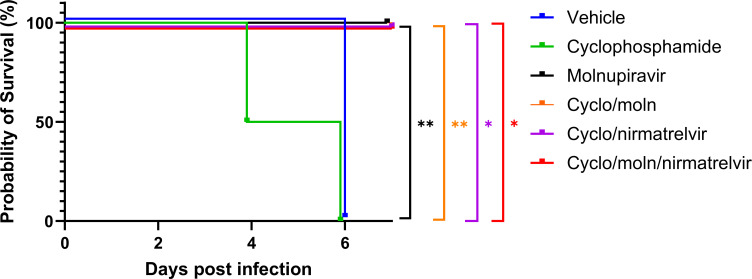 Figure 3
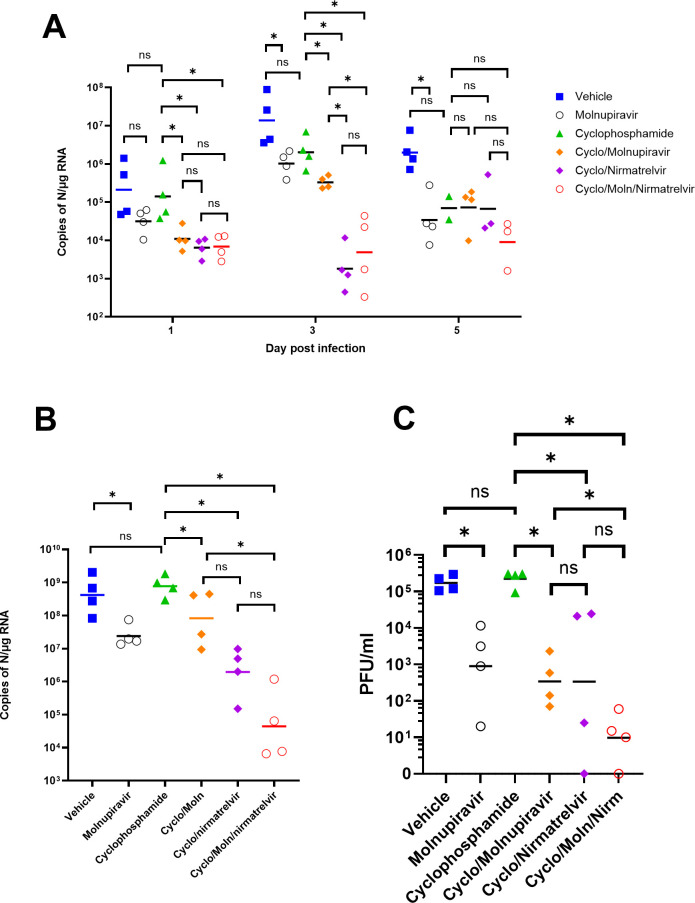 Figure 4
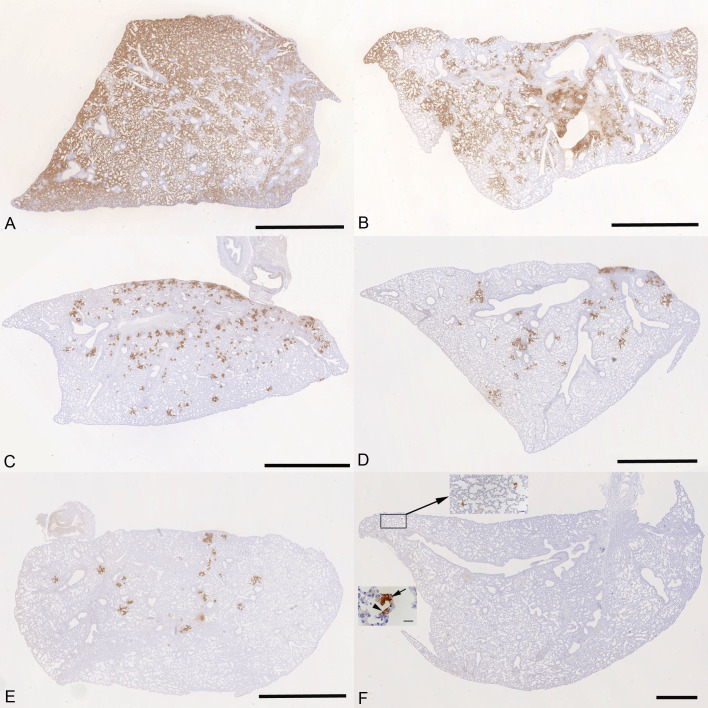 Figure 5
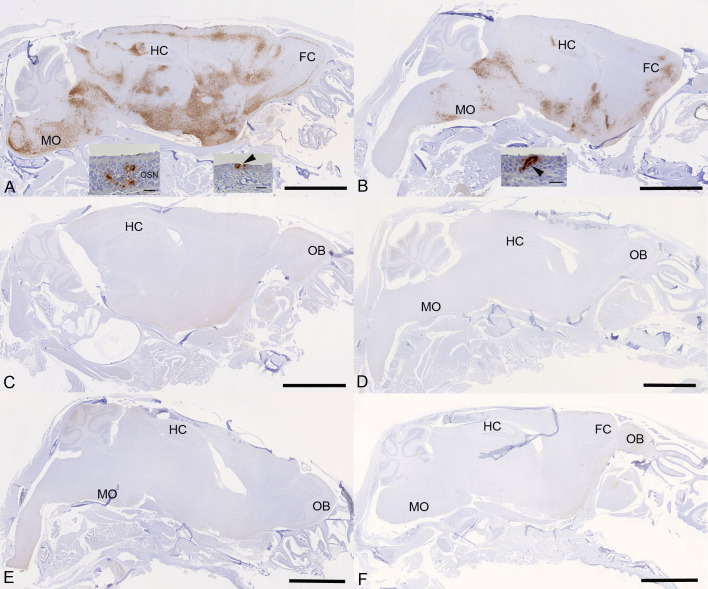 Figure 6
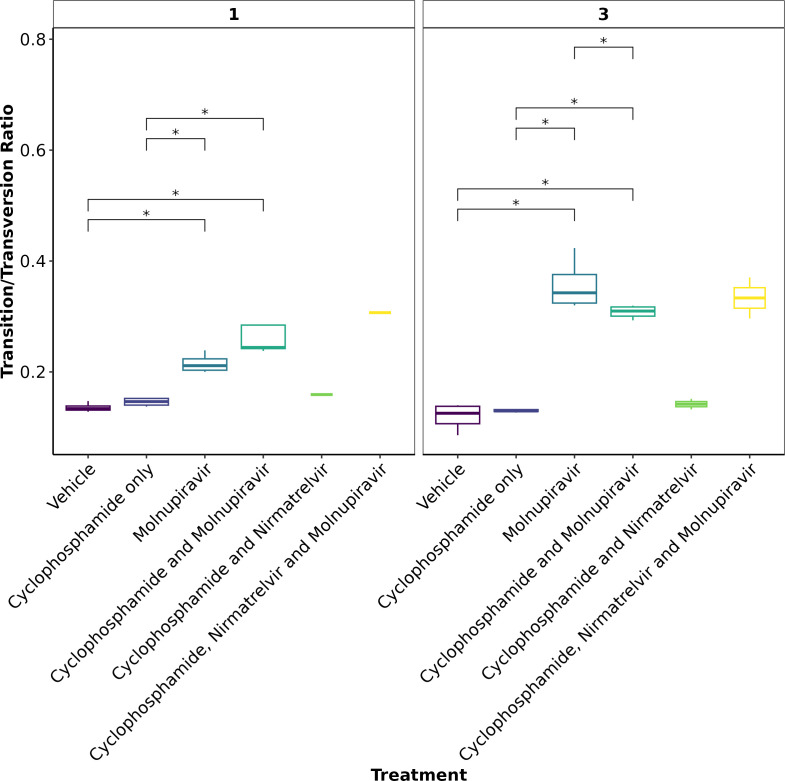 Figure 7
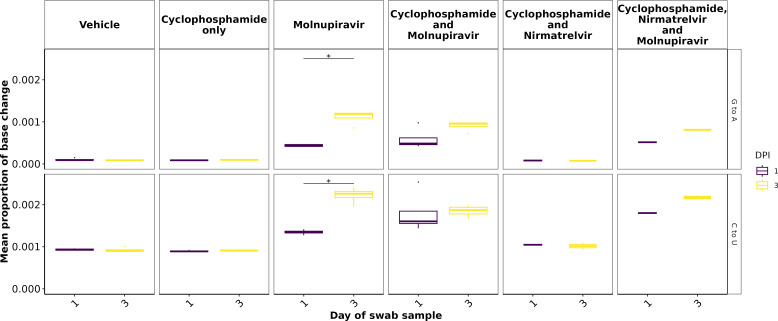 Figure 8
Peer Reviews
No public reviews on file for this paper yet. If you reviewed it on a platform where reviews are public (OpenReview, ICLR, NeurIPS, ICML), you can paste yours below so the community can read it here.
Videos
No videos yet. Explain this paper in a talk, walkthrough, or lecture? Add one.
Taxonomy
TopicsSARS-CoV-2 and COVID-19 Research · Viral gastroenteritis research and epidemiology · Animal Virus Infections Studies