Archaeal diversity in the microbiomes of four wild bird species
Trevor Hunter, Lauren Chance, Chris S. Elphick, Sarah M. Hird

TL;DR
This study shows that using specific primers improves the detection of archaea in the gut microbiomes of wild birds, revealing shared and unique archaeal communities across four species.
Contribution
The study demonstrates the effectiveness of Archaea-Specific primers in detecting archaeal diversity in wild bird microbiomes compared to Universal primers.
Findings
Archaea-Specific primers increased archaeal richness and detection in all four bird species.
Methanogenic archaea were enriched in Canada Geese and found in lesser amounts in other species.
Nitrososphaerales were detected in all four bird species, suggesting a shared archaeal component.
Abstract
Archaea are generally low-abundance members of the vertebrate microbiota that require specific PCR primers to be detected in metabarcoding studies, and the robust intraspecific sample size is necessary for well-supported conclusions about archaeal diversity. Using 16S rRNA gene amplicons generated using both Archaea-Specific and Universal primers, we investigated prokaryotic diversity in 110 fecal samples from four wild bird species from four different orders: Anna’s Hummingbird (Calypte anna), Saltmarsh Sparrow (Ammospiza caudacuta), Ruddy Turnstone (Arenaria interpres), and Canada Goose (Branta canadensis). Our aim was to test the hypotheses that Archaea-Specific primers would offer higher resolution of archaeal diversity and that the four ecologically distinct host species would have distinct archaeal communities. Archaea-Specific primers resulted in increases in archaeal richness…
Genes, proteins, chemicals, diseases, species, mutations and cell lines named across the full text — each resolved to its canonical identifier and authoritative record.
Click any figure to enlarge with its caption.
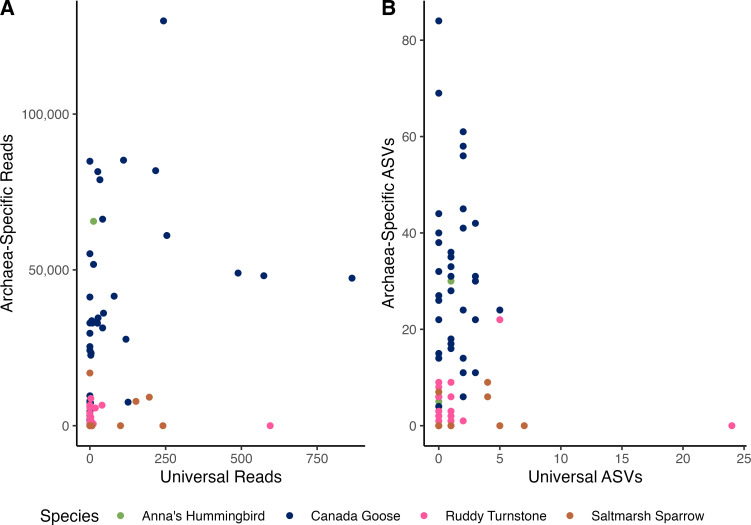 Figure 1
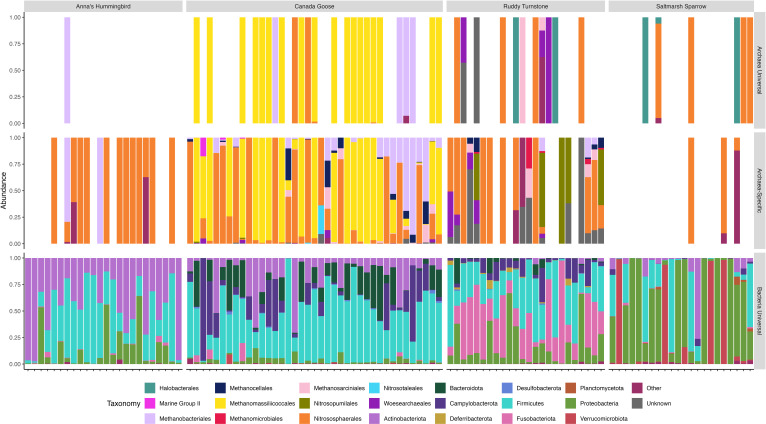 Figure 2
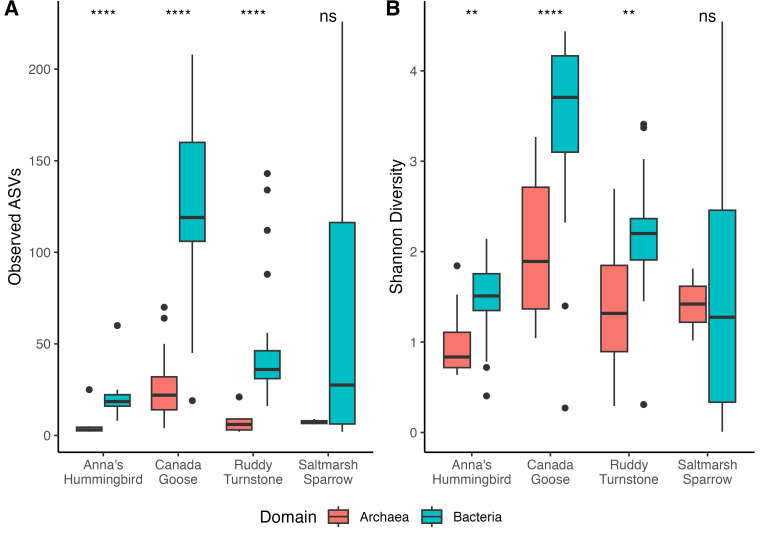 Figure 3
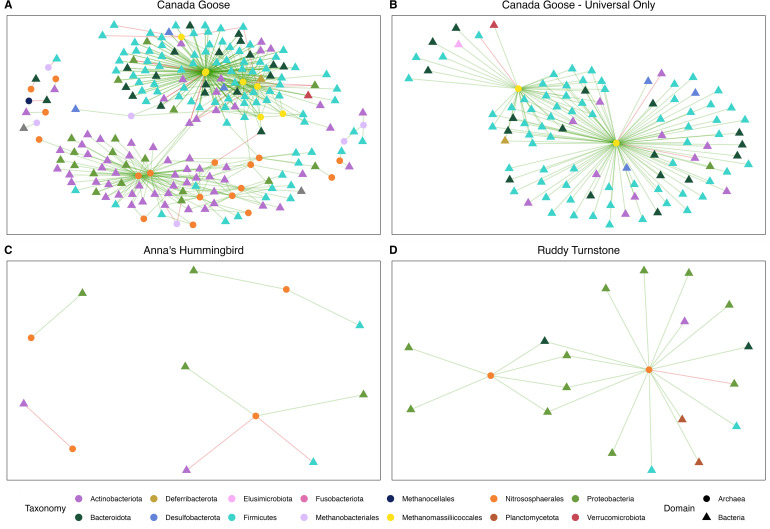 Figure 4
Peer Reviews
No public reviews on file for this paper yet. If you reviewed it on a platform where reviews are public (OpenReview, ICLR, NeurIPS, ICML), you can paste yours below so the community can read it here.
Videos
No videos yet. Explain this paper in a talk, walkthrough, or lecture? Add one.
Taxonomy
TopicsEnvironmental DNA in Biodiversity Studies · Gut microbiota and health · Microbial Community Ecology and Physiology