Severe Palatal Myiasis in a Young Patient With Neurological and Physical Disabilities: A Case Report
Marcelo Santos Bahia, Yuri de Lima Medeiros, Luan Viana Faria, Alexandre Elias Trivellato, Cassio Edvard Sverzut

TL;DR
A 16-year-old girl with neurological impairments developed severe palatal myiasis, requiring multidisciplinary treatment and highlighting challenges in such vulnerable patients.
Contribution
This case report presents a rare instance of severe palatal myiasis in a neurologically impaired pediatric patient and emphasizes the need for prompt multidisciplinary care.
Findings
The patient presented with palatal myiasis, bacterial pneumonia, and dyspnea due to larval migration.
Treatment included manual larval removal, intravenous antibiotics, and surgical debridement, leading to stabilization.
The case underscores the complexity of managing myiasis in patients with disabilities and socioeconomic challenges.
Abstract
Myiasis can be particularly debilitating in pediatric patients with neurological impairments, as communication challenges in expressing symptoms may delay diagnosis and appropriate treatment. We report a case of palatal myiasis in a young Latin American patient with neurological deficits. A 16‐year‐old female with a history of severe meningitis, which resulted in neurological sequelae including spastic paralysis and epilepsy, presented with an oral lesion in the buccal cavity and episodes of fever. Upon admission, she was diagnosed with bacterial pneumonia, multiple foci of myiasis in the hard and soft palate, and dyspnea caused by larval migration to the oropharyngeal region. Larvae were manually removed, and the patient was treated with intravenous ceftriaxone, clindamycin, and ivermectin. Nitrofurazone paste was also applied topically. Four days later, surgical debridement was…
Genes, proteins, chemicals, diseases, species, mutations and cell lines named across the full text — each resolved to its canonical identifier and authoritative record.
Click any figure to enlarge with its caption.
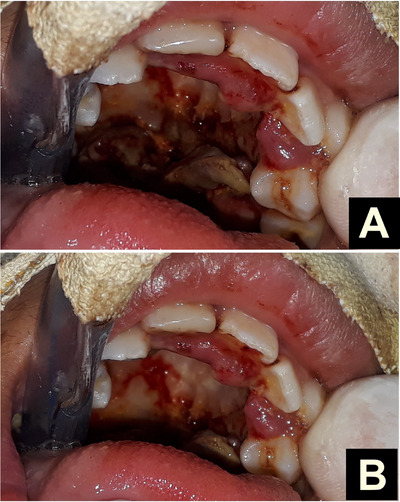 Figure 1
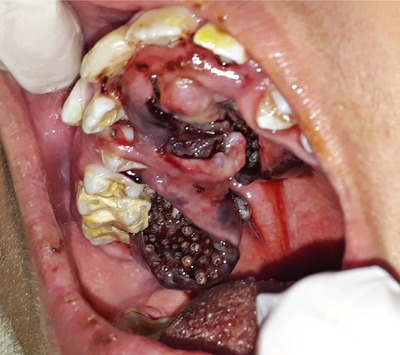 Figure 2
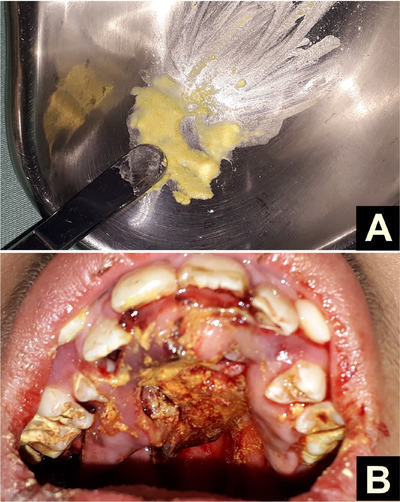 Figure 3
Peer Reviews
No public reviews on file for this paper yet. If you reviewed it on a platform where reviews are public (OpenReview, ICLR, NeurIPS, ICML), you can paste yours below so the community can read it here.
Videos
No videos yet. Explain this paper in a talk, walkthrough, or lecture? Add one.
Taxonomy
TopicsForensic Entomology and Diptera Studies · Dermatological diseases and infestations · Insect and Pesticide Research