Discovery and Development of an Aerobic Radical Hydroxyarylation Reaction Using Aryl Halides, Olefins, and O2
Mark C. Maust, Defne Tuncaral, Simon B. Blakey

TL;DR
Scientists developed a new chemical reaction that uses light and oxygen to create complex ring structures from simple starting materials.
Contribution
A novel aerobic radical hydroxyarylation reaction is introduced, enabling mild synthesis of hydroxylated ring systems.
Findings
Photoredox activation generates aryl radicals for hydroxyarylation under mild conditions.
The reaction enables 5-exo, 6-exo, and dearomative cyclizations to form fused ring systems.
Iodide is identified as essential in the catalytic cycle when using aryl bromides.
Abstract
Herein, we report the development of a radical hydroxyarylation reaction through the coupling of an aryl radical, an olefin, and O2. Photoredox activation of a silyl radical halogen atom abstractor enables mild aryl radical generation and reactivity in 5-exo, 6-exo, and dearomative cyclizations to synthesize a variety of hydroxylated semisaturated fused ring systems. Expansion of the substrate scope to include aryl bromide starting materials reveals the crucial role of iodide in the catalytic cycle.
Genes, proteins, chemicals, diseases, species, mutations and cell lines named across the full text — each resolved to its canonical identifier and authoritative record.
Click any figure to enlarge with its caption.
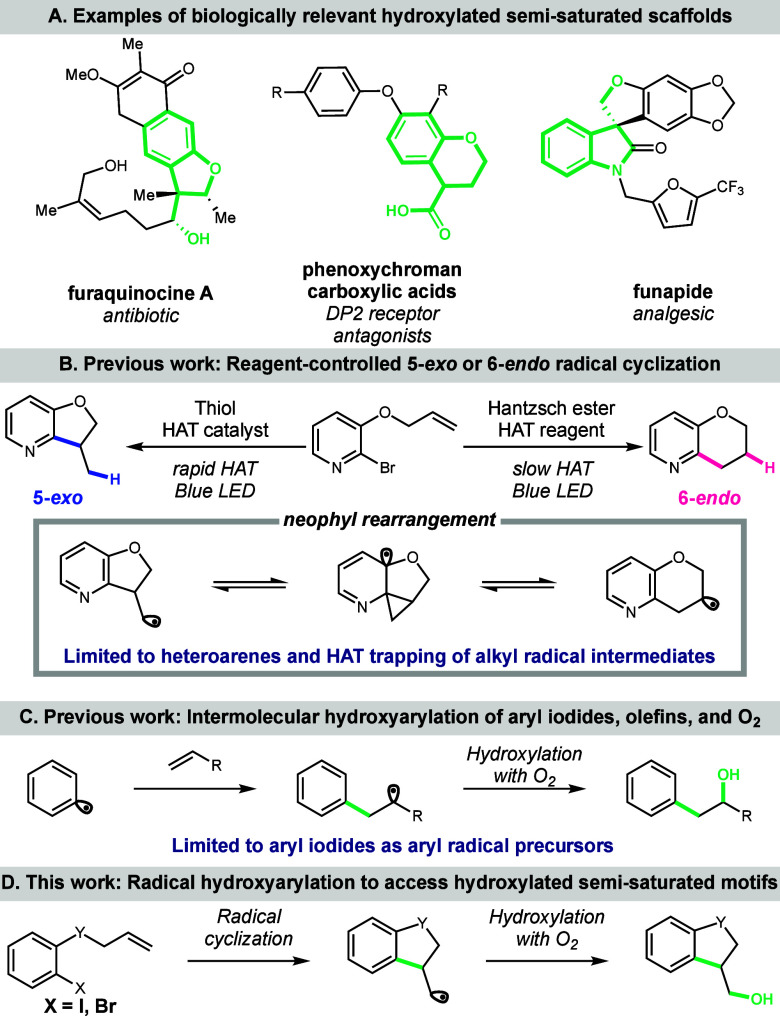 Figure 1
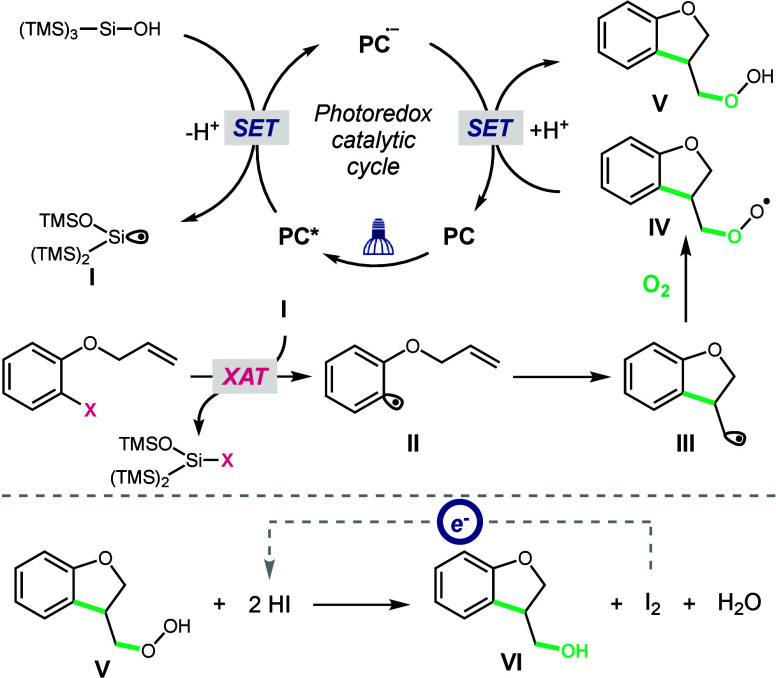 Figure 2
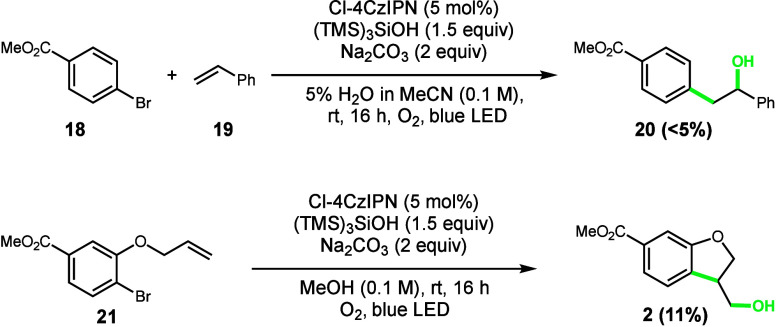 Figure 3
 Figure 4
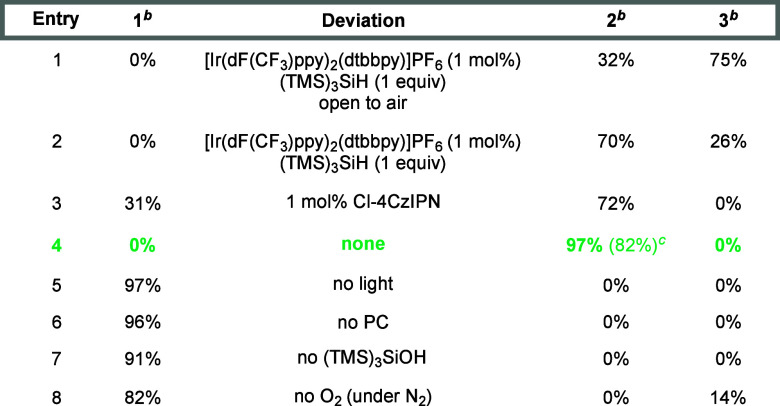 Figure 5
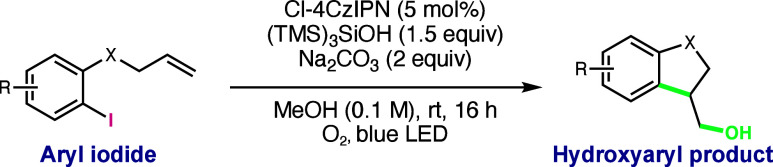 Figure 6
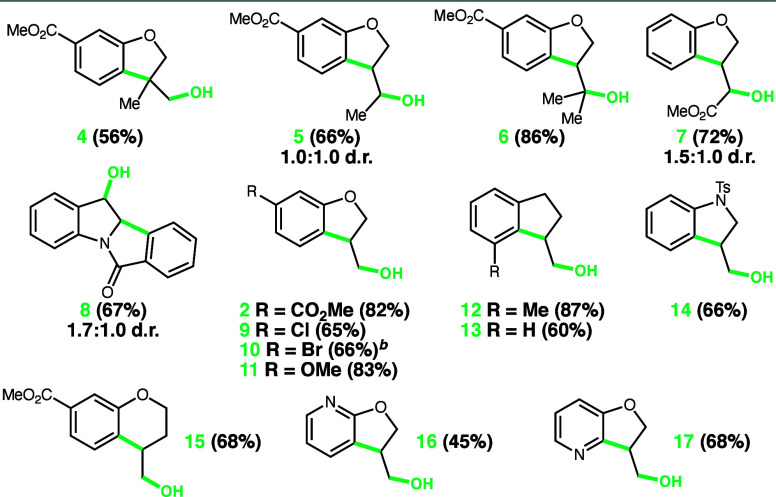 Figure 7
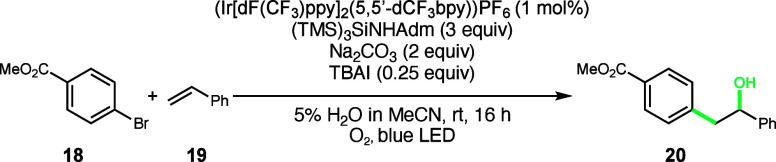 Figure 8
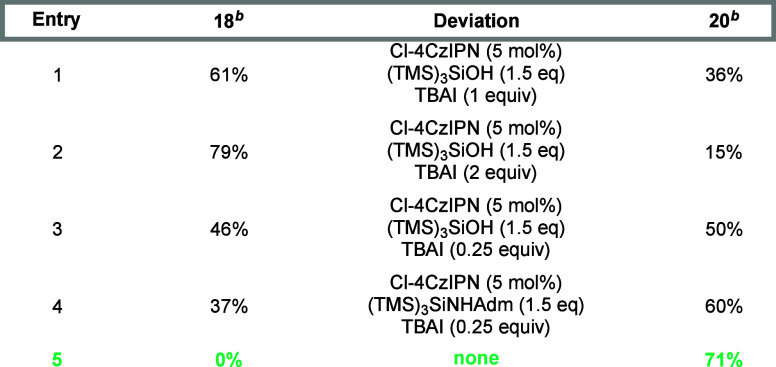 Figure 9
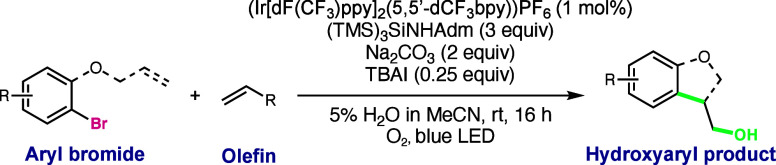 Figure 10
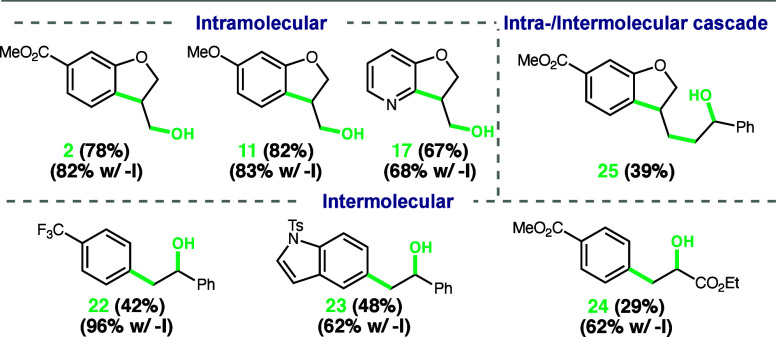 Figure 11
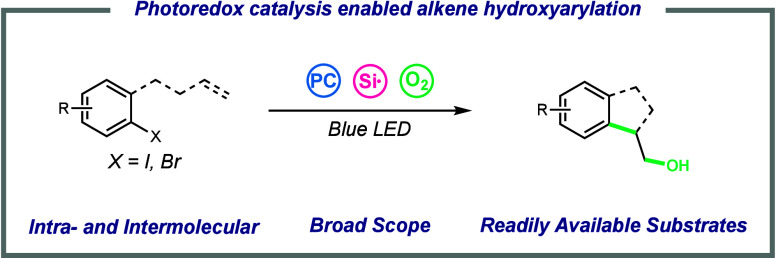 Figure 12
Peer Reviews
No public reviews on file for this paper yet. If you reviewed it on a platform where reviews are public (OpenReview, ICLR, NeurIPS, ICML), you can paste yours below so the community can read it here.
Videos
No videos yet. Explain this paper in a talk, walkthrough, or lecture? Add one.
Taxonomy
TopicsRadical Photochemical Reactions · Oxidative Organic Chemistry Reactions · Catalytic C–H Functionalization Methods