Deciphering Aspergillus section Terrei in Galleria mellonella model: a clade-specific pathogenicity characterization
Roya Vahedi-Shahandashti, Jos Houbraken, Vit Hubka, Martin Meijer, Bettina Gudrun Zelger, Ulrike Binder, Cornelia Lass-Flörl

TL;DR
This study explores the pathogenicity of Aspergillus species in the section Terrei using a wax moth larvae model, revealing differences in virulence and antifungal resistance among cryptic species.
Contribution
The study provides the first comprehensive virulence assessment of Aspergillus section Terrei species using an in vivo model, highlighting the clinical relevance of cryptic species.
Findings
Series Ambigui showed significantly lower virulence compared to Terrei and Nivei.
Cryptic species like A. niveus and A. iranicus exhibited reduced antifungal susceptibility.
Highly virulent species showed increased hyphal formation and fungal spread in host tissues.
Abstract
The Aspergillus genus encompasses a diverse array of species, some of which are opportunistic pathogens. Traditionally, human aspergillosis has primarily been linked to a few Aspergillus species, predominantly A. fumigatus. Changes in epidemiology and advancements in molecular techniques have brought attention to less common and previously unrecognized pathogenic cryptic species. Despite the taxonomic recognition of many cryptic species in section Terrei, their virulence potential and clinical implications, compared to A. terreus sensu stricto, remain poorly understood. Hence, the current study utilized the alternative in vivo model Galleria mellonella to evaluate the virulence potential of 19 accepted Aspergillus species in section Terrei, classified into three series (major phylogenetic clades): Terrei, Nivei, and Ambigui. Analyzing the median survival rates of infected larvae of all…
Genes, proteins, chemicals, diseases, species, mutations and cell lines named across the full text — each resolved to its canonical identifier and authoritative record.
Click any figure to enlarge with its caption.
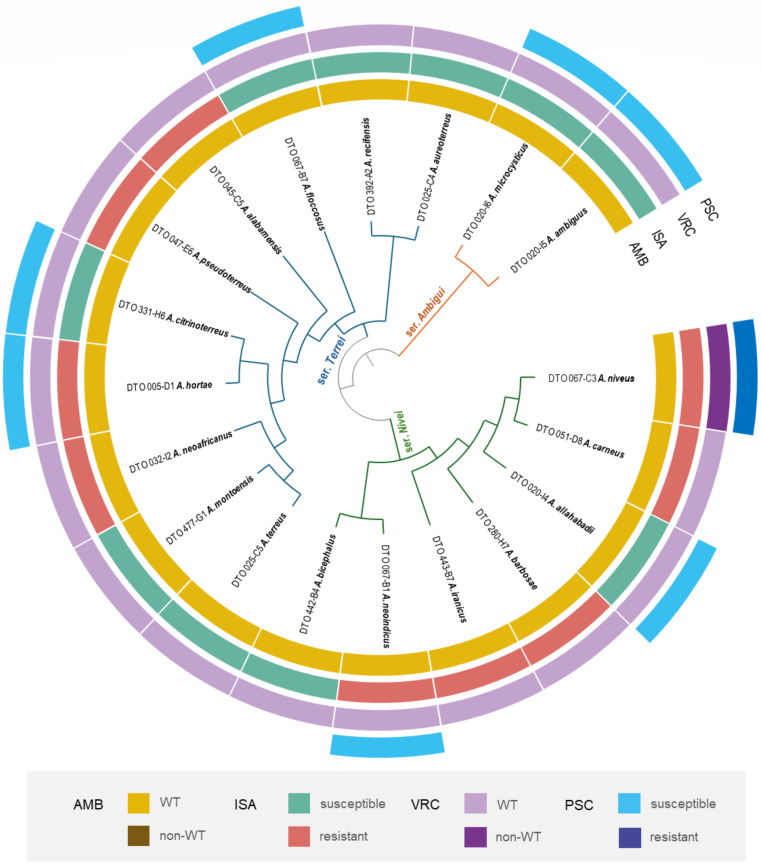 Figure 1
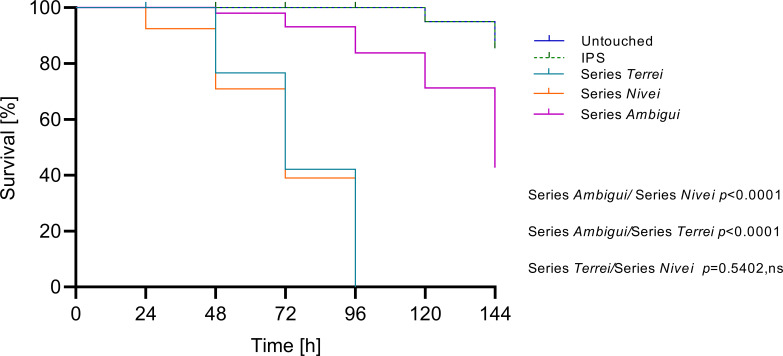 Figure 2
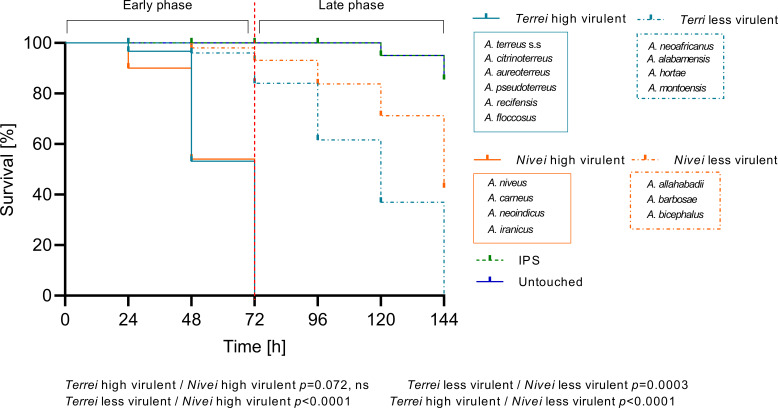 Figure 3
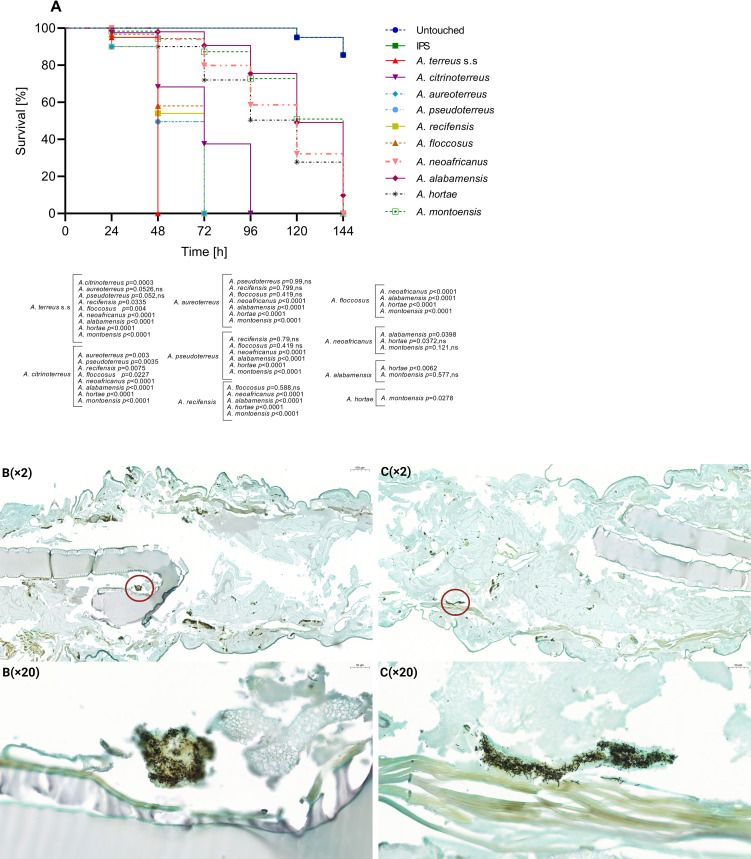 Figure 4
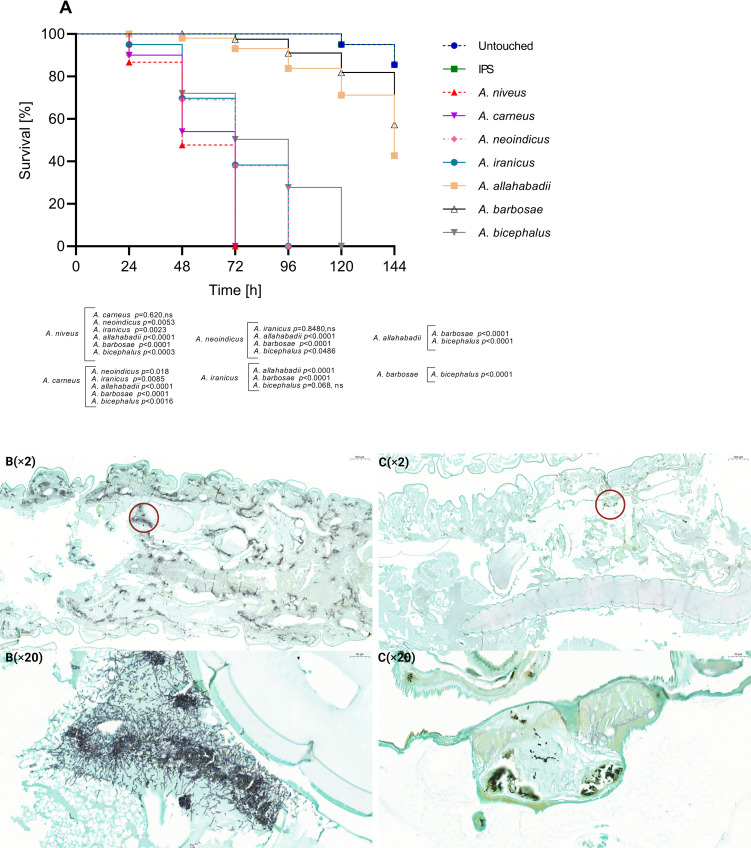 Figure 5
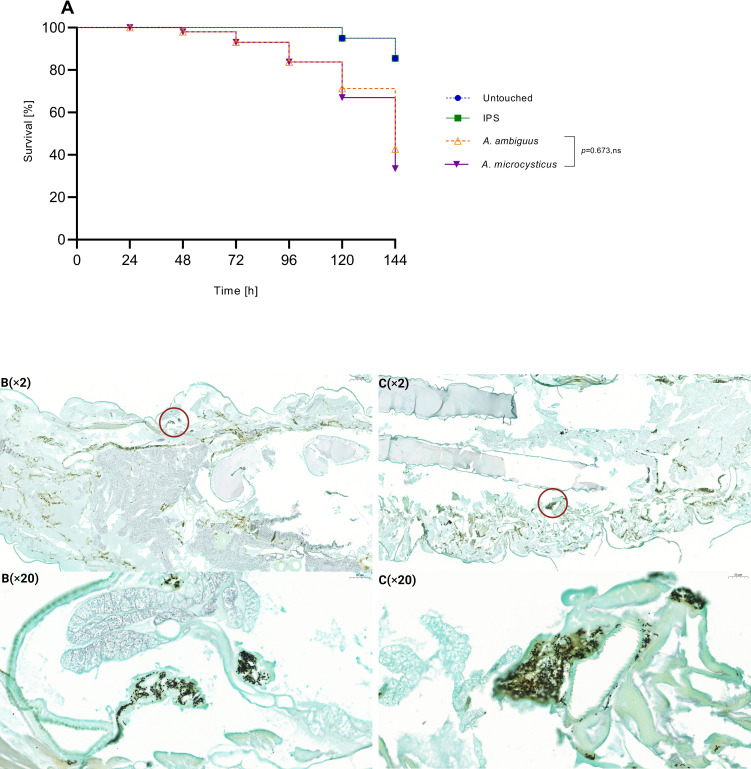 Figure 6
Peer Reviews
No public reviews on file for this paper yet. If you reviewed it on a platform where reviews are public (OpenReview, ICLR, NeurIPS, ICML), you can paste yours below so the community can read it here.
Videos
No videos yet. Explain this paper in a talk, walkthrough, or lecture? Add one.
Taxonomy
TopicsAntifungal resistance and susceptibility · Entomopathogenic Microorganisms in Pest Control · Helminth infection and control