Real-World Safety and Efficacy of 156 U – 195 U OnabotulinumtoxinA in Adults With Chronic Migraine: Results From the REPOSE Study
Fayyaz Ahmed, Charly Gaul, Katja Kollewe, Ritu C. Singh, Katherine Sommer

TL;DR
This study confirms that onabotulinumtoxinA doses between 155 U and 195 U are safe and effective for treating chronic migraine in real-world settings.
Contribution
The study provides real-world evidence supporting the safety and efficacy of higher onabotulinumtoxinA doses for chronic migraine.
Findings
Both 155 U and 156 U–195 U doses reduced headache-day frequency significantly.
Quality of life improved for both dose groups over the 24-month study period.
The higher dose range was well-tolerated with no new safety concerns identified.
Abstract
The phase 3 PREEMPT clinical trials confirmed the efficacy and safety of 155 U – 195 U onabotulinumtoxinA for individuals with chronic migraine (CM) and is the licensed dose in Canada and Europe. This analysis aimed to analyze the efficacy and safety parameters of 155 U – 195 U onabotulinumtoxinA in participants with CM from the real-world REPOSE study. REPOSE (NCT01686581) was a 2-year, prospective, observational, noninterventional, open-label study that described the real-world use of onabotulinumtoxinA in adults with CM in Europe. Participants received onabotulinumtoxinA approximately every 12 weeks and were monitored for 24 months after starting treatment. Data on participant-estimated mean headache-day frequency in the last month (MHD), Migraine-Specific Quality of Life Questionnaire (MSQ) scores, and adverse events (AEs) were collected at each treatment visit. Participants in the…
Genes, proteins, chemicals, diseases, species, mutations and cell lines named across the full text — each resolved to its canonical identifier and authoritative record.
Click any figure to enlarge with its caption.
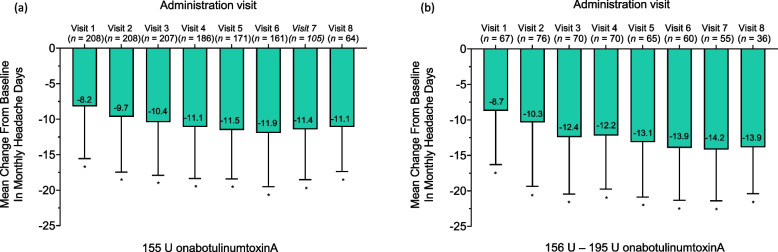 Figure 1
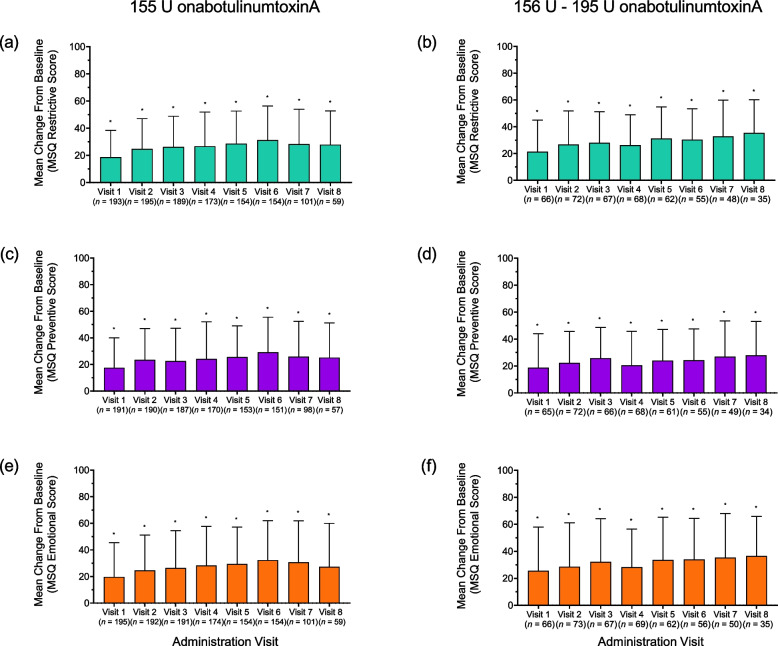 Figure 2
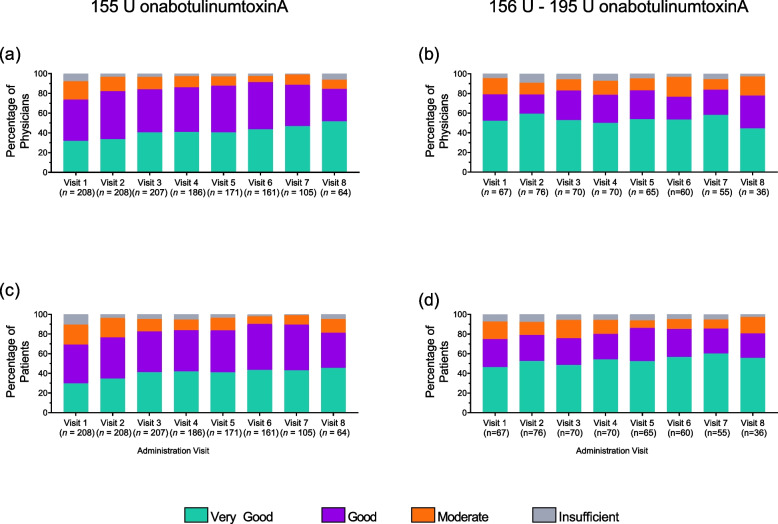 Figure 3
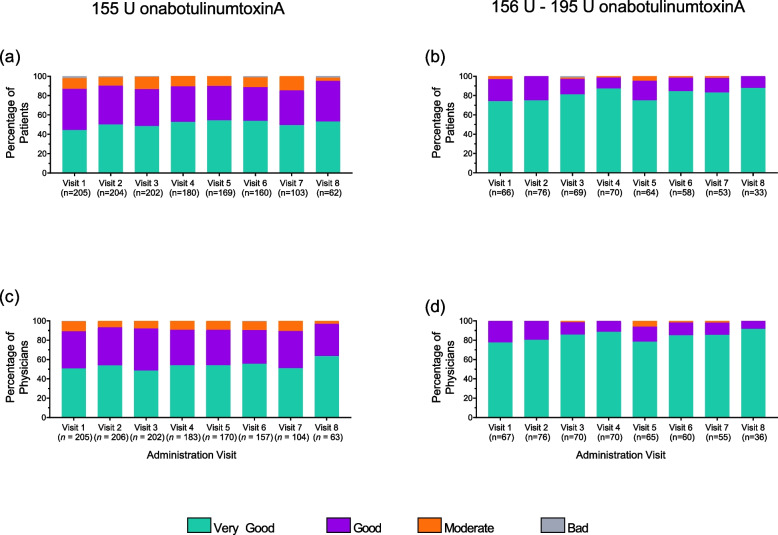 Figure 4
Peer Reviews
No public reviews on file for this paper yet. If you reviewed it on a platform where reviews are public (OpenReview, ICLR, NeurIPS, ICML), you can paste yours below so the community can read it here.
Videos
No videos yet. Explain this paper in a talk, walkthrough, or lecture? Add one.
Taxonomy
TopicsMigraine and Headache Studies · Trigeminal Neuralgia and Treatments · Cardiovascular Syncope and Autonomic Disorders