A novel model for accurate and fast prediction of cancer incidence
Mahmoud Hamed, Berlanty A. Zayed, Fotouh R. Mansour

TL;DR
This paper introduces a new model using Google Trends data to accurately predict cancer incidence rates in the U.S. and globally.
Contribution
The novel approach combines cancer incidence data with yearly changes in Google Trends search volume for improved predictions.
Findings
The model achieved less than 6% error in predicting cancer rates across most U.S. states.
Similar accuracy was observed when predicting cancer incidence in 54 countries.
The model successfully provided short-term predictions from 2017 to 2023.
Abstract
Predicting cancer incidence has long been a challenge for clinicians and researchers. Accurate predictions are essential for health planning to ensure adequate resources for diagnosis, treatment, and rehabilitation. Current prediction methods rely on historical data, assuming persistent patterns of cancer incidence. In this study, the Google Trends tool was used to obtain the relative search volume index (RSVI) for the topic “cancer” each year from 2017 to 2023 in the United States and worldwide. The proposed model incorporated actual cancer incidence rates and yearly changes in RSVI. The model was applied to predict the rates of new cancer cases in fifty American states over four consecutive years (2017, 2018, 2019, 2020). The selection of years was restricted with data availability. In most states, the percentage error did not exceed 6%. The high degree of similarity between the…
Genes, proteins, chemicals, diseases, species, mutations and cell lines named across the full text — each resolved to its canonical identifier and authoritative record.
Click any figure to enlarge with its caption.
 Figure 1
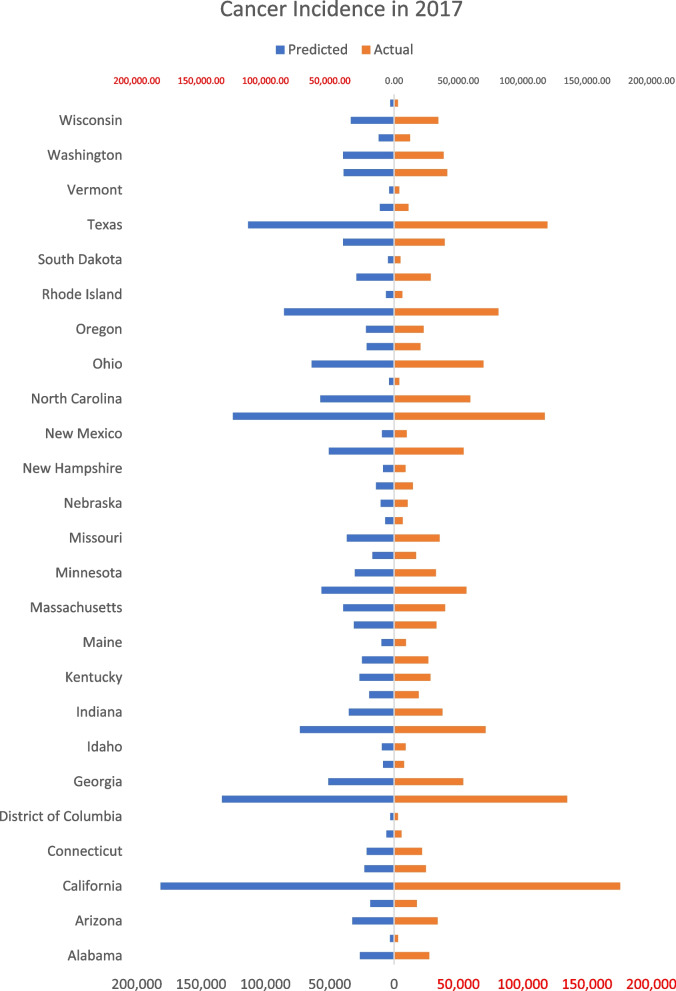 Figure 2
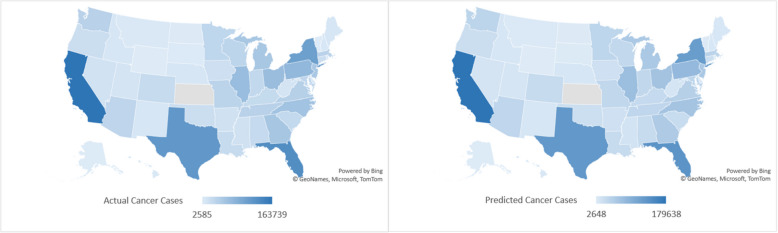 Figure 3
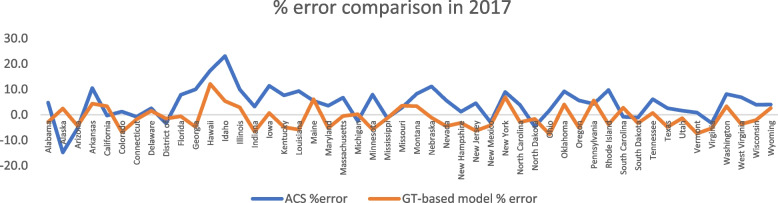 Figure 4
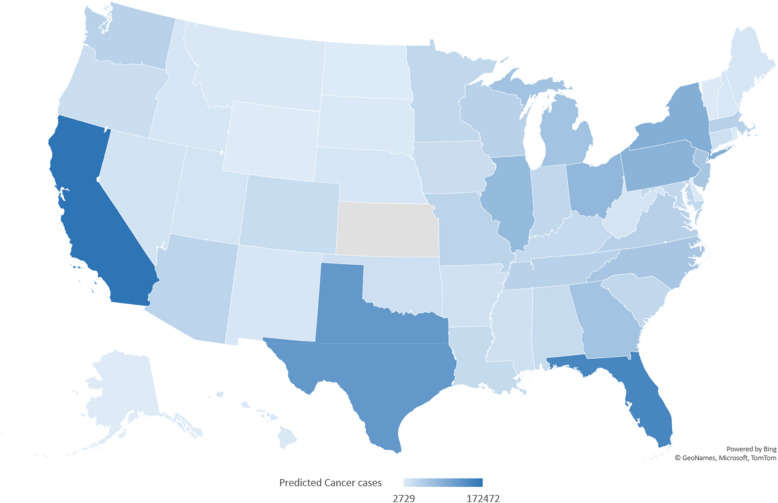 Figure 5
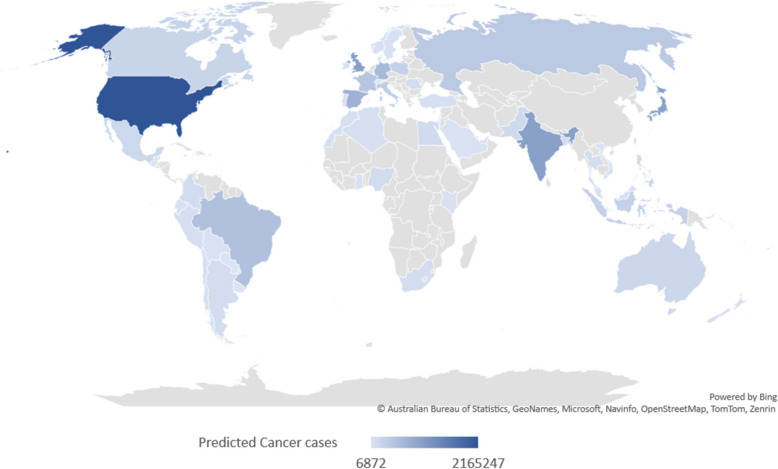 Figure 6
Peer Reviews
No public reviews on file for this paper yet. If you reviewed it on a platform where reviews are public (OpenReview, ICLR, NeurIPS, ICML), you can paste yours below so the community can read it here.
Videos
No videos yet. Explain this paper in a talk, walkthrough, or lecture? Add one.
Taxonomy
TopicsData-Driven Disease Surveillance · Colorectal Cancer Screening and Detection · Nutritional Studies and Diet