The index of severity for eosinophilic esophagitis reflects treatment response in children and associates with outcome variables
Carolina Gutiérrez-Junquera, Alejandro García-Díaz, Sonia Fernández-Fernández, Guadalupe Tena-García, Angela Marazuela, Elisabet Díez-Vela, Maria Luz Cilleruelo, Enriqueta Román

TL;DR
A severity index for eosinophilic esophagitis in children shows treatment response and predicts the need for multiple therapies.
Contribution
The I-SEE index is validated as a sensitive tool for tracking treatment response and predicting treatment complexity in pediatric EoE.
Findings
I-SEE scores significantly decreased after treatment, especially in children with histologic response.
Higher baseline I-SEE scores correlate with the need for multiple or combined therapies.
53% of children had inactive disease at last endoscopy, indicating effective treatment over time.
Abstract
We aimed to categorize the severity of eosinophilic esophagitis using the recently developed Index of Severity of Eosinophilic Esophagitis (I-SEE), to assess the longitudinal response to treatment, and to correlate baseline severity with outcome variables. A retrospective analysis of a prospectively enrolled cohort of children at two centers was performed. I-SEE was calculated at diagnosis, at the second endoscopy after initial treatment, and at the last endoscopy over a mean of 35 months. We analyzed clinical, endoscopic, and histologic characteristics at baseline by disease severity, examined the change in severity at the second and last endoscopy, and evaluated the association of baseline disease severity with treatment variables. Of 95 children meeting inclusion criteria, 35%, 63%, and 2% had mild, moderate, and severe I-SEE scores, respectively, at baseline. Between baseline and…
Genes, proteins, chemicals, diseases, species, mutations and cell lines named across the full text — each resolved to its canonical identifier and authoritative record.
Click any figure to enlarge with its caption.
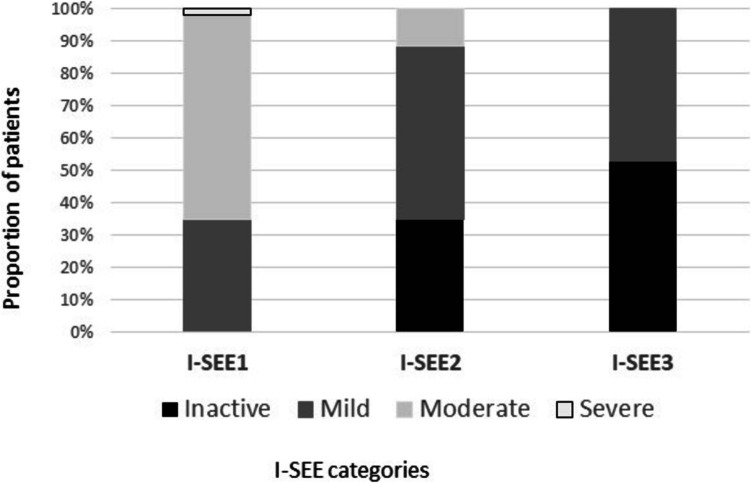 Figure 1
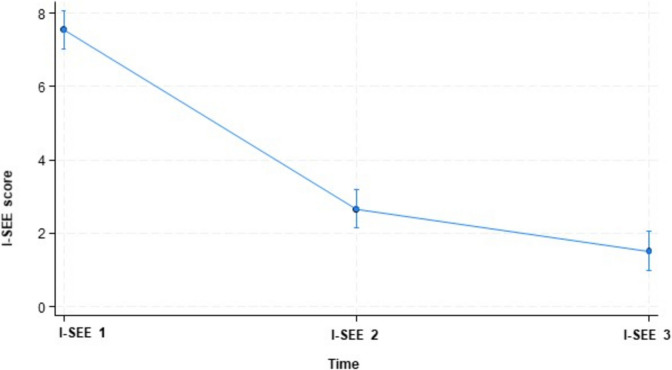 Figure 2
Peer Reviews
No public reviews on file for this paper yet. If you reviewed it on a platform where reviews are public (OpenReview, ICLR, NeurIPS, ICML), you can paste yours below so the community can read it here.
Videos
No videos yet. Explain this paper in a talk, walkthrough, or lecture? Add one.
Taxonomy
TopicsEosinophilic Esophagitis · Eosinophilic Disorders and Syndromes