Generation of high-resolution MPRAGE-like images from 3D head MRI localizer (AutoAlign Head) images using a deep learning-based model
Hiroshi Tagawa, Yasutaka Fushimi, Koji Fujimoto, Satoshi Nakajima, Sachi Okuchi, Akihiko Sakata, Sayo Otani, Krishna Pandu Wicaksono, Yang Wang, Satoshi Ikeda, Shuichi Ito, Masaki Umehana, Akihiro Shimotake, Akira Kuzuya, Yuji Nakamoto

TL;DR
This study uses deep learning to convert MRI localizer images into high-quality MPRAGE-like images, which could help in diagnosing dementia and neurodegenerative diseases.
Contribution
A novel deep learning model is proposed to generate high-resolution MPRAGE-like images from 3D MRI localizers for improved diagnostic evaluation.
Findings
The model achieved high image quality metrics: PSNR 35.4, SSIM 0.871, and LPIPS 0.045 on the test dataset.
Dice scores for major brain structures ranged from 0.788 to 0.926, indicating good structural similarity.
Visual scores showed strong agreement (kappa 0.80–0.88) for medial temporal lobe atrophy assessment.
Abstract
Magnetization prepared rapid gradient echo (MPRAGE) is a useful three-dimensional (3D) T1-weighted sequence, but is not a priority in routine brain examinations. We hypothesized that converting 3D MRI localizer (AutoAlign Head) images to MPRAGE-like images with deep learning (DL) would be beneficial for diagnosing and researching dementia and neurodegenerative diseases. We aimed to establish and evaluate a DL-based model for generating MPRAGE-like images from MRI localizers. Brain MRI examinations including MPRAGE taken at a single institution for investigation of mild cognitive impairment, dementia and epilepsy between January 2020 and December 2022 were included retrospectively. Images taken in 2020 or 2021 were assigned to training and validation datasets, and images from 2022 were used for the test dataset. Using the training and validation set, we determined one model using visual…
Genes, proteins, chemicals, diseases, species, mutations and cell lines named across the full text — each resolved to its canonical identifier and authoritative record.
Click any figure to enlarge with its caption.
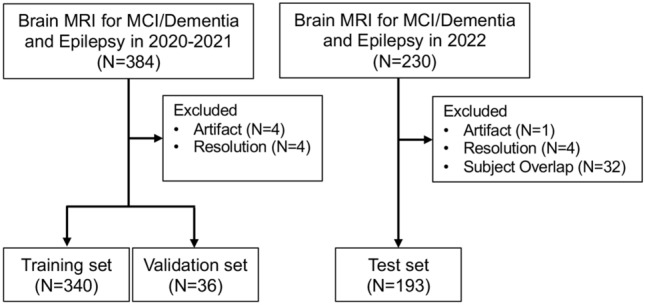 Figure 1
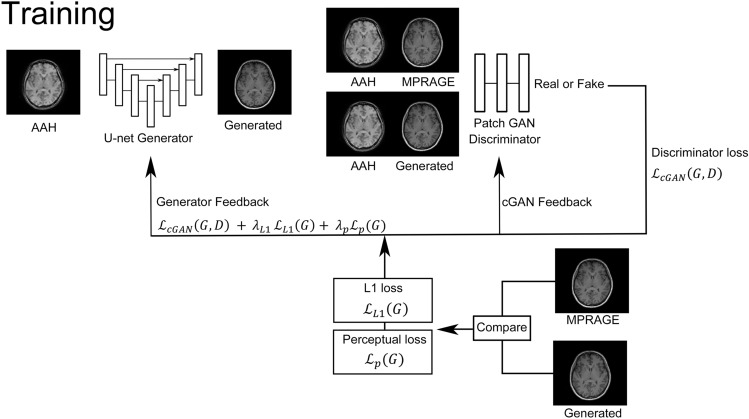 Figure 2
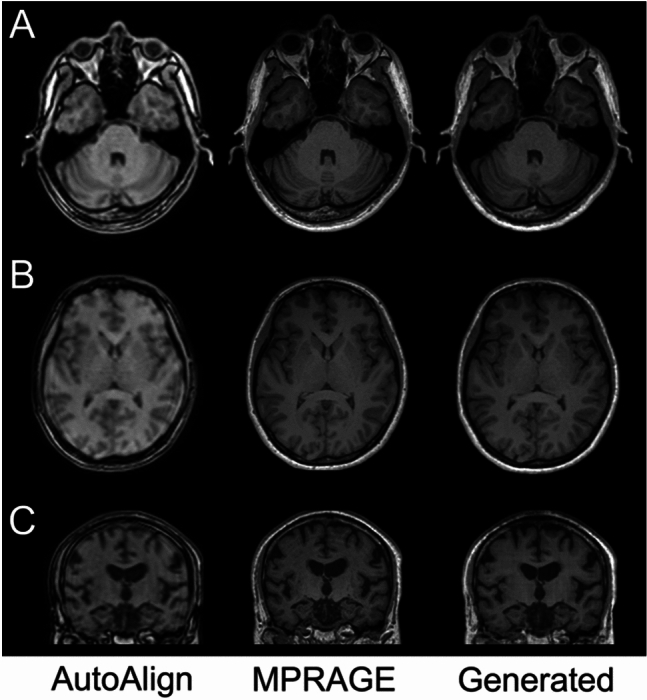 Figure 3
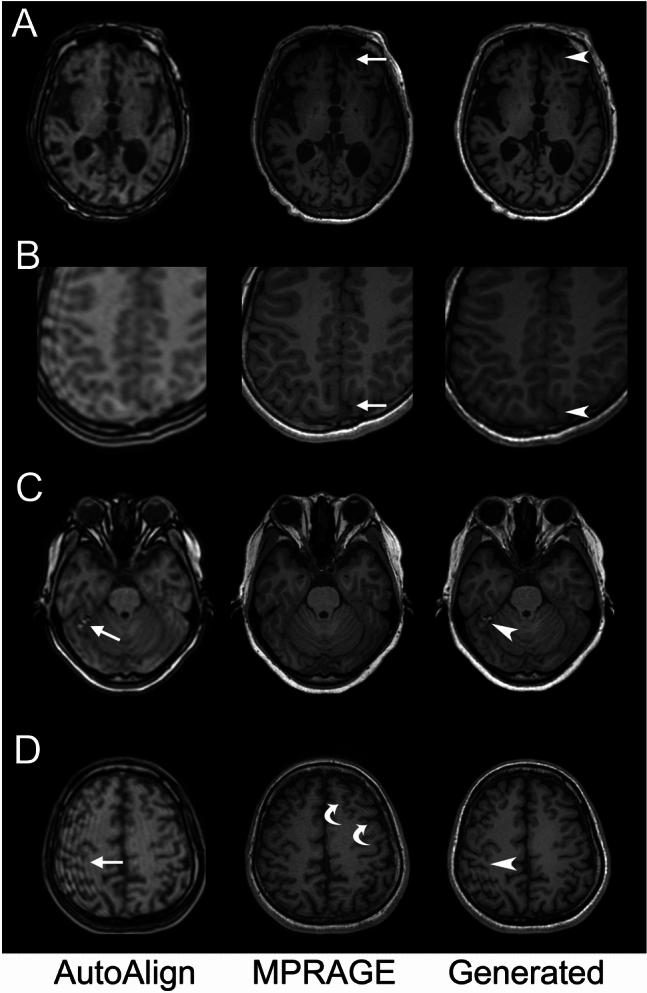 Figure 4
Peer Reviews
No public reviews on file for this paper yet. If you reviewed it on a platform where reviews are public (OpenReview, ICLR, NeurIPS, ICML), you can paste yours below so the community can read it here.
Videos
No videos yet. Explain this paper in a talk, walkthrough, or lecture? Add one.
Taxonomy
TopicsAdvanced MRI Techniques and Applications · Advanced Neuroimaging Techniques and Applications · Radiomics and Machine Learning in Medical Imaging