GluN2B influences the progression of status epilepticus by modulating calcium ion homeostasis through its interaction with CaMKIIα
Lin Zhang, Youshi Meng, Chaoning Liu, Lei Wei, Yuling Lu, Shouhuan Zheng, Donghua Zou, Yuan Wu

TL;DR
This study shows that GluN2B and CaMKIIα interact to disrupt calcium balance in the brain during seizures, potentially offering new targets for treating status epilepticus.
Contribution
The novel contribution is identifying how GluN2B binding to CaMKIIα disrupts calcium homeostasis, influencing the progression of status epilepticus.
Findings
GluN2B binding to CaMKIIα reduces phosphorylation at T286, affecting calcium homeostasis.
Inhibiting GluN2B with ifenprodil counteracts calcium influx and modulates p-CaMKIIα expression.
The interaction between GluN2B and CaMKIIα disrupts the excitation-inhibition balance in the central nervous system.
Abstract
Status epilepticus (SE) is a neurological emergency characterized by prolonged, unresolved epileptic seizures, often resulting in adverse outcomes. Conventional pharmaceuticals are not universally effective in terminating epileptic seizures; therefore, identifying novel targets for seizure cessation and the prevention of SE is crucial. This study aimed to assess the expression levels and interactions of the N-methyl-D-aspartate receptor (NMDAR) subunit GluN2B and CaMKIIα following epileptic convulsions and to explore their potential mechanisms of action. This study utilized Western blotting to evaluate the protein expression levels of CaMKIIα, p-CaMKIIα, and GluN2B in the hippocampus of mice subjected to kainic acid-induced SE. Immunofluorescence colocalization analysis and co-immunoprecipitation were utilized to investigate the interaction between GluN2B and CaMKIIα in the…
Genes, proteins, chemicals, diseases, species, mutations and cell lines named across the full text — each resolved to its canonical identifier and authoritative record.
Click any figure to enlarge with its caption.
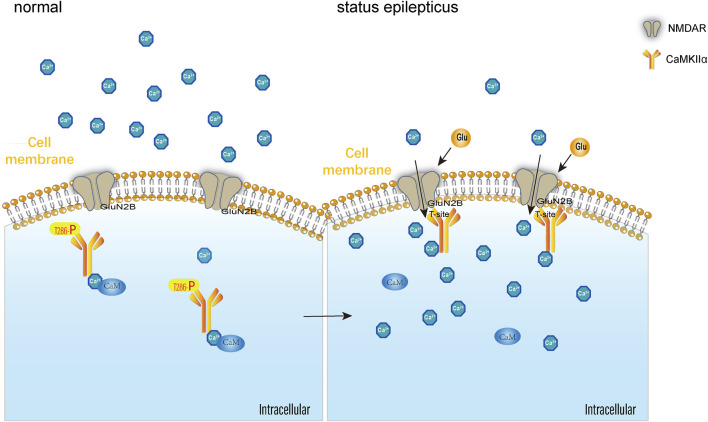 Figure 1
 Figure 2
 Figure 3
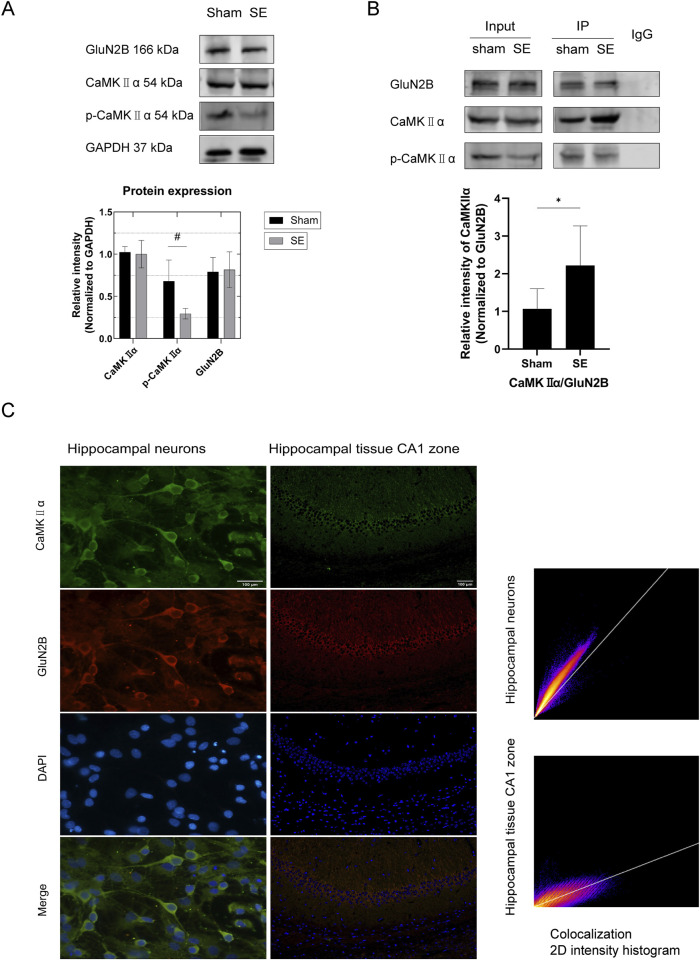 Figure 4
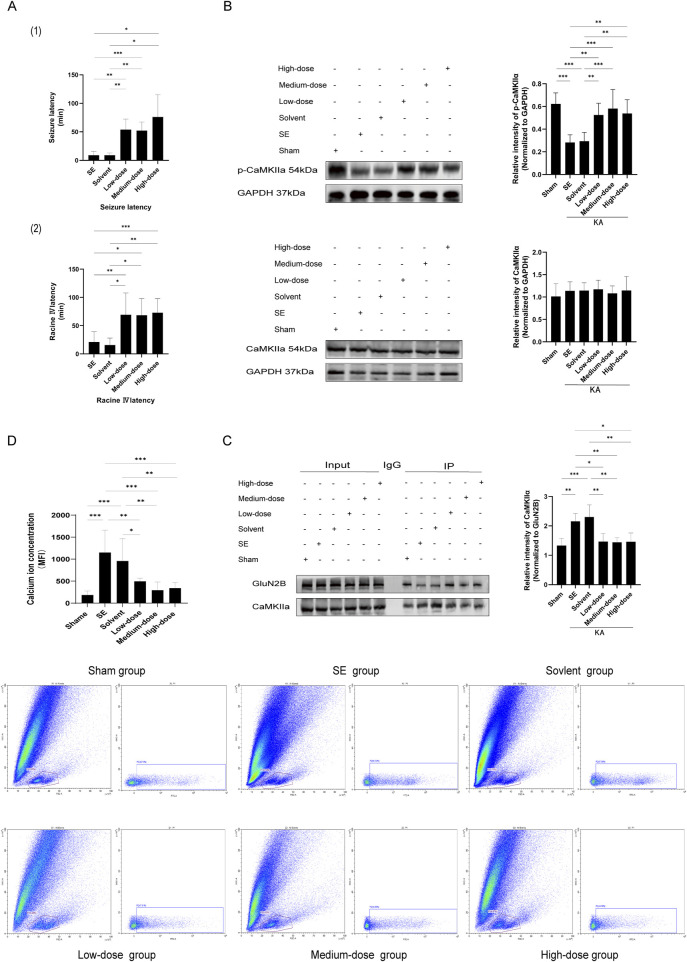 Figure 5
Peer Reviews
No public reviews on file for this paper yet. If you reviewed it on a platform where reviews are public (OpenReview, ICLR, NeurIPS, ICML), you can paste yours below so the community can read it here.
Videos
No videos yet. Explain this paper in a talk, walkthrough, or lecture? Add one.
Taxonomy
TopicsNeuroscience and Neuropharmacology Research · Epilepsy research and treatment · Genetics and Neurodevelopmental Disorders