Torsional resistance of additively, subtractively, and conventionally manufactured occlusal devices
Tina Maleki, Andrea Coldea, John Meinen, Marcel Reymus, Daniel Edelhoff, Bogna Stawarczyk

TL;DR
This study compares the torsional strength of different manufacturing methods for dental devices before and after aging.
Contribution
It evaluates how aging affects the torsional resistance of additively, subtractively, and conventionally manufactured occlusal devices.
Findings
Additively manufactured materials showed lower torsional resistance compared to subtractively and conventionally manufactured ones.
Thermal cycling reduced torsional resistance in all materials, with additively manufactured ones showing the most significant decline.
Material choice should consider clinical requirements due to varying torsional behavior after aging.
Abstract
To investigate the torque load (TL) and angular rotation (AR) of additively, subtractively and conventionally manufactured occlusal devices. Specimens (N = 120) were fabricated from four additive manufacturing resins (GR-10 guide, ProArt Print Splint clear, V-Print Splint, V-Print Splint comfort), five subtractively (BioniCut, EldyPlus, ProArt CAD Splint clear, Temp Premium Flexible, Thermeo) and one conventionally manufactured (Pro Base Cold) materials. The TL and AR were tested initially (24 h, 37 °C, H2O) as well as after thermal cycling (5,000 thermal cycles, 5/55°C). Data were analyzed using Kolmogorov–Smirnov, one-way ANOVA, Scheffé post-hoc, t-test, chi-square and Ciba-Geigy table (p < 0.05). Initially, the mean TL values ranged from 63.7 to 104 Ncm for additively, 39.2 to 265 Ncm for subtractively, and 204 Ncm for conventionally manufactured materials. The initial mean AR…
Genes, proteins, chemicals, diseases, species, mutations and cell lines named across the full text — each resolved to its canonical identifier and authoritative record.
Click any figure to enlarge with its caption.
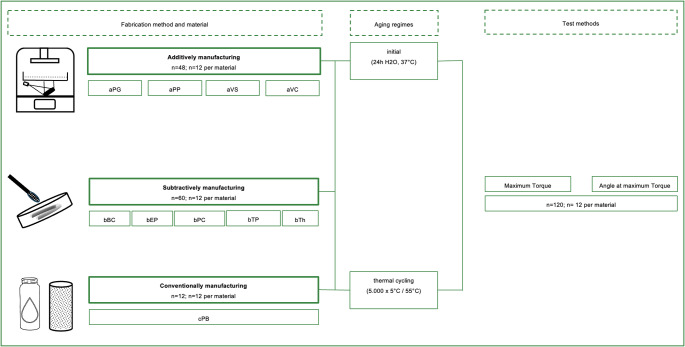 Figure 1
 Figure 2
 Figure 3
 Figure 4
 Figure 5
 Figure 6
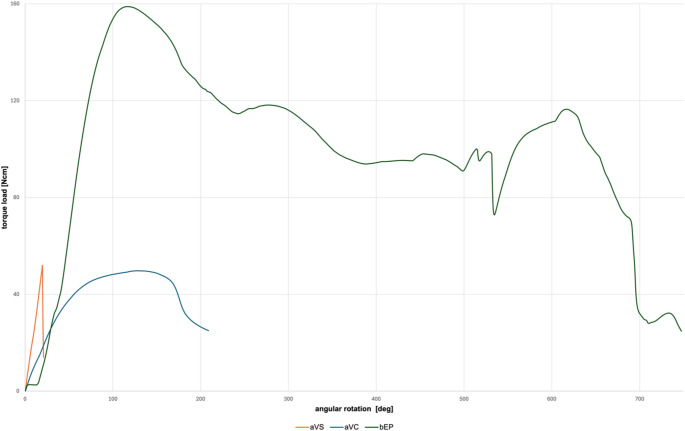 Figure 7
Peer Reviews
No public reviews on file for this paper yet. If you reviewed it on a platform where reviews are public (OpenReview, ICLR, NeurIPS, ICML), you can paste yours below so the community can read it here.
Videos
No videos yet. Explain this paper in a talk, walkthrough, or lecture? Add one.
Taxonomy
TopicsTemporomandibular Joint Disorders · Dental materials and restorations · Facial Nerve Paralysis Treatment and Research