Neighborhood disorder and depressive symptoms in Jamaican adults: the mediating roles of neighborhood crime and safety problems and collective efficacy
C. Cunningham-Myrie, T. Moore, J. Wiggan, N. Younger-Coleman, S. McFarlane, G. Gordon-Strachan, D. Francis, N. Bennett, I. Govia, M. Tulloch-Reid, T. S. Ferguson, W. Aiken, A. Grant, T. Davidson, K. Webster-Kerr, R. Wilks, K. P. Theall

TL;DR
High neighborhood disorder in Jamaica is linked to more depressive symptoms, partly due to crime, safety issues, and low community trust.
Contribution
This study identifies mediation pathways of neighborhood disorder on depression in a Jamaican population.
Findings
High disorder neighborhoods had 1.55 times higher odds of depressive symptoms.
Crime and safety problems partially mediated the disorder-depression link.
Collective efficacy also mediated the relationship, both directly and serially.
Abstract
Neighborhood disorder has been found to be associated with worse mental health outcomes, such as depression. This study examined the association between perceived neighborhood disorder on depressive symptoms in a nationally representative sample of Jamaican adults, and whether any association was mediated by perception of neighbourhood crime and safety problems or collective efficacy (CE). Secondary analysis was conducted on the Jamaica Health and Lifestyle Survey (JHLS III). The JHLS III, a cross-sectional nationally representative survey, was administered to 2,807 individuals aged 15 years and older in Jamaica and completed in 2017. Regression analyses were performed to identify associations between perceived neighborhood disorder and depressive symptoms and mediation analyses to examine the roles of perceived neighborhood crime and safety problems and CE in the pathway between…
Genes, proteins, chemicals, diseases, species, mutations and cell lines named across the full text — each resolved to its canonical identifier and authoritative record.
Click any figure to enlarge with its caption.
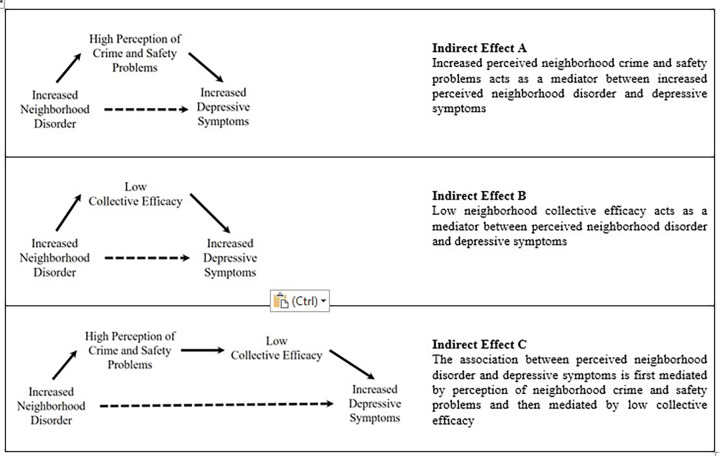 Figure 1
Peer Reviews
No public reviews on file for this paper yet. If you reviewed it on a platform where reviews are public (OpenReview, ICLR, NeurIPS, ICML), you can paste yours below so the community can read it here.
Videos
No videos yet. Explain this paper in a talk, walkthrough, or lecture? Add one.
Taxonomy
TopicsHealth disparities and outcomes · Urban, Neighborhood, and Segregation Studies · Caribbean history, culture, and politics