Conjunctival Rhinosporidosis Mimicking Papilloma in an Ethiopian Child: A Rare Case Report
Seblewengel Maru Wubalem, Social Beyecaha Diro

TL;DR
A rare case of conjunctival rhinosporidiosis in an Ethiopian child was mistaken for papilloma, highlighting the need for histopathology in diagnosis.
Contribution
This case report presents a rare occurrence of conjunctival rhinosporidiosis mimicking papilloma in a pediatric patient.
Findings
Conjunctival rhinosporidiosis can clinically mimic papilloma, leading to misdiagnosis.
Histopathology is essential for confirming rhinosporidiosis in atypical presentations.
Rhinosporidiosis should be considered in the differential diagnosis of conjunctival lesions in endemic regions.
Abstract
Rhinosporidiosis is a chronic granulomatous disease caused by Rhinosporidium seeberi, mainly affecting the nose and nasopharynx. We report a sporadic occurrence of conjunctival rhinosporidiosis that mimicked papilloma in a 10‐year‐old Ethiopian child. Rhinosporidiosis should be considered in the differential diagnosis of conjunctival lesions. Histopathology is necessary for a definitive diagnosis.
Genes, proteins, chemicals, diseases, species, mutations and cell lines named across the full text — each resolved to its canonical identifier and authoritative record.
Click any figure to enlarge with its caption.
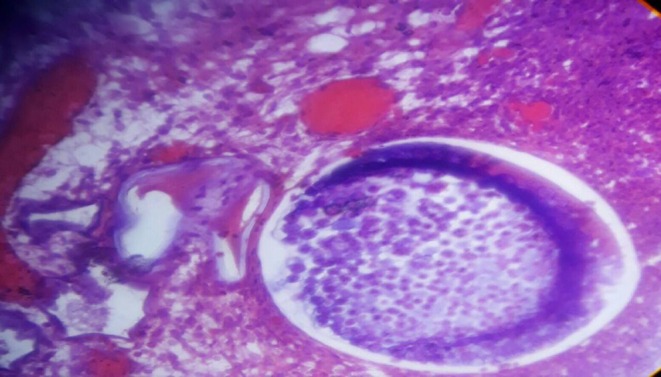 Figure 1
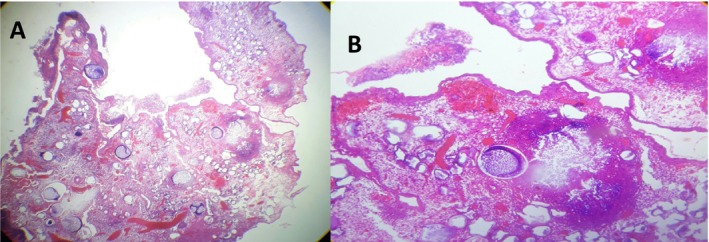 Figure 2
Peer Reviews
No public reviews on file for this paper yet. If you reviewed it on a platform where reviews are public (OpenReview, ICLR, NeurIPS, ICML), you can paste yours below so the community can read it here.
Videos
No videos yet. Explain this paper in a talk, walkthrough, or lecture? Add one.
Taxonomy
TopicsInfectious Diseases and Mycology · Actinomycetales infections and treatment · Mycobacterium research and diagnosis