Genomic Comparisons in an Austral–Pacific Sandalwood (Santalaceae) Complex Highlights Novel Clades, Divergent Groups, and the Conservation Dynamics of Critically Endangered and Non‐Threatened Lineages
Aaron Brunton, Tony Page, David J. Lee

TL;DR
This study uses genetic data to uncover hidden diversity and evolutionary relationships in sandalwood species across Australia and Papua New Guinea, guiding conservation efforts.
Contribution
The study reveals novel genetic groupings and hybridization patterns in sandalwood species, suggesting new conservation strategies.
Findings
S. macgregorii in PNG is split into two distinct genetic groups.
One PNG S. macgregorii group is closely related to Australian S. lanceolatum.
Genetic divergence aligns with geography and suggests historical land bridge influences.
Abstract
Understanding the genetic processes underlying divergence and connectivity among species is crucial for identifying evolutionary histories and informing conservation strategies. The Santalum genus exhibits distinct genetic variations across the complex geographic regions of Australia, Asia, and the Pacific Islands. This study leveraged genome‐wide SNP markers to explore the genetic relationships within critically endangered and non‐threatened species in an Austral‐Pacific sandalwood complex, including Santalum lanceolatum, S. leptocladum , and S. macgregorii. Our findings revealed significant geographic partitioning and genetic divergence mostly aligned with current taxonomic classifications. However, notably, we showed S. macgregorii populations in Papua New Guinea (PNG) were divided into two distinct genetic groups: one in the Central and Gulf provinces and another in the Western…
Genes, proteins, chemicals, diseases, species, mutations and cell lines named across the full text — each resolved to its canonical identifier and authoritative record.
Click any figure to enlarge with its caption.
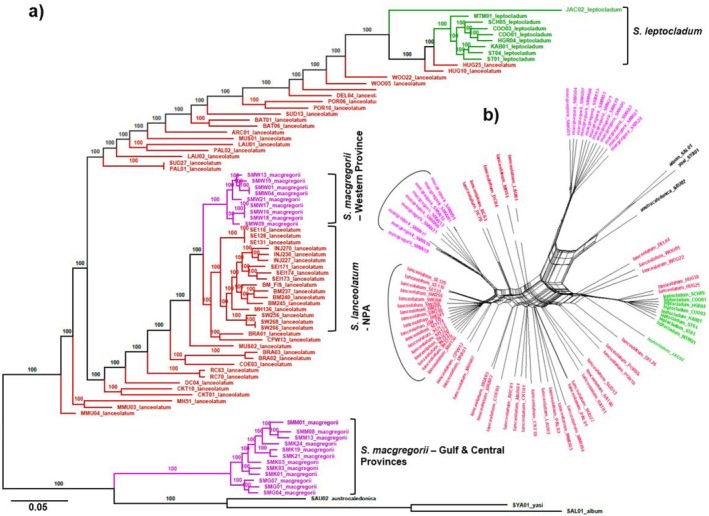 Figure 1
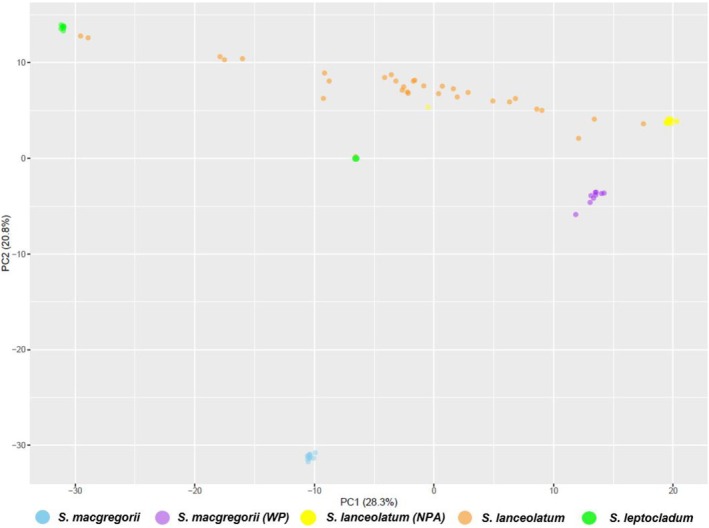 Figure 2
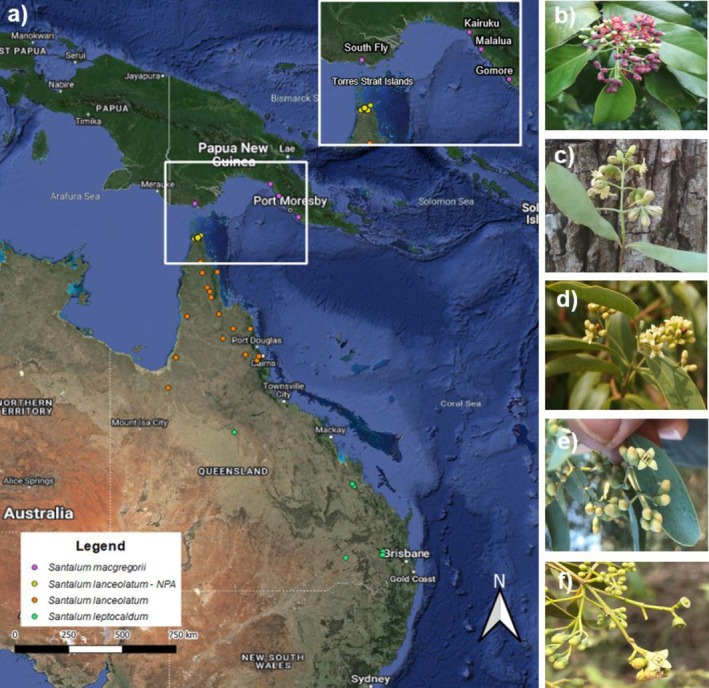 Figure 3
 Figure 4
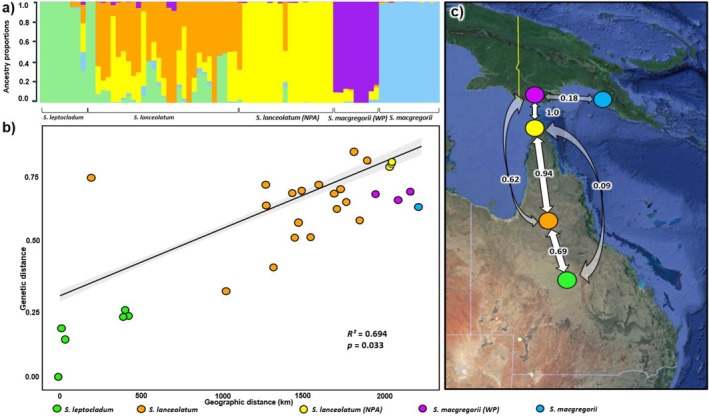 Figure 5
Peer Reviews
No public reviews on file for this paper yet. If you reviewed it on a platform where reviews are public (OpenReview, ICLR, NeurIPS, ICML), you can paste yours below so the community can read it here.
Videos
No videos yet. Explain this paper in a talk, walkthrough, or lecture? Add one.
Taxonomy
TopicsPlant and Fungal Interactions Research · Genetic diversity and population structure · Forest Insect Ecology and Management