Pogostemon cablin Acts as a Key Regulator of NF-κB Signaling and Has a Potent Therapeutic Effect on Intestinal Mucosal Inflammation
Yuqing Deng, Xin Liang, Long Zhao, Xin Zhou, Jianqin Liu, Zhi Li, Shanshan Chen, Guohui Xiao

TL;DR
Pogostemon cablin regulates the NF-κB pathway and may offer a new treatment for intestinal inflammation.
Contribution
This review highlights Pogostemon cablin's therapeutic potential in treating intestinal inflammation via NF-κB signaling regulation.
Findings
Pogostemon cablin regulates NF-κB signaling to reduce intestinal inflammation.
Pogostemon cablin has anti-inflammatory, antiapoptotic, and antioxidant effects.
Traditional treatments for colitis have limitations, making Pogostemon cablin a promising alternative.
Abstract
Persistent intestinal inflammation is a major contributor to various diseases, including digestive disorders, immune dysregulation, and cancer. The NF-κB signaling pathway is pivotal in the inflammatory response of intestinal cells, regulating the secretion of inflammatory factors, mediating signal transduction, and activating receptors. In colitis, NF-κB signaling and its effector molecules are excessively activated by various stimuli, leading to overexpression of inflammatory mediators and immune regulators. Colitis, an inflammation of the intestinal mucosa, underlies many intestinal diseases, with increasing incidence. Traditional treatments such as glucocorticoids and nonsteroidal antiinflammatory drugs have significant limitations and side effects. Pogostemon cablin, a traditional Chinese medicine and food, is widely used in food, spices, and pharmaceuticals. Studies have…
Genes, proteins, chemicals, diseases, species, mutations and cell lines named across the full text — each resolved to its canonical identifier and authoritative record.
Click any figure to enlarge with its caption.
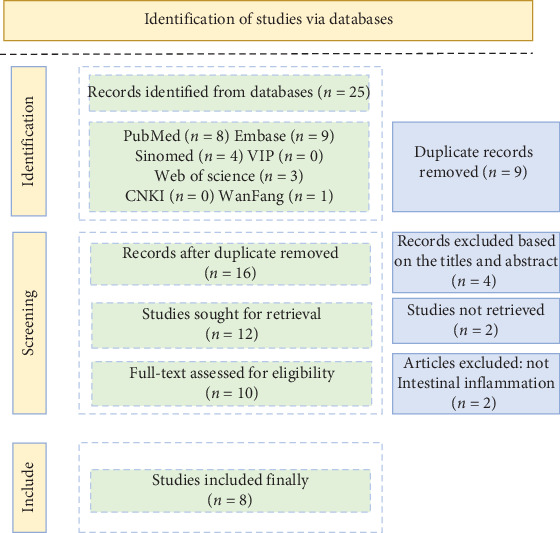 Figure 1
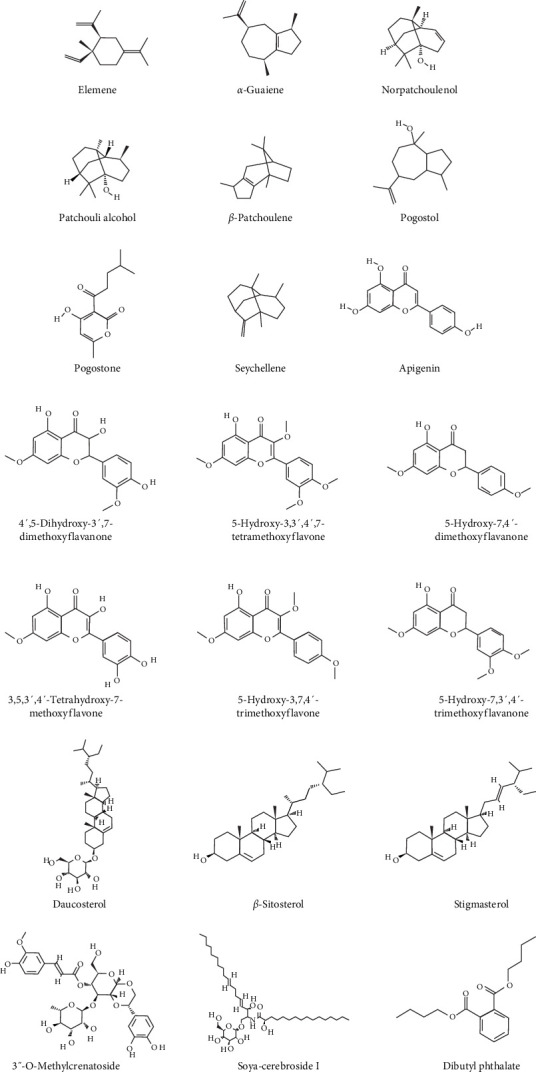 Figure 2
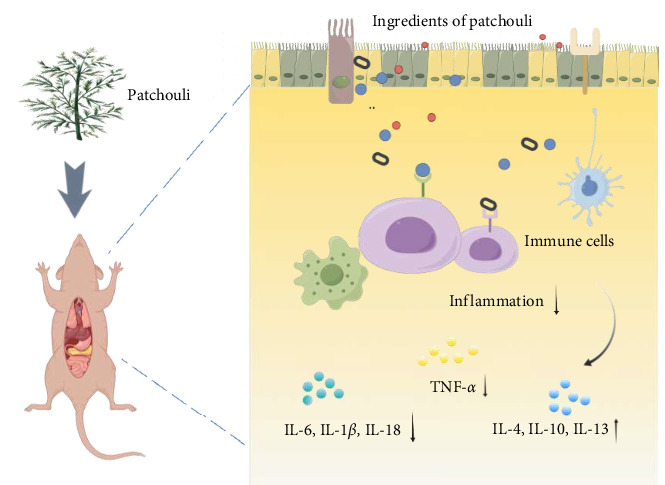 Figure 3
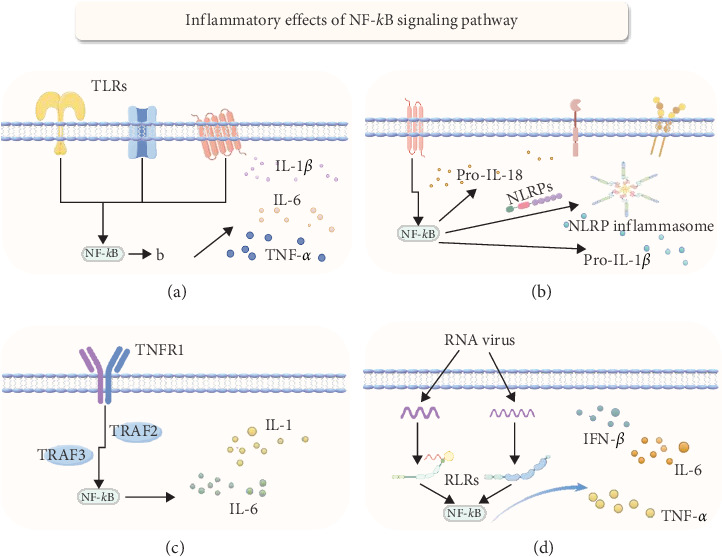 Figure 4
Peer Reviews
No public reviews on file for this paper yet. If you reviewed it on a platform where reviews are public (OpenReview, ICLR, NeurIPS, ICML), you can paste yours below so the community can read it here.
Videos
No videos yet. Explain this paper in a talk, walkthrough, or lecture? Add one.
Taxonomy
TopicsToxin Mechanisms and Immunotoxins · Phytochemistry and biological activity of medicinal plants · Ginger and Zingiberaceae research