Trends and Practices on Blood Flow Restriction Training Are Not Largely Aligned With the Contemporary Evidence
Vasileios Korakakis, Alexandra Korakaki, Themida Korakaki, Stefanos Karanasios, Roula Kotsifaki

TL;DR
Physiotherapists use blood flow restriction training in ways that often don't match current scientific evidence.
Contribution
This study reveals a mismatch between physiotherapists' BFRT practices and current scientific guidelines.
Findings
Physiotherapists show confidence in BFRT but use varied methods not aligned with evidence.
Most BFRT is used for musculoskeletal conditions to improve strength and muscle volume.
Training practices vary widely in pressure calculation, reperfusion schemes, and exercise numbers.
Abstract
Objective: To evaluate trends and current clinical practice of physiotherapists on blood flow restriction training (BFRT) application. Methods: An online survey was conducted to assess: a) demographics and professional characteristics, b) specifics of BFRT application, and c) safety and adverse events. We tested using Pearson’s Chi-square test whether the physiotherapist's characteristics were independent of their years of experience and formal BFR education. Results: Most respondents reported having much confidence (n=47, 44.6%) in using BFRT, and they used it for a mean of 2.6±1.7 years. Significant variability among respondents was found in devices used, limb occlusion pressure calculation methods, the reperfusion scheme, the number of exercises implemented, and the percentage of complete occlusion pressure used for exercising. Most used BFRT in musculoskeletal conditions of the…
Genes, proteins, chemicals, diseases, species, mutations and cell lines named across the full text — each resolved to its canonical identifier and authoritative record.
Click any figure to enlarge with its caption.
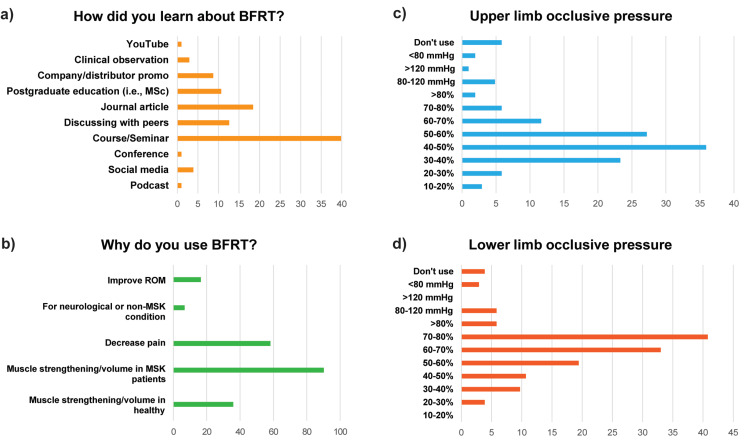 Figure 1
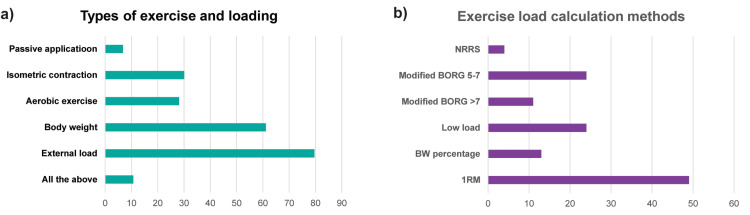 Figure 2
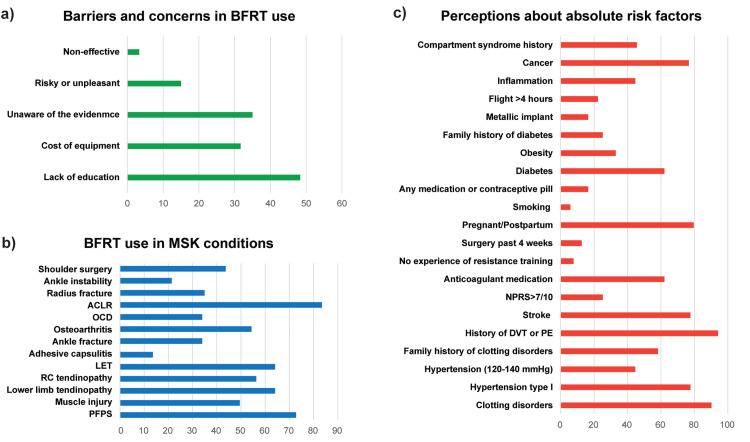 Figure 3
Peer Reviews
No public reviews on file for this paper yet. If you reviewed it on a platform where reviews are public (OpenReview, ICLR, NeurIPS, ICML), you can paste yours below so the community can read it here.
Videos
No videos yet. Explain this paper in a talk, walkthrough, or lecture? Add one.
Taxonomy
TopicsCardiac, Anesthesia and Surgical Outcomes · Hemodynamic Monitoring and Therapy · Cardiac Arrest and Resuscitation