New class of symmetric starlike functions subordinate to the generating function of Gregory coefficients
Mohammad Faisal Khan, Mohammed Abaoud, Naeem Ahmad, Muqrin A. Almuqrin, Mohamed Riahi, Mohamed Riahi, Mohamed Riahi

TL;DR
This paper introduces a new class of symmetric starlike functions and derives sharp coefficient bounds using subordination and generating functions of Gregory coefficients.
Contribution
The novelty lies in defining a new family of symmetric starlike functions and providing sharp coefficient bounds using the generating function of Gregory coefficients.
Findings
Sharp bounds for the first five coefficients of symmetric starlike functions are established.
The Fekete-Szego problem and the Hankel determinant of order three are solved for the defined function class.
Optimal bounds for logarithmic and inverse functions within the class are derived.
Abstract
Function theory research has long struggled with the challenge of deriving sharp estimates for the coefficients of analytic and univalent functions. Researchers have advanced the field by developing and applying a variety of approaches to get these bounds. In the current paper, we apply the technique of subordination, we define the family of symmetric starlike functions which is related to generating function of Gregory coefficients. We provide sharp bounds for the problem concerning the coefficients of the family of symmetric starlike functions connected to the generating function of Gregory coefficients by utilizing the notion of functions with positive real component. These problems include first five sharp coefficient bounds and Fekete-Szego problem along with the Hankel determinant of order three. Additionally, we explore the optimal bounds (sharp bounds) for two important…
Genes, proteins, chemicals, diseases, species, mutations and cell lines named across the full text — each resolved to its canonical identifier and authoritative record.
Click any figure to enlarge with its caption.
 Figure 1
 Figure 2
 Figure 3
 Figure 4
 Figure 5
 Figure 6
 Figure 7
 Figure 8
 Figure 9
 Figure 10
 Figure 11
 Figure 12
 Figure 13
 Figure 14
 Figure 15
 Figure 16
 Figure 17
 Figure 18
 Figure 19
 Figure 20
 Figure 21
 Figure 22
 Figure 23
 Figure 24
 Figure 25
 Figure 26
 Figure 27
 Figure 28
 Figure 29
 Figure 30
 Figure 31
 Figure 32
 Figure 33
 Figure 34
 Figure 35
 Figure 36
 Figure 37
 Figure 38
 Figure 39
 Figure 40
 Figure 41
 Figure 42
 Figure 43
 Figure 44
 Figure 45
 Figure 46
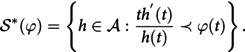 Figure 47
 Figure 48
 Figure 49
 Figure 50
Peer Reviews
No public reviews on file for this paper yet. If you reviewed it on a platform where reviews are public (OpenReview, ICLR, NeurIPS, ICML), you can paste yours below so the community can read it here.
Videos
No videos yet. Explain this paper in a talk, walkthrough, or lecture? Add one.
Taxonomy
TopicsAnalytic and geometric function theory · Holomorphic and Operator Theory