High frequency of the PIK3CA H1047L mutation in Indonesian breast cancer across molecular subtypes
Yan Wisnu Prajoko, Didik Setyo Heriyanto, Bayu Tirta Dirja, Susanto Susanto, Vincent Lau, Andrew Nobiantoro Gunawan, Brigitta Natasya Halim, Nur Dina Amalina

TL;DR
This study finds a high frequency of a specific PIK3CA mutation in Indonesian breast cancer patients across different molecular subtypes.
Contribution
The study reports a high frequency of the PIK3CA H1047L mutation in Indonesian breast cancer and its association with molecular subtypes and age groups.
Findings
The PIK3CA mutation frequency was 32.9% in Indonesian breast cancer samples.
Luminal B HER2-negative and luminal A subtypes showed the highest mutation rates.
Exon 9 mutations were more common in younger patients, while exon 20 mutations were more common in older patients.
Abstract
Breast cancer (BC) is a global health concern with significant mortality rates, necessitating a deep understanding of its molecular landscape. Luminal A and B BC, characterized by estrogen receptor (ER) and/or progesterone receptor (PR) positivity, face challenges in endocrine therapy due to acquired resistance, frequently driven by PI3K/AKT/mTOR pathway activation. This study focuses on the frequency of PIK3CA mutations across molecular subtypes BC within the Indonesian population. The study analyzed collected samples from diverse Indonesian regions, representing various islands. Histopathological analysis and immunohistochemistry classified samples into molecular subtypes. Genetic analysis using PIK3CA mutation detection kits revealed a mutation frequency of 32.9%, with 30 (14.5%) samples located in exon 9 and 38 (18.4%) samples in exon 20. Statistical analyses highlighted…
Genes, proteins, chemicals, diseases, species, mutations and cell lines named across the full text — each resolved to its canonical identifier and authoritative record.
Click any figure to enlarge with its caption.
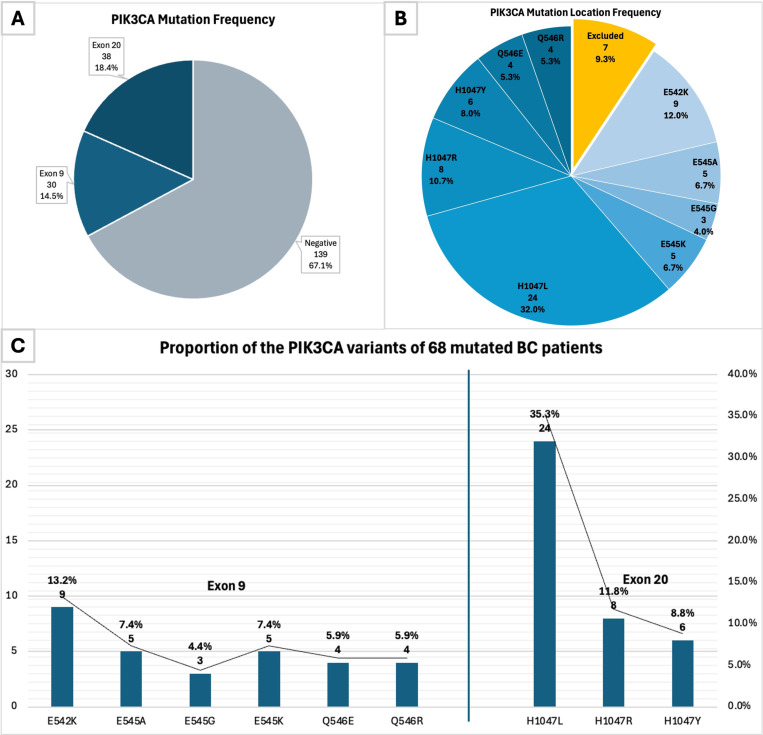 Figure 1
 Figure 2
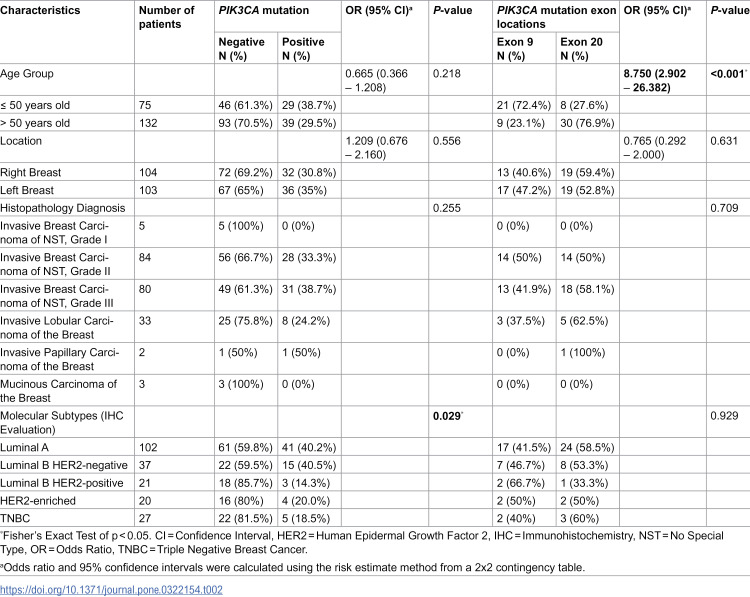 Figure 3
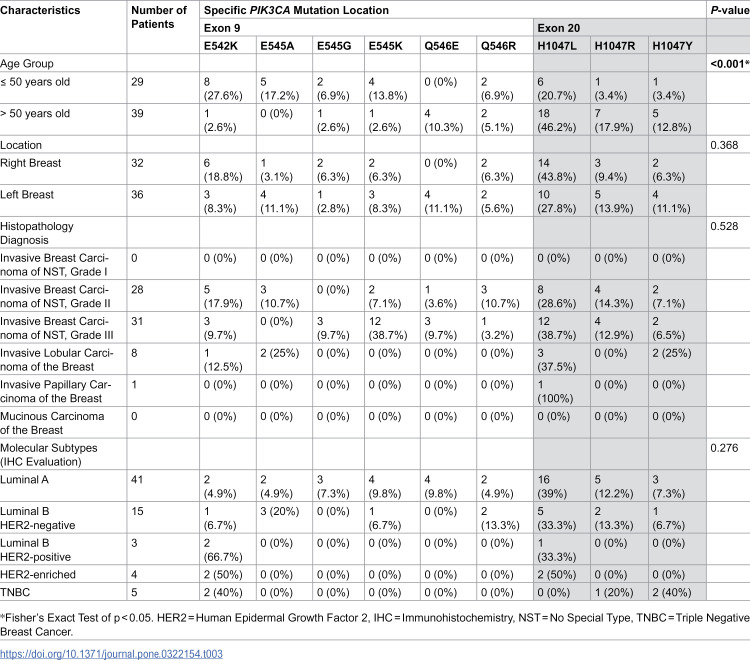 Figure 4
Peer Reviews
No public reviews on file for this paper yet. If you reviewed it on a platform where reviews are public (OpenReview, ICLR, NeurIPS, ICML), you can paste yours below so the community can read it here.
Videos
No videos yet. Explain this paper in a talk, walkthrough, or lecture? Add one.
Taxonomy
TopicsPI3K/AKT/mTOR signaling in cancer · Breast Cancer Treatment Studies · Cancer Genomics and Diagnostics