Monitoring the trends of Angiostrongylus cantonensis infection in humans and Pomacea spp. Snails in Dali, Yunnan, China, 2007–2021
Tian-mei Li, Yu-hua Liu, Wen Fang, Shen-hua Zhao, Ting Li, Ling Jiang, Peter S. Andrus, Yun-hai Guo, Shao-rong Chen, Siddhartha Mahanty, jong-Yil Chai, Siddhartha Mahanty, jong-Yil Chai, Siddhartha Mahanty, jong-Yil Chai, Siddhartha Mahanty, jong-Yil Chai

TL;DR
This study tracks the spread of a parasitic infection in humans and snails in Dali, China, from 2007 to 2021, highlighting public health responses.
Contribution
The study provides a detailed epidemiological analysis of angiostrongyliasis in Dali and its correlation with snail infection trends.
Findings
125 cases of angiostrongyliasis were reported in Dali from 2007 to 2021, with common symptoms including headache and muscle pain.
0.75% of 49,970 Pomacea spp. snails tested positive for Angiostrongylus cantonensis infection.
The highest incidence of cases and snail infections occurred during spring months (February to May).
Abstract
We summarize historical events related to angiostrongyliasis and analyze surveys of clinically diagnosed and suspected cases of angiostrongyliasis in Dali from 2007 to 2021. We also randomly tested market sold Pomacea spp. snails to detect whether Angiostrongylus cantonensis was present in Dali market stalls from 2008 to 2021. There were a total of 125 cases of angiostrongyliasis (92 clinically diagnosed and 33 suspected) reported in the Dali Prefecture from 2007-2021. Of the 125 cases, 72 patients from 2010 to 2021 were investigated, with the main clinical manifestations being headache (100%), muscle pain (61%), neck stiffness (58.3%), paresthesia (58.3%), fever (55.5%), nausea (48.6%), coughing (26.3%), vomiting (44.4%), photophobia (18%), diplopia (25%), and visual impairment (5.5%). Laboratory testing showed cerebrospinal fluid qualitative protein levels and blood eosinophil levels…
Genes, proteins, chemicals, diseases, species, mutations and cell lines named across the full text — each resolved to its canonical identifier and authoritative record.
Click any figure to enlarge with its caption.
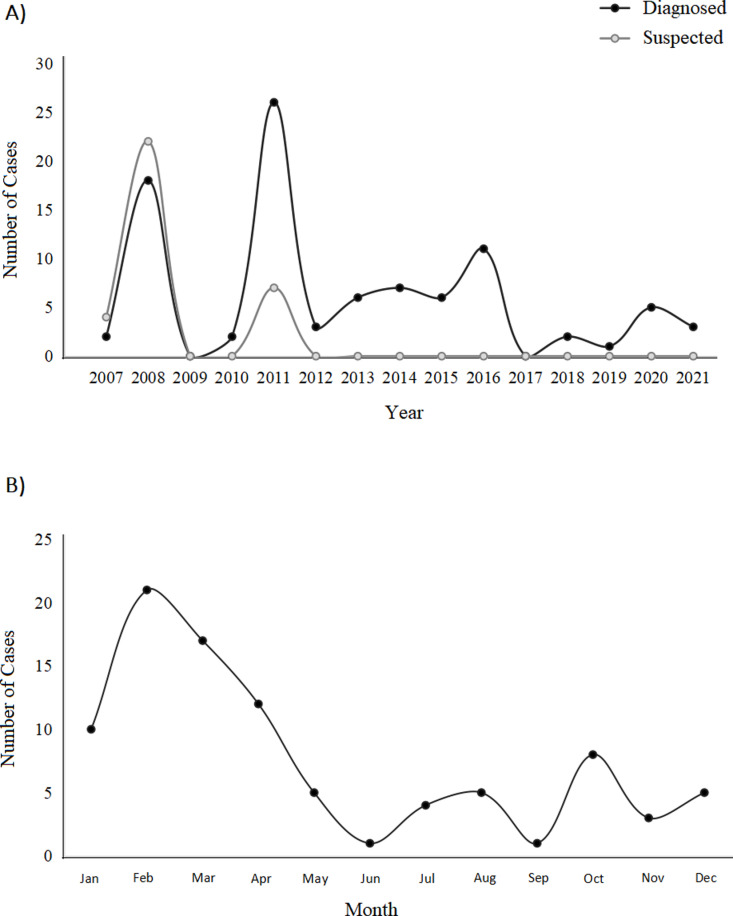 Figure 1
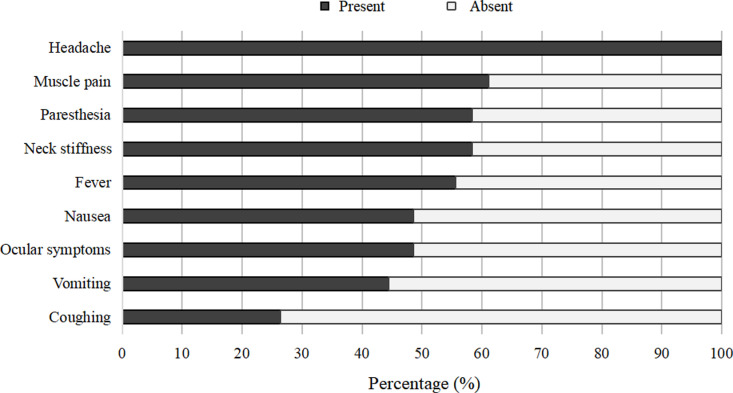 Figure 2
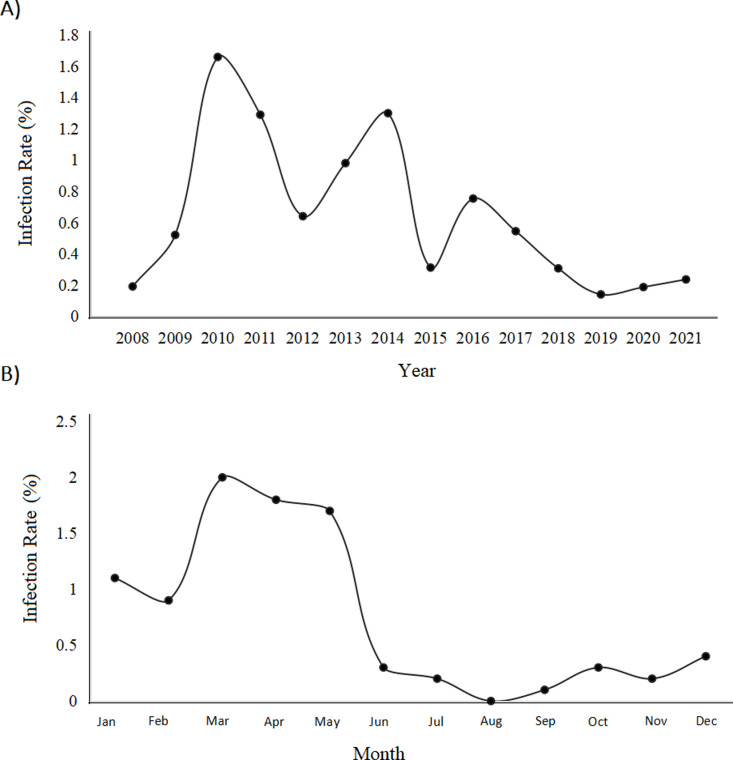 Figure 3
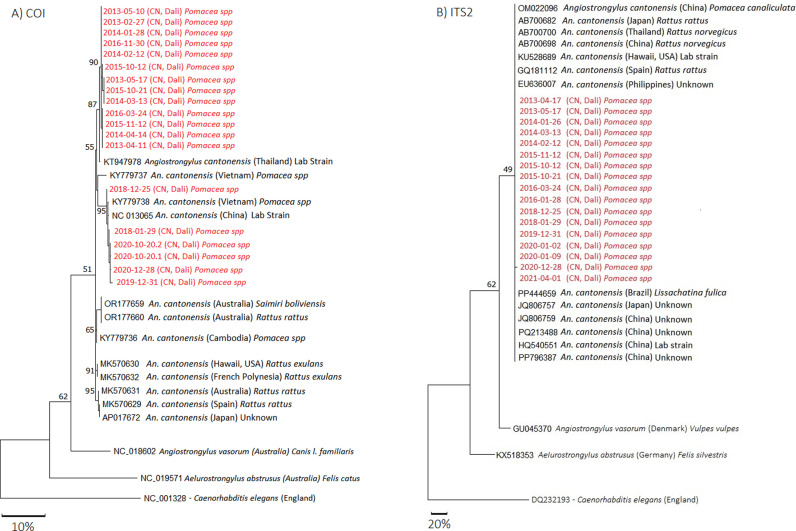 Figure 4
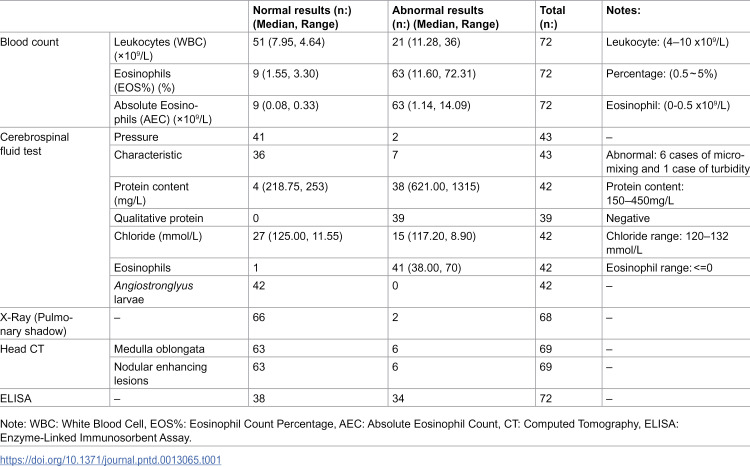 Figure 5
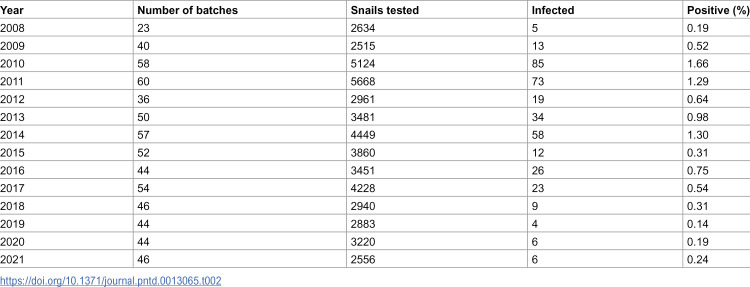 Figure 6
Peer Reviews
No public reviews on file for this paper yet. If you reviewed it on a platform where reviews are public (OpenReview, ICLR, NeurIPS, ICML), you can paste yours below so the community can read it here.
Videos
No videos yet. Explain this paper in a talk, walkthrough, or lecture? Add one.
Taxonomy
TopicsMollusks and Parasites Studies · Medical and Biological Ozone Research · Therapeutic Uses of Natural Elements