Modeling opioid overdose events recurrence with a covariate-adjusted triggering point process
Fenglian Pan, You Zhou, Carolina Vivas-Valencia, Nan Kong, Carol Ott, Mohammad S Jalali, Jian Liu

TL;DR
This paper introduces a new model to predict opioid overdose events by considering both risk factors and how past overdoses influence future ones.
Contribution
The novel contribution is a covariate-adjusted triggering point process model that captures inter-event dependencies and risk factors.
Findings
The proposed model achieved the lowest prediction errors for 30- to 180-day-ahead forecasts.
Around 47% of opioid overdose recurrence was explained by the triggering mechanism.
The model provides insights into inter-event dependencies and improves prediction accuracy.
Abstract
Substance use disorder, particularly opioid-related, is a serious public health challenge in the U.S. Accurately predicting opioid overdose events and stratifying the risk of having such an event are critical for healthcare providers to deliver effective interventions in patients with opioid overdose. Despite a large body of literature investigating various risk factors for the prediction, the existing research to date has not explicitly investigated and quantitatively modeled how an individual’s past opioid overdose events affect future occurrences. In this paper, we proposed a covariate-adjusted triggering point process to simultaneously model the effect of various risk factors on opioid overdose events and the triggering mechanism among opioid overdose events. The prediction performance was assessed by the U.S. state-wise Medicaid reimbursement claims data. Compared with commonly…
Genes, proteins, chemicals, diseases, species, mutations and cell lines named across the full text — each resolved to its canonical identifier and authoritative record.
Click any figure to enlarge with its caption.
 Figure 1
 Figure 2
 Figure 3
 Figure 4
 Figure 5
 Figure 6
 Figure 7
 Figure 8
 Figure 9
 Figure 10
 Figure 11
 Figure 12
 Figure 13
 Figure 14
 Figure 15
 Figure 16
 Figure 17
 Figure 18
 Figure 19
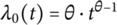 Figure 20
 Figure 21
 Figure 22
 Figure 23
 Figure 24
 Figure 25
 Figure 26
 Figure 27
 Figure 28
 Figure 29
 Figure 30
 Figure 31
 Figure 32
 Figure 33
 Figure 34
 Figure 35
 Figure 36
 Figure 37
 Figure 38
 Figure 39
 Figure 40
 Figure 41
 Figure 42
 Figure 43
 Figure 44
 Figure 45
 Figure 46
 Figure 47
 Figure 48
 Figure 49
 Figure 50
Peer Reviews
No public reviews on file for this paper yet. If you reviewed it on a platform where reviews are public (OpenReview, ICLR, NeurIPS, ICML), you can paste yours below so the community can read it here.
Videos
No videos yet. Explain this paper in a talk, walkthrough, or lecture? Add one.
Taxonomy
TopicsOpioid Use Disorder Treatment · Substance Abuse Treatment and Outcomes · Advanced Causal Inference Techniques