Monocyte-secreted Wnt reduces the efficiency of central nervous system remyelination
Bianca M. Hill, Rebecca K. Holloway, Lindsey H. Forbes, Claire L. Davies, Jonathan K. Monteiro, Christina M. Brown, Jamie Rose, Neva Fudge, Pamela J. Plant, Ayisha Mahmood, Koroboshka Brand-Arzamendi, Sarah A. Kent, Irene Molina-Gonzalez, Stefka Gyoneva, Richard M. Ransohoff

TL;DR
Monocytes release Wnt proteins that hinder the regrowth of myelin in the central nervous system, offering a new target for improving CNS repair.
Contribution
The study identifies monocyte-secreted Wnt as a novel inhibitor of remyelination in the CNS.
Findings
Monocytes, not microglia, uniquely regulate remyelination by promoting differentiation but inhibiting myelin production.
Wnt signaling in monocytes is reduced in mouse models and human MS lesions, leading to improved remyelination when inhibited.
Blocking monocyte Wnt signaling increases the efficiency of CNS remyelination.
Abstract
The regeneration of myelin in the central nervous system (CNS) reinstates nerve health and function, yet its decreased efficiency with aging and progression of neurodegenerative disease contributes to axonal loss and/or degeneration. Although CNS myeloid cells have been implicated in regulating the efficiency of remyelination, the distinct contribution of blood monocytes versus that of resident microglia is unclear. Here, we reveal that monocytes have non-redundant functions compared to microglia in regulating remyelination. Using a transgenic mouse in which classical monocytes have reduced egress from bone marrow (Ccr2−/−), we demonstrate that monocytes drive the timely onset of oligodendrocyte differentiation and myelin protein expression, yet impede myelin production. Ribonucleic acid sequencing revealed a Wnt signature in wild-type mouse lesion monocytes, which was confirmed in…
Genes, proteins, chemicals, diseases, species, mutations and cell lines named across the full text — each resolved to its canonical identifier and authoritative record.
Click any figure to enlarge with its caption.
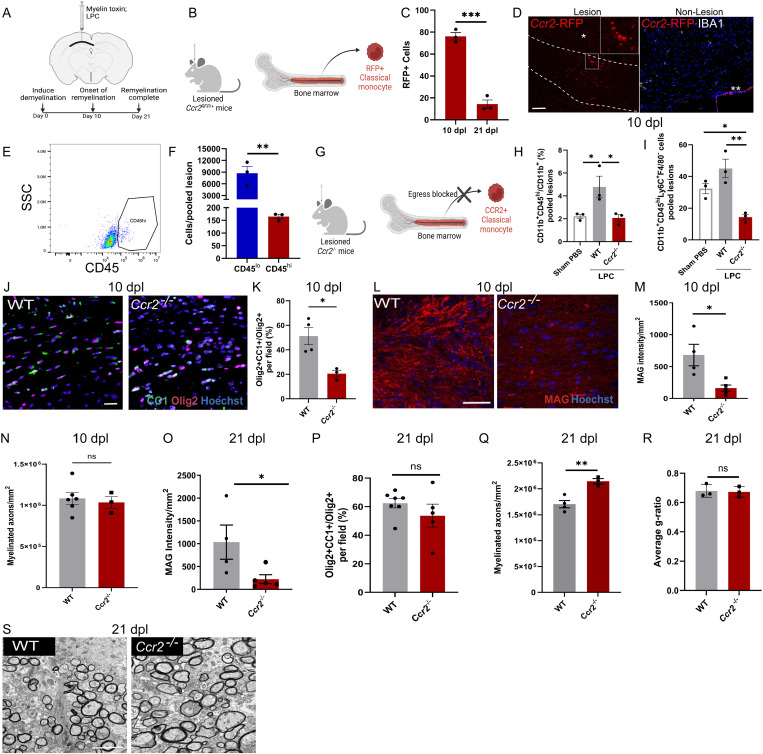 Figure 1
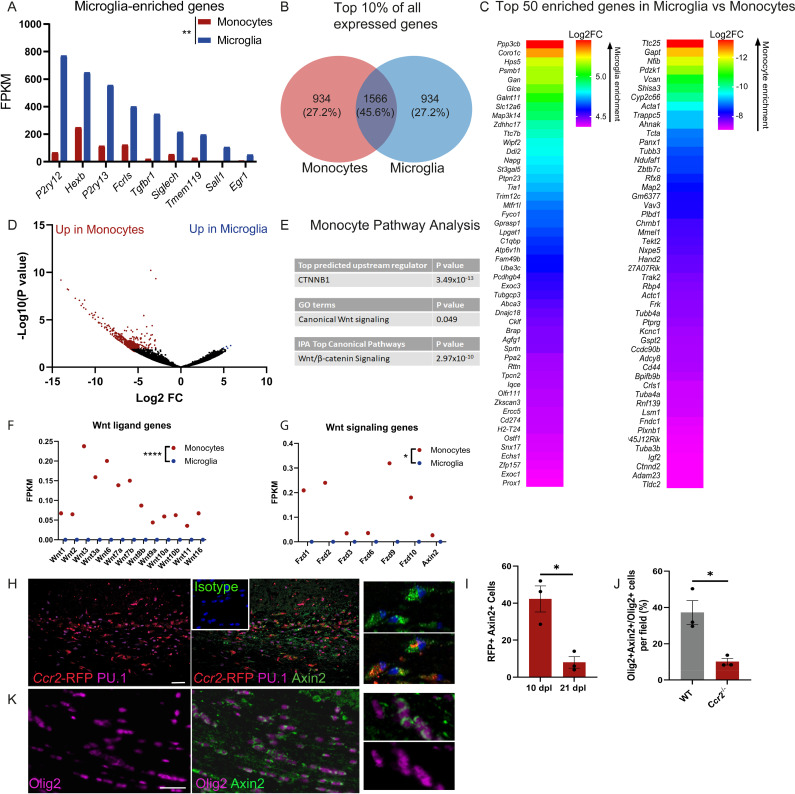 Figure 2
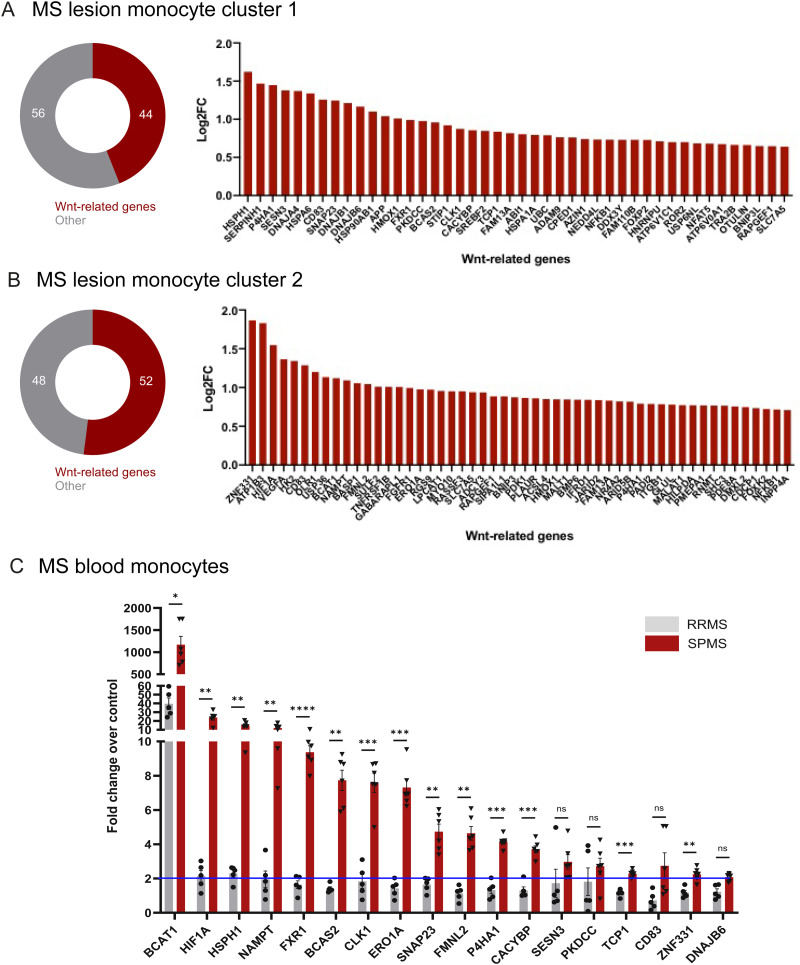 Figure 3
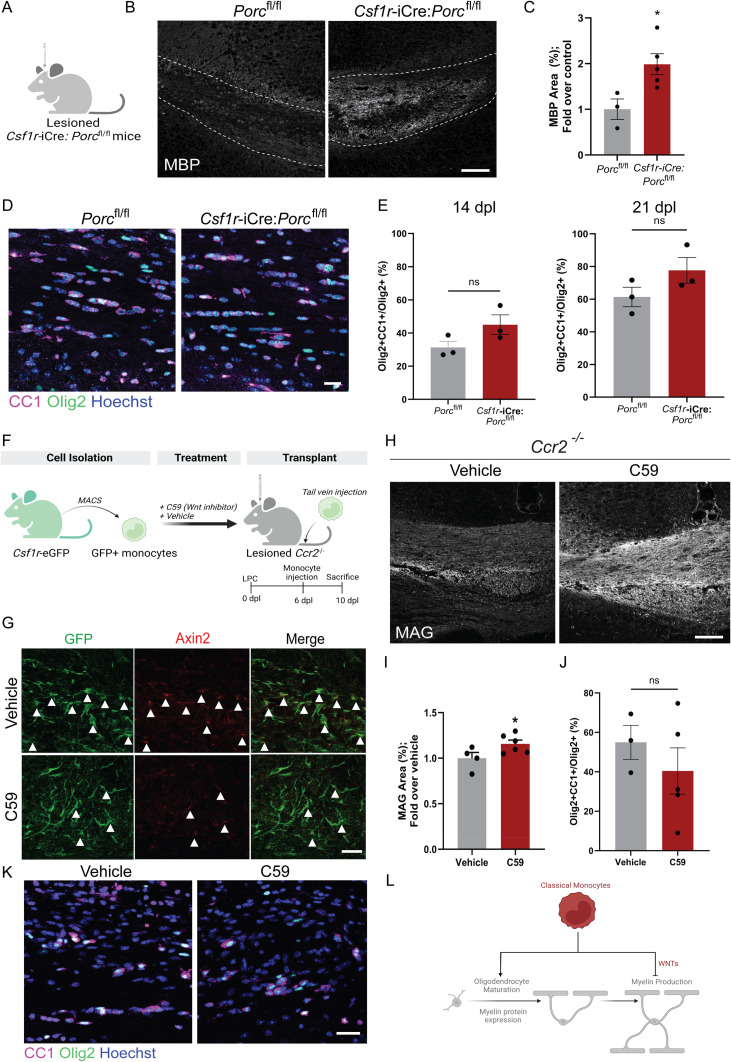 Figure 4
Peer Reviews
No public reviews on file for this paper yet. If you reviewed it on a platform where reviews are public (OpenReview, ICLR, NeurIPS, ICML), you can paste yours below so the community can read it here.
Videos
No videos yet. Explain this paper in a talk, walkthrough, or lecture? Add one.
Taxonomy
TopicsNeuroinflammation and Neurodegeneration Mechanisms · Neurogenesis and neuroplasticity mechanisms · Nerve injury and regeneration