Validating the Utility of Supervised Clustering Algorithm for Precise [11C]DPA-713 PET Brain Image Quantification
Youjin Lee, Thanh D. Nguyen, Yong Du, Jennifer M. Coughlin, Sara A. Zein, Nicolas A. Karakatsanis, Sadek Nehmeh, Martin G. Pomper, Susan A. Gauthier, Yeona Kang

TL;DR
This study validates a new supervised clustering algorithm for brain PET imaging, showing it can replace traditional methods and improve accuracy in measuring brain activity.
Contribution
The study introduces and validates a supervised clustering algorithm (SVCA) as a reliable alternative to arterial input function for PET quantification.
Findings
SVCA-DVR showed strong correlation with AIF-DVR, with correlation coefficients of 0.86 and 0.95 in white matter and thalamus, respectively.
Test-retest variability was significantly reduced for SVCA-DVR compared to AIF-DVR across different brain regions and VOI sizes.
SVCA-DVR demonstrated consistent performance even in small volumes of interest, maintaining variability below 5%.
Abstract
The reliance of quantitative PET imaging on the arterial input function makes brain PET challenging to perform in certain populations, limiting the sample size. To address this challenge, a supervised clustering algorithm (SVCA) has been introduced as an alternative. Our objective was to validate SVCA’s performance for brain PET with [11C]DPA-713 that targets a putative marker of brain injury and repair. Methods: This study included a composite dataset comprising 12 healthy volunteers (HVs), with 6 participants from Weill Cornell Medicine and 6 participants from Johns Hopkins University School of Medicine. The minimum number of subjects required to define kinetic classes was identified. Next, the distribution volume ratio (DVR) was examined by comparing pseudoreference time–activity curves derived from SVCA (SVCA-DVR) with the conventional arterial input function–based DVR (AIF-DVR).…
Genes, proteins, chemicals, diseases, species, mutations and cell lines named across the full text — each resolved to its canonical identifier and authoritative record.
Click any figure to enlarge with its caption.
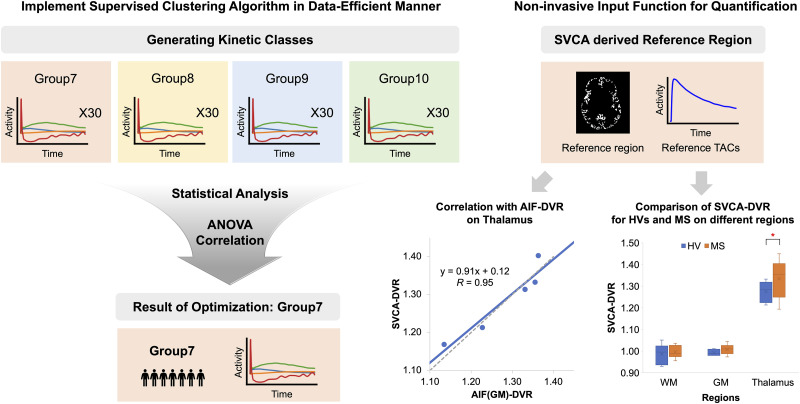 Figure 1
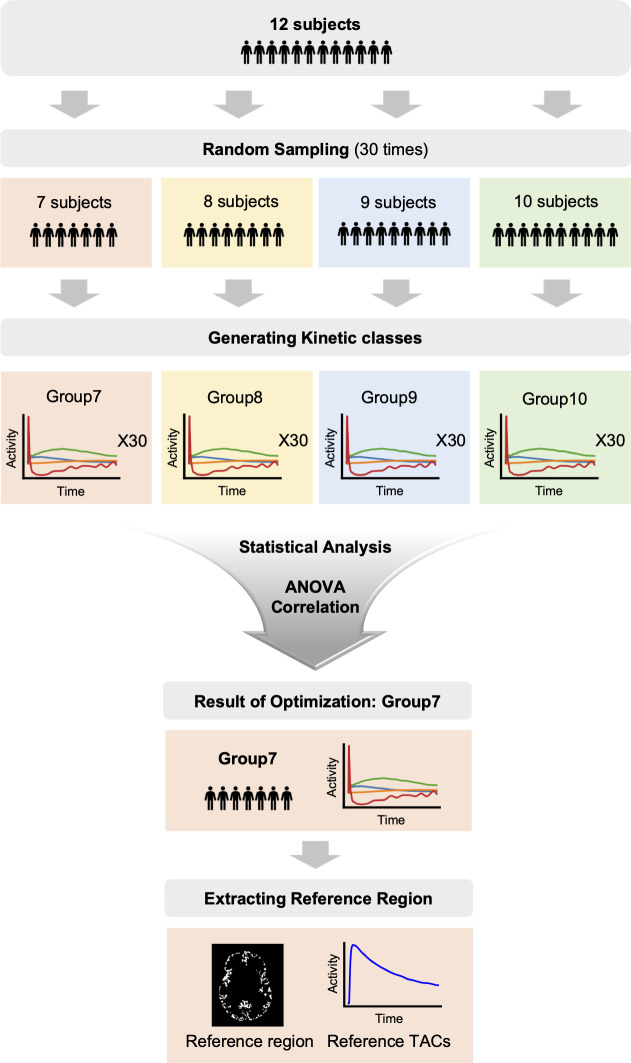 Figure 2
 Figure 3
 Figure 4
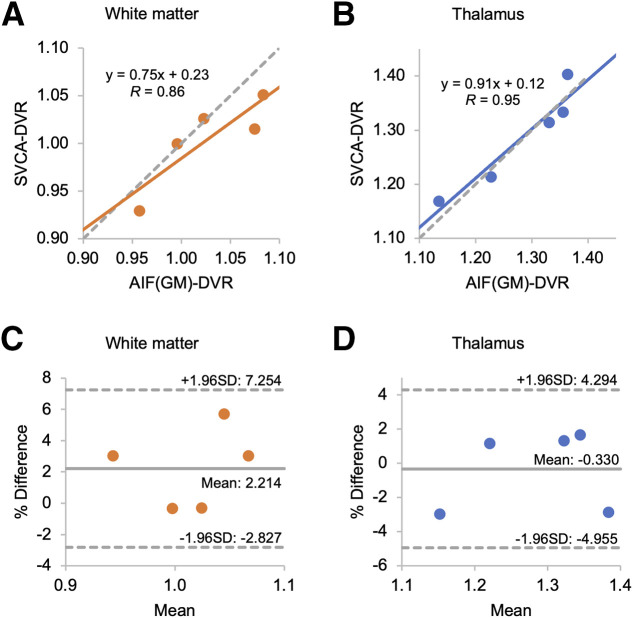 Figure 5
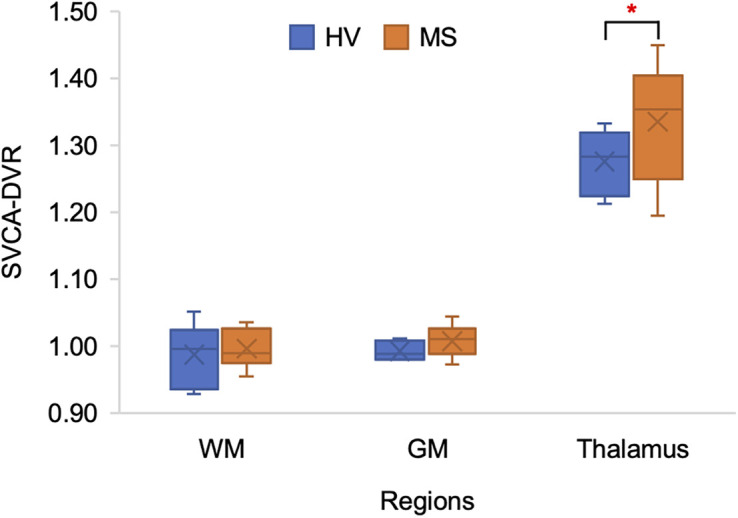 Figure 6
Peer Reviews
No public reviews on file for this paper yet. If you reviewed it on a platform where reviews are public (OpenReview, ICLR, NeurIPS, ICML), you can paste yours below so the community can read it here.
Videos
No videos yet. Explain this paper in a talk, walkthrough, or lecture? Add one.
Taxonomy
TopicsMedical Imaging Techniques and Applications · Advanced MRI Techniques and Applications · Functional Brain Connectivity Studies