Selective Mapping of Brain COX-1 with [11C]PS13: Pharmacokinetic Evidence from human PET Imaging
Kiana Orangi, Kimiya Batebi, Farnoosh Vosough, Mahdiyeh Nozad Varjovi, Fatemeh Salehian, Sahar Mesbah, Mehrnaz Salahi, Sajjad Hajihosseini, Mohammad Yousef Fazel, Saman Zaman, Reza Hossein Zadeh, Alaleh Alizadeh, Mahsa Asadi Anar, Niloofar Deravi

TL;DR
This study shows that [11C]PS13 can selectively map COX-1 in the human brain using PET imaging, with ketoprofen being the most effective blocker.
Contribution
Demonstrates [11C]PS13's selectivity for COX-1 in the human brain and identifies ketoprofen as a potent COX-1 inhibitor in PET imaging.
Findings
Ketoprofen showed 49% COX-1 occupancy in the calcarine and lingual gyrus.
Celecoxib exhibited 27% COX-1 occupancy with partial inhibition.
Aspirin had minimal effect on COX-1 binding.
Abstract
Arachidonic acid is converted by cyclooxygenase-1 (COX-1) and cyclooxygenase-2 (COX-2) to prostaglandin H2, which has proinflammatory properties. The new PET radioligand [11 C]PS13 exhibits superior in vivo selectivity for COX-1 in nonhuman primates compared to COX-2. This study aimed to investigate [11 C]PS13 pharmacologically selectivity and substantial binding to COX-1 in the human brain. Eight healthy volunteers had baseline [11 C]PS13 brain PET scans, and then images were blocked with either aspirin, celecoxib, or ketoprofen. The participants underwent two 90-minute [11 C]PS13 PET scans with radio metabolite-corrected arterial input function at baseline and approximately two hours after they received 75 mg of ketoprofen orally This study on [11 C]PS13 brain PET scans showed that ketoprofen and celecoxib selectively bind to COX-1 in the human brain. The occupancy plot showed a…
Genes, proteins, chemicals, diseases, species, mutations and cell lines named across the full text — each resolved to its canonical identifier and authoritative record.
Click any figure to enlarge with its caption.
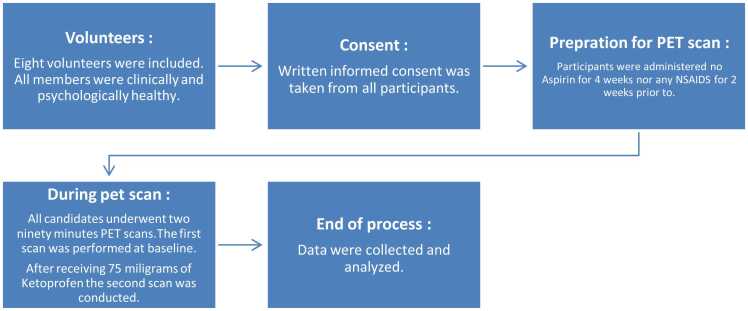 Figure 1
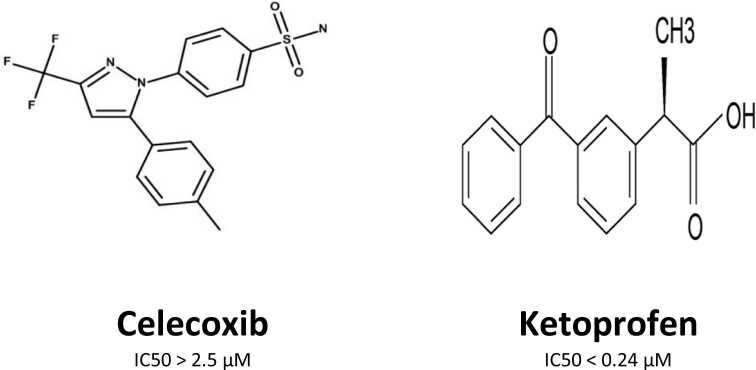 Figure 2
 Figure 3
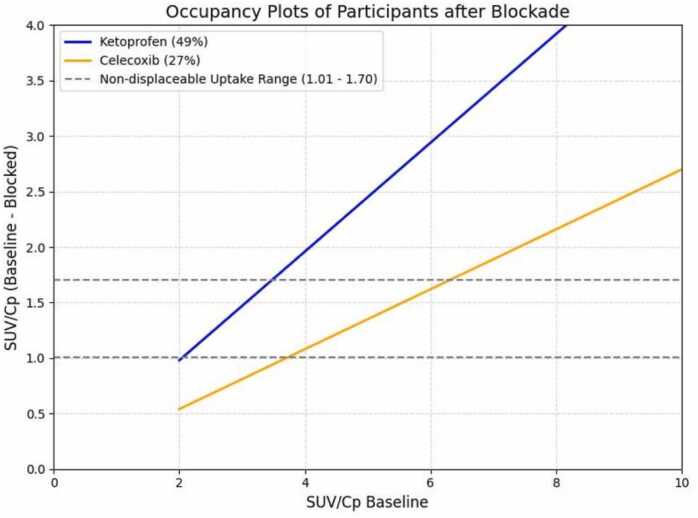 Figure 4
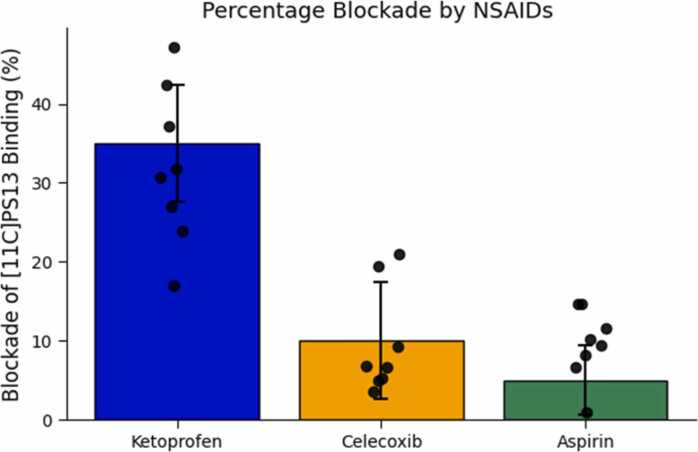 Figure 5
Peer Reviews
No public reviews on file for this paper yet. If you reviewed it on a platform where reviews are public (OpenReview, ICLR, NeurIPS, ICML), you can paste yours below so the community can read it here.
Videos
No videos yet. Explain this paper in a talk, walkthrough, or lecture? Add one.
Taxonomy
TopicsInflammatory mediators and NSAID effects · Estrogen and related hormone effects · Eicosanoids and Hypertension Pharmacology