Identification of the phosphatase essential for riboflavin biosynthesis in Aquifex aeolicus
Zoe A. Hoffpauir, Audrey L. Lamb

TL;DR
This study identifies a specific phosphatase in Aquifex aeolicus that is essential for riboflavin production, distinguishing it from a nonspecific phosphatase.
Contribution
The discovery of a histidine family phosphatase specifically involved in riboflavin biosynthesis in Aquifex aeolicus.
Findings
Two phosphatases from Aquifex aeolicus dephosphorylate ARAPDP, but only one supports riboflavin production.
The histidine family phosphatase specifically dephosphorylates ARAPDP without affecting other substrates.
X-ray crystallography revealed distinct structural folds for the two phosphatases.
Abstract
The riboflavin biosynthetic pathway uses dedicated enzymes that function exclusively for riboflavin production. Indeed, the pathway is fully annotated, with the exception of an unknown phosphatase that catalyzes the dephosphorylation of 5-amino-6-ribitylamino-pyrimidinedione 5′-phosphate (ARAPDP) to generate 5-amino-6-ribitylamino-pyrimidinedione (ARAPD), which is the substrate for the penultimate enzyme of the pathway, lumazine synthase. Whereas nonspecific phosphatases from the haloacid dehalogenase superfamily capable of catalyzing the dephosphorylation of ARAPDP have been reported for Bacillus subtilis, Escherichia coli, and Arabadopsis thaliana, we hypothesized that a specific phosphatase may carry out this reaction. Using an anaerobic activity-based screen, two phosphatases from Aquifex aeolicus were identified that dephosphorylate ARAPDP, but only one reconstitutes riboflavin…
Genes, proteins, chemicals, diseases, species, mutations and cell lines named across the full text — each resolved to its canonical identifier and authoritative record.
Click any figure to enlarge with its caption.
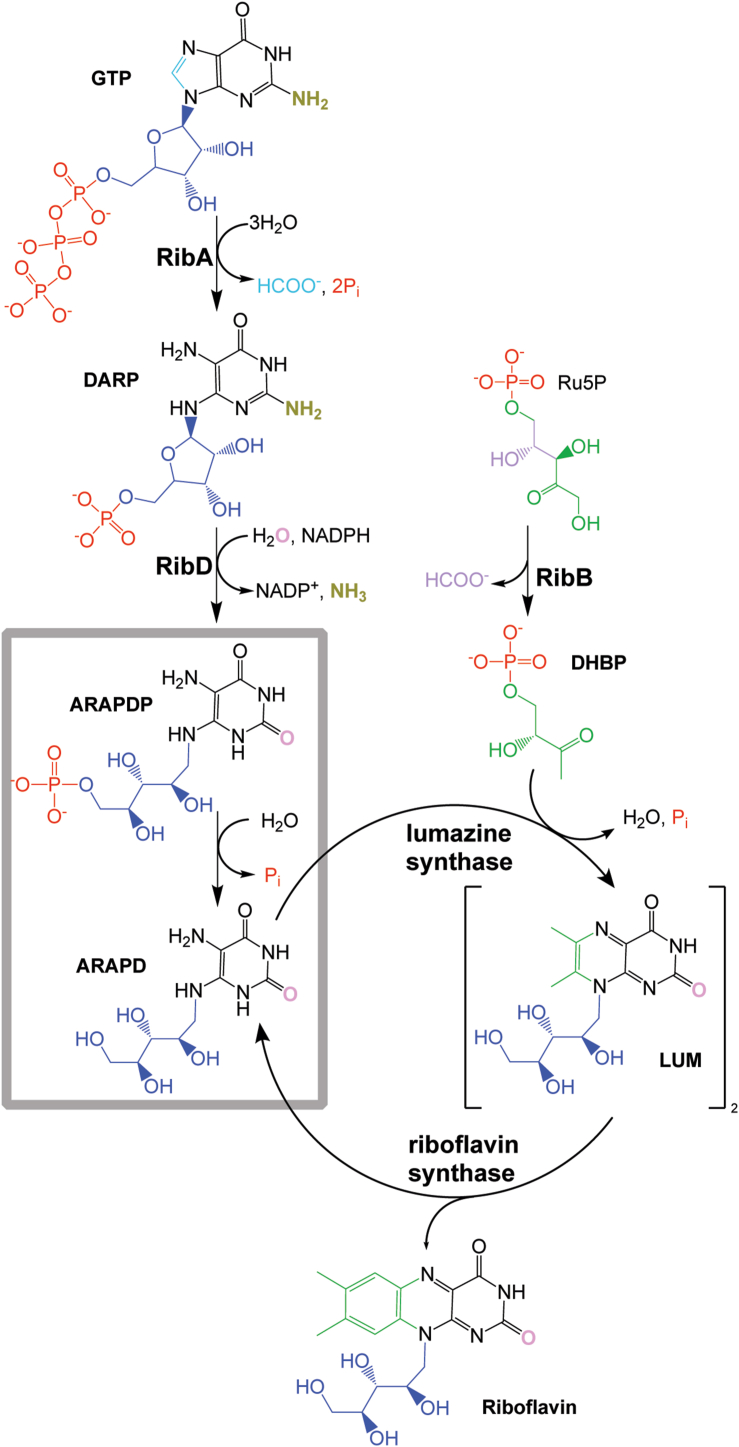 Figure 1
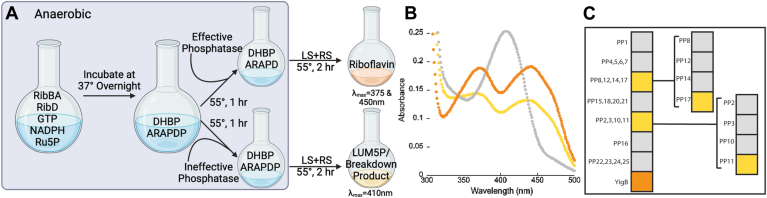 Figure 2
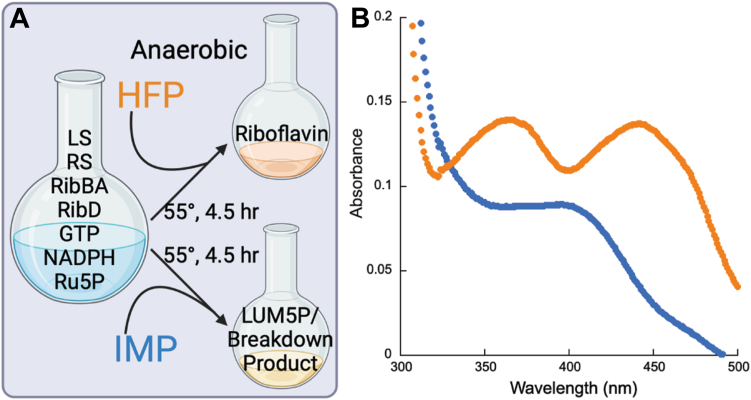 Figure 3
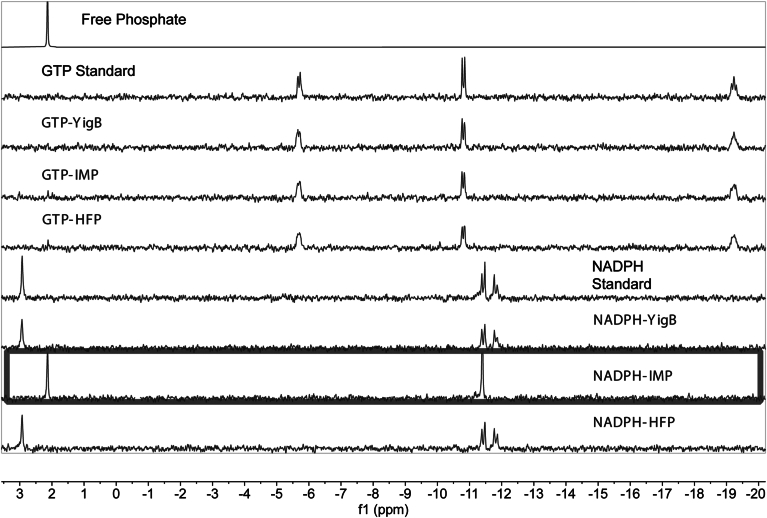 Figure 4
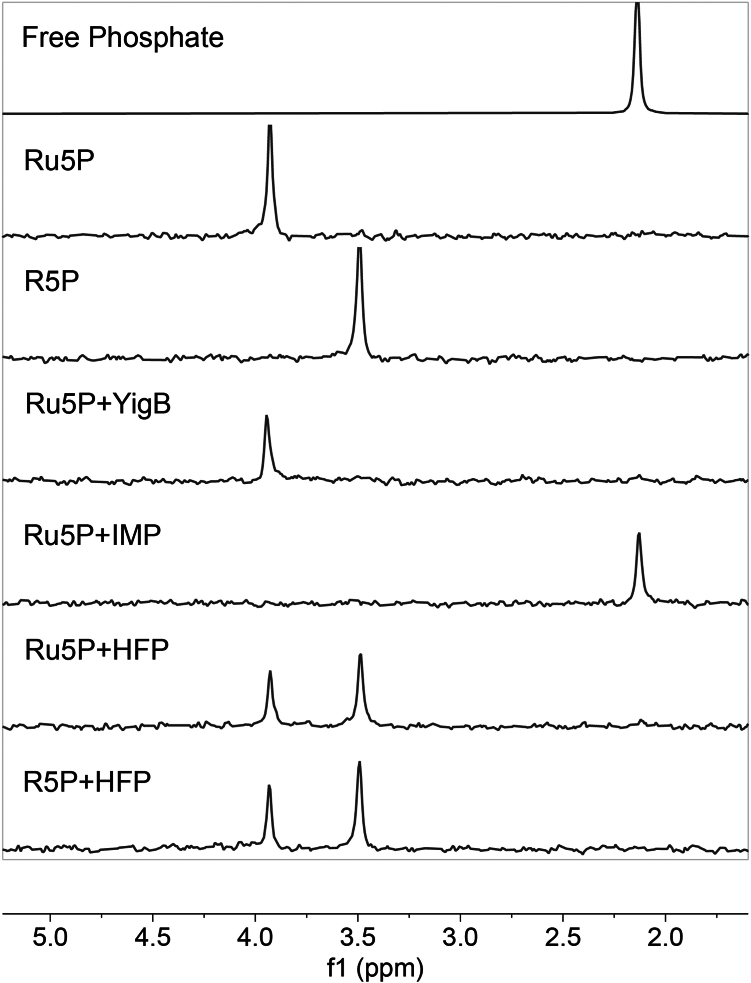 Figure 5
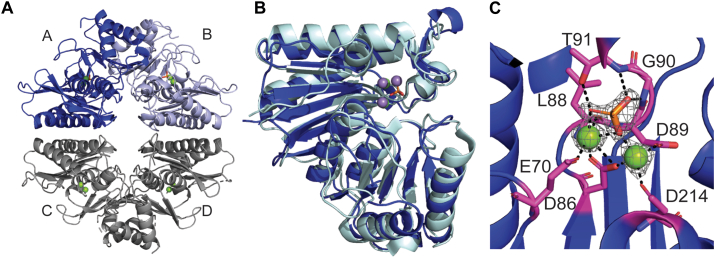 Figure 6
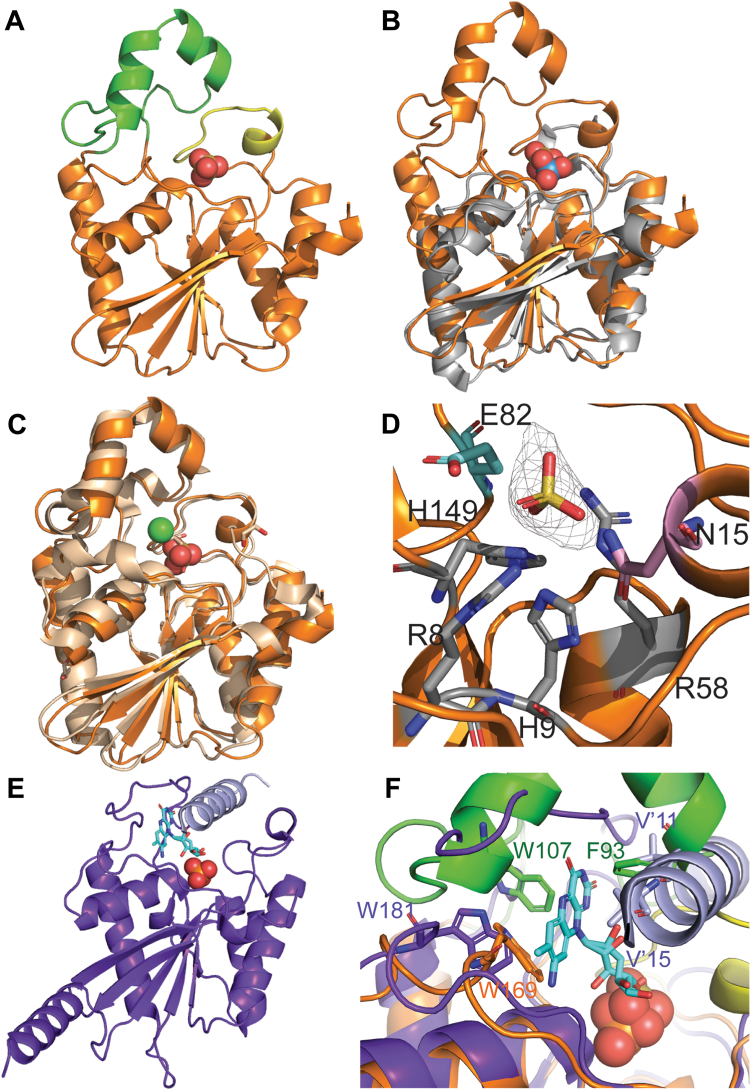 Figure 7
Peer Reviews
No public reviews on file for this paper yet. If you reviewed it on a platform where reviews are public (OpenReview, ICLR, NeurIPS, ICML), you can paste yours below so the community can read it here.
Videos
No videos yet. Explain this paper in a talk, walkthrough, or lecture? Add one.
Taxonomy
TopicsMitochondrial Function and Pathology · Photosynthetic Processes and Mechanisms · Microbial Metabolic Engineering and Bioproduction