Blood buffers: The viewpoint of a biochemist
Andrea Bellelli

TL;DR
This paper reviews how blood maintains a stable pH through buffering systems and compares three main theories explaining blood pH regulation.
Contribution
The paper reconciles three major theories of blood pH regulation using Bronsted-Lowry definitions.
Findings
Three theories of blood pH regulation—Strong Ions Difference, Base Excess, and physiological—are compared.
These theories are shown to be complementary when using Bronsted-Lowry acid-base definitions.
Erroneous assumptions in the theories must be corrected for reconciliation.
Abstract
Mammalian blood is a very complex system whose multiple physiological roles require that its pH is maintained constant, in spite of the necessity of carrying over 15 moles of CO2 a day from the tissues to the lungs. The blood pH is maintained constant by several buffers, whose interplay is complex. The study of blood buffers is over a century old and has crossed major reinterpretations of the nature of acids and bases, from Arrhenius to Bronsted and Lowry, as well as an enormous evolution of our knowledge of protein structure, proteins being the most relevant among blood buffers. As a consequence, several theories have been developed to explain the physiological and pathological fluctuations of blood pH. This review compares the three main theories currently used: that based on the Strong Ions Difference (SID), due to Stewart and his followers; that based on the Base Excess, due to the…
Genes, proteins, chemicals, diseases, species, mutations and cell lines named across the full text — each resolved to its canonical identifier and authoritative record.
Click any figure to enlarge with its caption.
 Figure 1
 Figure 2
 Figure 3
 Figure 4
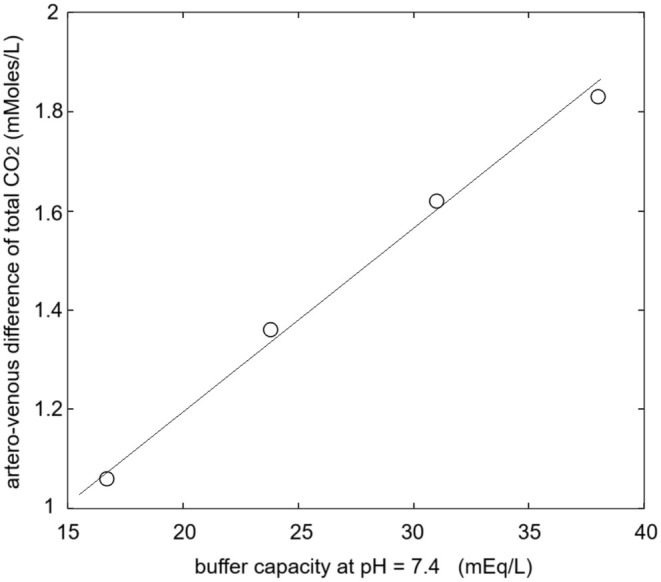 Figure 5
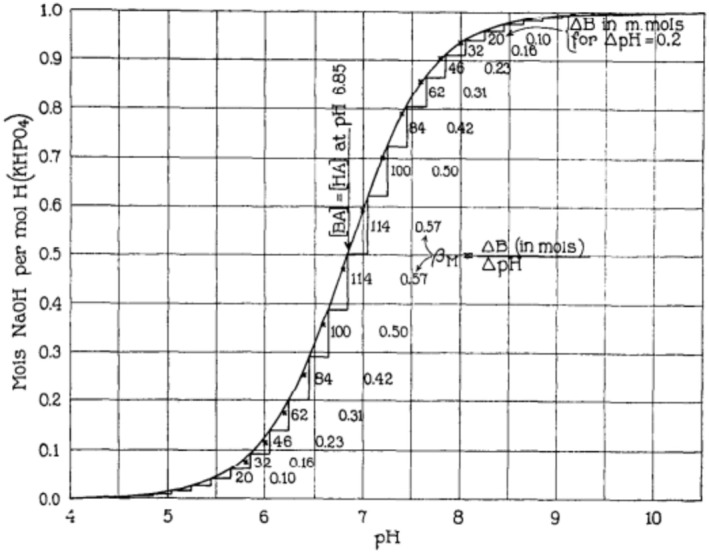 Figure 6
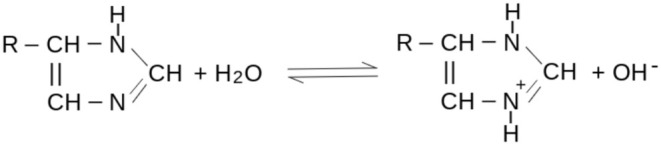 Figure 7
Peer Reviews
No public reviews on file for this paper yet. If you reviewed it on a platform where reviews are public (OpenReview, ICLR, NeurIPS, ICML), you can paste yours below so the community can read it here.
Videos
No videos yet. Explain this paper in a talk, walkthrough, or lecture? Add one.
Taxonomy
TopicsRenal function and acid-base balance · Ion Transport and Channel Regulation · Hemodynamic Monitoring and Therapy