Functional and Pangenomic Exploration of Roc Two‐Component Regulatory Systems Identifies Novel Players Across Pseudomonas Species
Victor Simon, Julian Trouillon, Ina Attrée, Sylvie Elsen

TL;DR
This study expands the Roc regulatory system in Pseudomonas by identifying new components and their roles in virulence and biofilm formation.
Contribution
The work identifies RocA3 and RocS4 as novel regulators in the Roc system and provides a pangenomic analysis of regulatory components across Pseudomonas species.
Findings
PA4080, renamed RocA3, is a fourth response regulator activated by RocS1 and RocS2.
A fourth branch of the Roc system includes RocS4 and HptA, which interact with other regulators.
Pangenomic analysis reveals the plasticity of Roc regulators among Pseudomonas clades.
Abstract
The opportunistic pathogen Pseudomonas aeruginosa relies on a large collection of two‐component regulatory systems (TCSs) to sense and adapt to changing environments. Among them, the Roc (regulation of cup) system is a one‐of‐a‐kind network of branched TCSs, composed of two histidine kinases (HKs—RocS1 and RocS2) interacting with three response regulators (RRs—RocA1, RocR, and RocA2), which regulate virulence, antibiotic resistance, and biofilm formation. Based on extensive work on the Roc system, previous data suggested the existence of other key regulators yet to be discovered. In this work, we identified PA4080, renamed RocA3, as a fourth RR that is activated by RocS1 and RocS2 and that positively controls the expression of the cupB operon. Comparative genomic analysis of the locus identified a gene—rocR3—adjacent to rocA3 in a subpopulation of strains that encodes a protein with…
Genes, proteins, chemicals, diseases, species, mutations and cell lines named across the full text — each resolved to its canonical identifier and authoritative record.
Click any figure to enlarge with its caption.
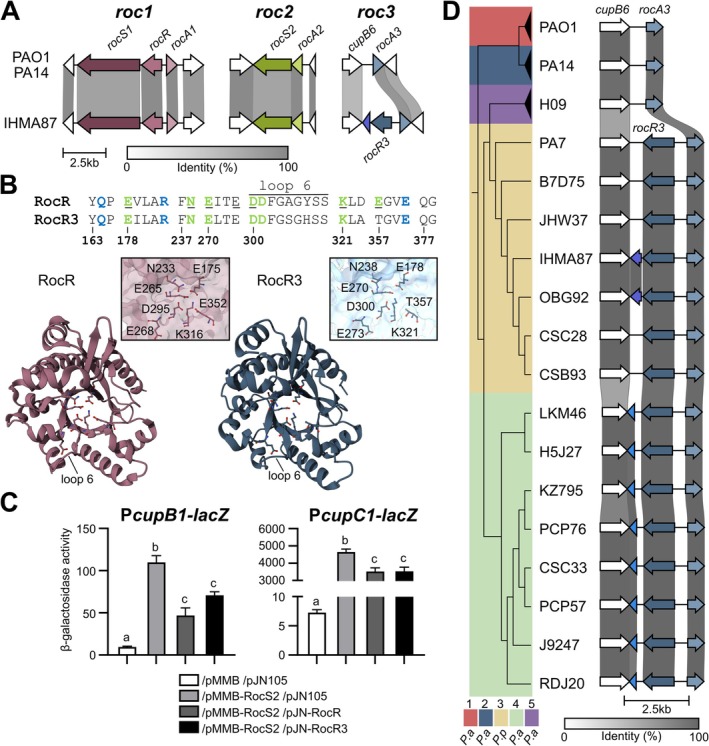 Figure 1
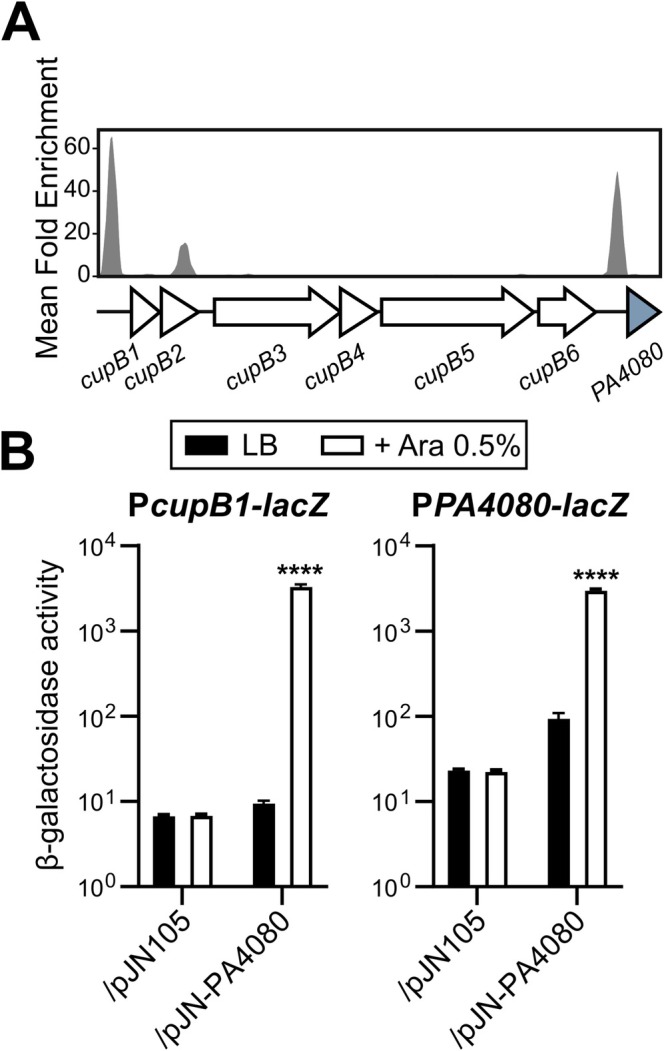 Figure 2
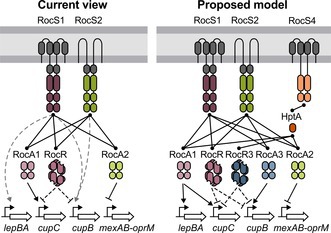 Figure 3
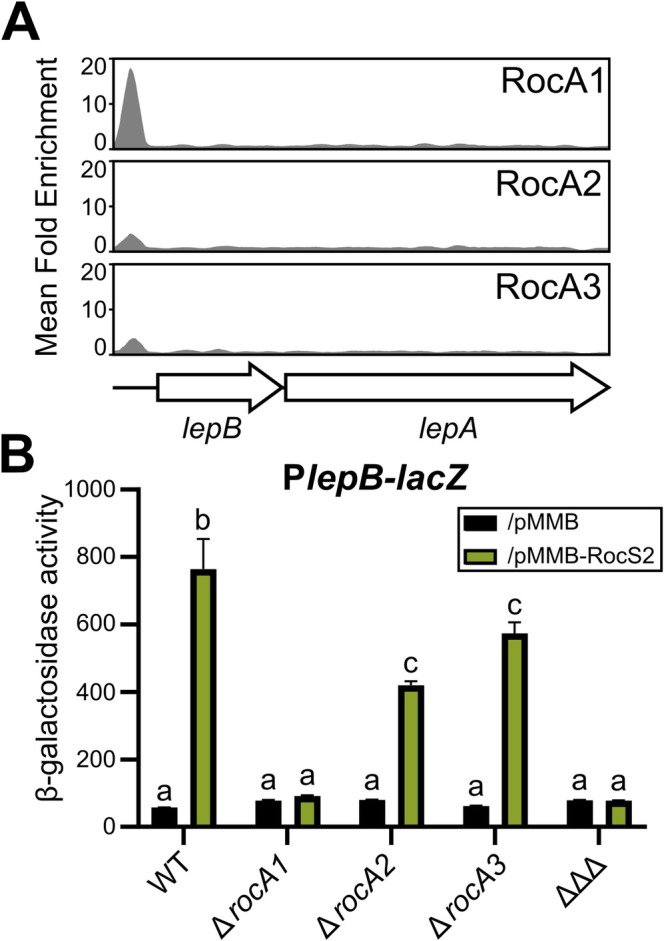 Figure 4
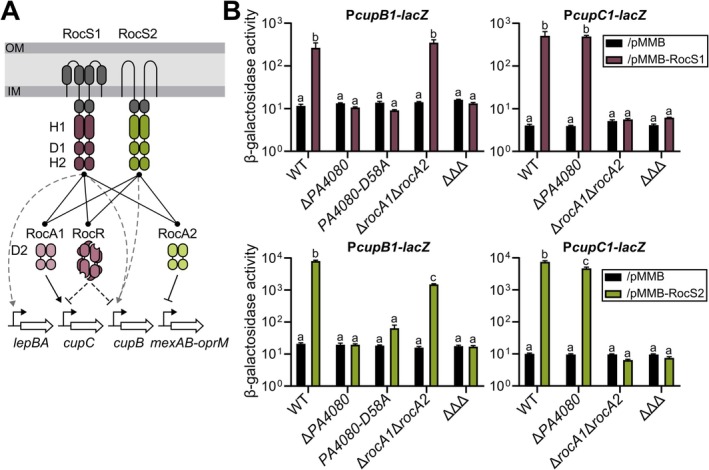 Figure 5
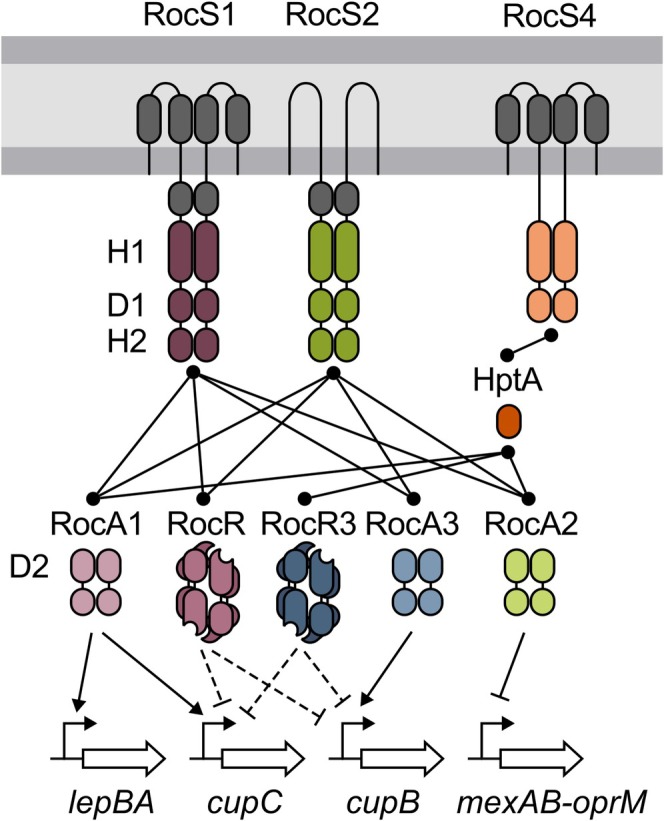 Figure 6
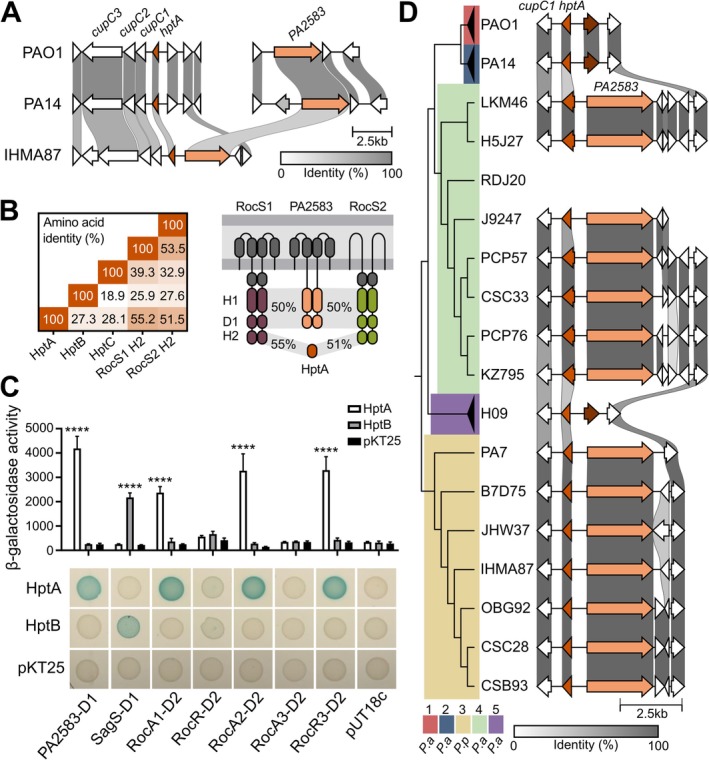 Figure 7
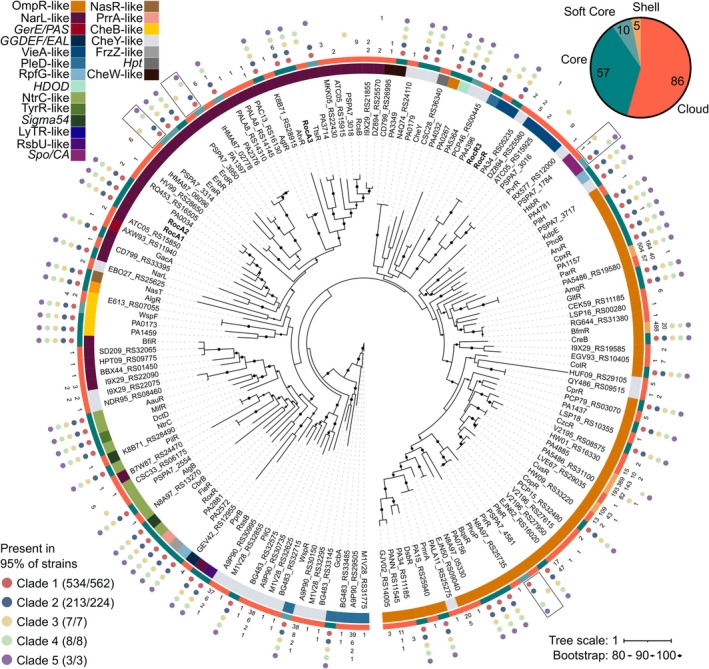 Figure 8
Peer Reviews
No public reviews on file for this paper yet. If you reviewed it on a platform where reviews are public (OpenReview, ICLR, NeurIPS, ICML), you can paste yours below so the community can read it here.
Videos
No videos yet. Explain this paper in a talk, walkthrough, or lecture? Add one.
Taxonomy
TopicsBacterial biofilms and quorum sensing · Antibiotic Resistance in Bacteria · Bacterial Genetics and Biotechnology