Clinical Assessment of Potential Difference in Motion-Tracking Irradiation for Liver Tumors Using Radixact Synchrony®
Wataru Okada, Hiroshi Doi, Keisuke Sano, Rina Muraoka, Shimpei Anami, Takashi Shintani, Masao Tanooka

TL;DR
This study evaluates the accuracy of motion-tracking radiotherapy for liver tumors using Radixact Synchrony® and finds that a 3.0 mm threshold minimizes treatment interruptions.
Contribution
The study provides clinical evidence for optimizing motion-tracking irradiation margins and identifies factors influencing treatment accuracy.
Findings
A PD interruption threshold of 3.0 mm minimized treatment interruptions in 83% of cases.
Respiratory motion amplitude positively correlates with PD95, while inter-marker distance negatively correlates.
The adjusted R² of 0.802 shows strong predictive power of planning parameters on PD95.
Abstract
This study aimed to advance the precision of motion-managed radiotherapy and provide robust information for clinical practice in terms of necessary margins using Radixact Synchrony® (Accuray, Sunnyvale, USA). A retrospective analysis was conducted on 88 irradiation sessions in nine cases of motion-tracking irradiation for liver tumors. Two gold markers were placed near the tumor, and a planning target volume (PTV) margin of 5 mm was set. The interruption threshold for potential difference (PD) (the statistical prediction value of the three-dimensional (3D) distance error from the predictive model) was set at 3.0 mm during treatment. PDvalues obtained before and during treatment, as well as the number of interruptions, were analyzed. A multiple regression analysis was performed to evaluate the influence of various planning parameters, which were obtained during four-dimensional (4D)…
Genes, proteins, chemicals, diseases, species, mutations and cell lines named across the full text — each resolved to its canonical identifier and authoritative record.
Click any figure to enlarge with its caption.
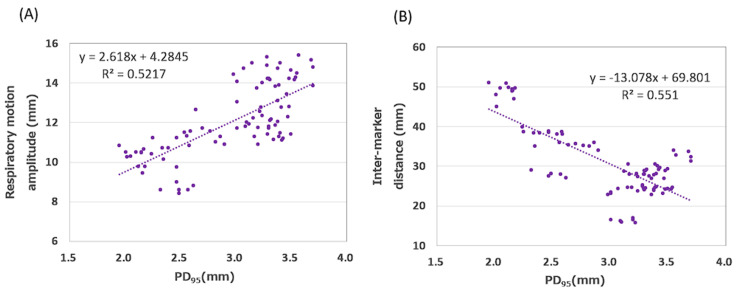 Figure 1
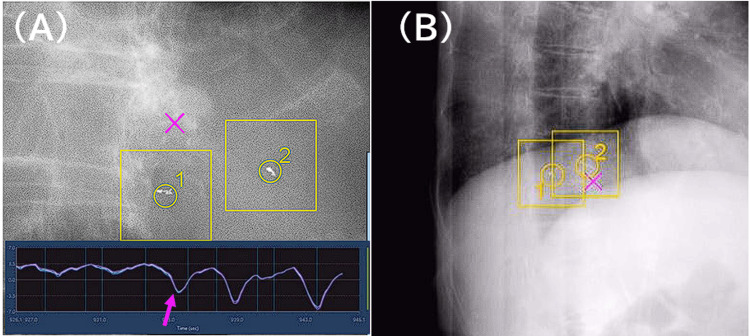 Figure 2
Peer Reviews
No public reviews on file for this paper yet. If you reviewed it on a platform where reviews are public (OpenReview, ICLR, NeurIPS, ICML), you can paste yours below so the community can read it here.
Videos
No videos yet. Explain this paper in a talk, walkthrough, or lecture? Add one.
Taxonomy
TopicsAdvanced Radiotherapy Techniques · Radiation Therapy and Dosimetry · Medical Imaging Techniques and Applications