Photoperiod influences visceral adiposity and the adipose molecular clock independent of temperature in wild‐derived Peromyscus leucopus
Margaret E. Newport, Paul Wilson, Shanna Lowes, Marthe Behrends, Alexis Coons, Jeff Bowman, Holly E. Bates

TL;DR
Extended artificial light increases visceral fat in mice without affecting body weight or temperature, suggesting a link between artificial light and obesity.
Contribution
Demonstrates that photoperiod alone, independent of temperature, influences visceral adiposity and molecular clock genes in mice.
Findings
Mice in long photoperiods developed greater visceral WAT mass without changes in subcutaneous WAT or BAT.
Clock genes Per1, Per2, and Nr1d1 showed altered expression in visceral WAT with photoperiod.
Adrβ3 and Ucp1 mRNA levels in visceral WAT decreased under long photoperiod conditions.
Abstract
Physiology is closely synchronized to daily and seasonal light/dark cycles. Humans artificially extend daylight and experience irregular light schedules, resulting in dysregulation of metabolism and body mass. In rodents, winter‐like conditions (cold and short photoperiod) can alter energy balance and adipose tissue mass. To determine if photoperiod alone, independent of temperature, is a strong enough signal to regulate adiposity, we compared the effects of long and short photoperiod at thermoneutrality on adiposity and WAT gene expression in photoperiod‐sensitive, F1 generation wild‐derived adult male white‐footed mice (Peromyscus leucopus). Mice were housed in long‐day (16:8 light:dark) or short‐day (8:16 light:dark) photoperiod conditions at thermoneutrality (27°C) for 4 weeks with the extended light being provided through artificial lighting. Photoperiod did not impact body weight…
Genes, proteins, chemicals, diseases, species, mutations and cell lines named across the full text — each resolved to its canonical identifier and authoritative record.
Click any figure to enlarge with its caption.
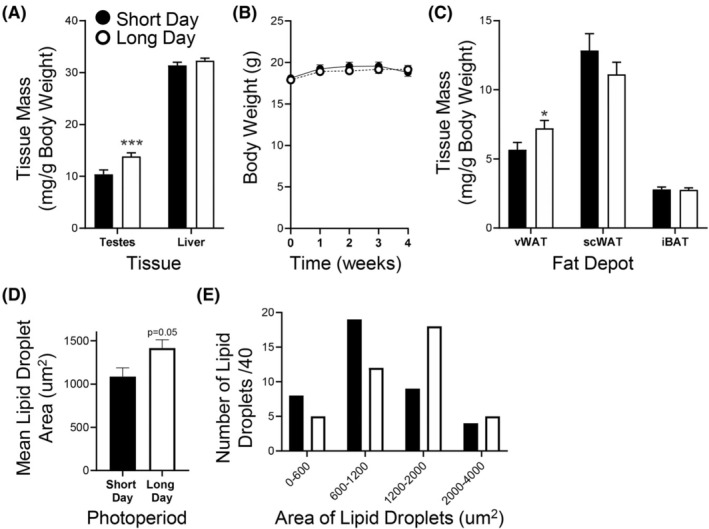 Figure 1
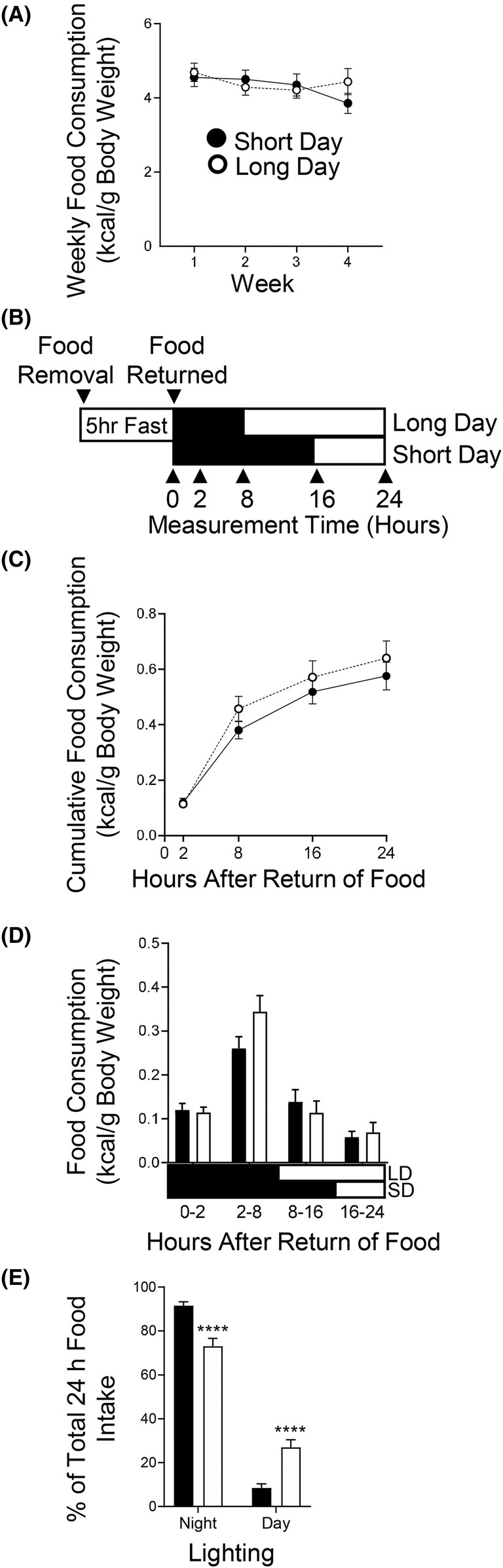 Figure 2
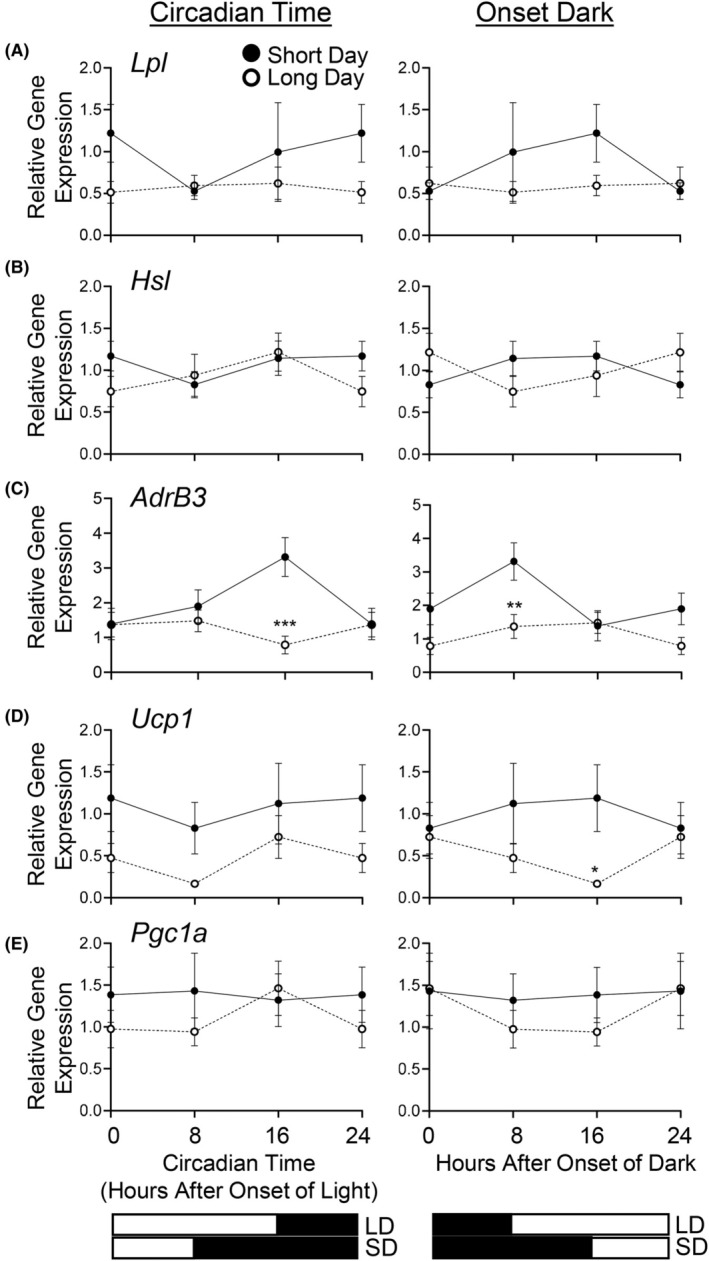 Figure 3
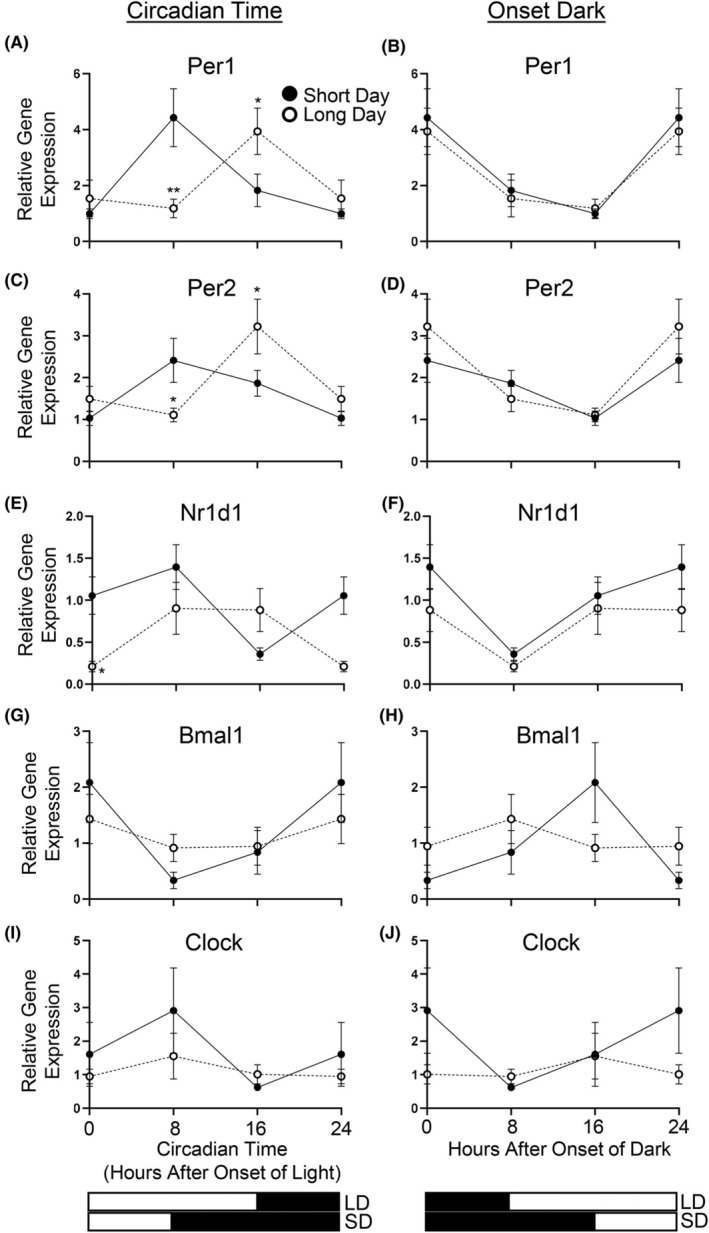 Figure 4
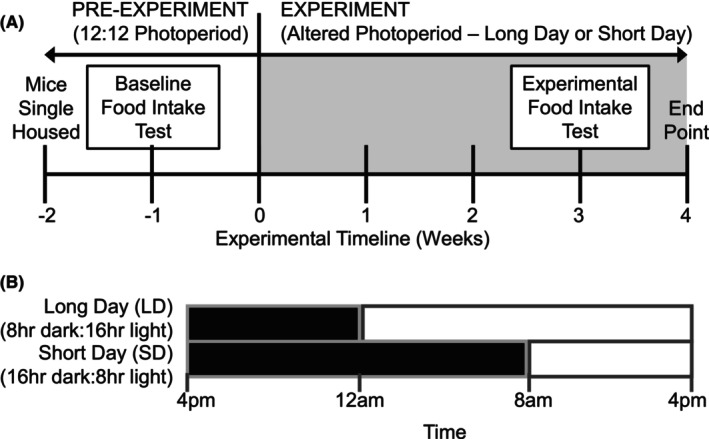 Figure 5
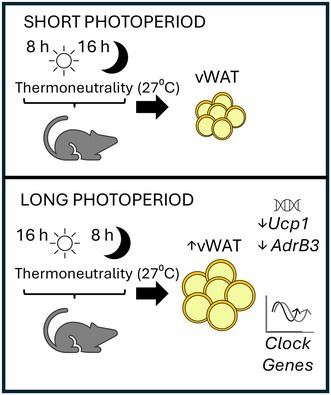 Figure 6
Peer Reviews
No public reviews on file for this paper yet. If you reviewed it on a platform where reviews are public (OpenReview, ICLR, NeurIPS, ICML), you can paste yours below so the community can read it here.
Videos
No videos yet. Explain this paper in a talk, walkthrough, or lecture? Add one.
Taxonomy
TopicsCircadian rhythm and melatonin · Adipose Tissue and Metabolism · Genetics, Aging, and Longevity in Model Organisms