Long‐Term Effects of Nusinersen Dosing Frequency on Adult Patients With Spinal Muscular Atrophy: Efficacy of a 6‐Month Dosing Interval
Keita Takahashi, Hitaru Kishida, Misako Kunii, Yosuke Miyaji, Yuichi Higashiyama, Hiroshi Doi, Naohisa Ueda, Hideyuki Takeuchi, Fumiaki Tanaka

TL;DR
This study shows that a 6-month dosing interval of nusinersen works well for ambulatory adult SMA patients but is less effective for nonambulatory patients compared to a 4-month interval.
Contribution
The study evaluates the long-term efficacy of a 6-month nusinersen dosing protocol in adult SMA patients, comparing it to a 4-month protocol.
Findings
Ambulatory patients showed sustained improvements in HFMSE scores over 39 months with a 6-month dosing interval.
Nonambulatory patients had less favorable outcomes compared to the European cohort using a 4-month interval.
The 6-month protocol did not lead to clinically meaningful deterioration in nonambulatory patients.
Abstract
Spinal muscular atrophy (SMA) is a genetic disease caused by the degeneration of spinal motor neurons due to a deficiency in survival motor neuron protein (SMN) protein, leading to progressive muscle atrophy and weakness. nusinersen, an antisense oligonucleotide that increases SMN protein expression, has shown effectiveness in both pediatric and adult patients with SMA. While it is administrated every 4 months during the maintenance period in most countries, the dosing interval is 6 months in Japan. The impact of this dosing difference on long‐term outcomes is not fully understood. This study evaluates the long‐term efficacy of the 6‐month dosing protocol of nusinersen in adult SMA patients. We assessed 14 adult patients treated with nusinersen every 6 months over a period of up to 39 months using the Hammersmith Function Motor Scale Expanded (HFMSE) and Revised Upper Limb Module…
Genes, proteins, chemicals, diseases, species, mutations and cell lines named across the full text — each resolved to its canonical identifier and authoritative record.
Click any figure to enlarge with its caption.
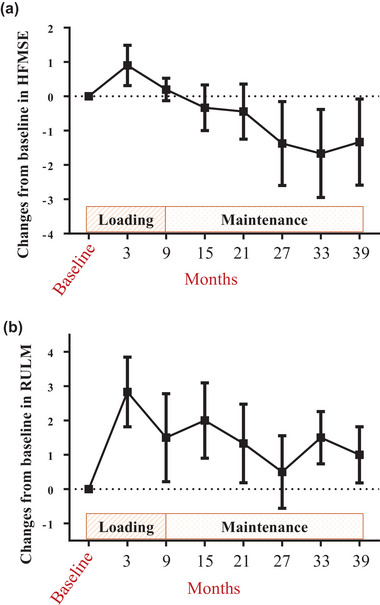 Figure 1
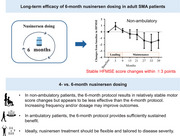 Figure 2
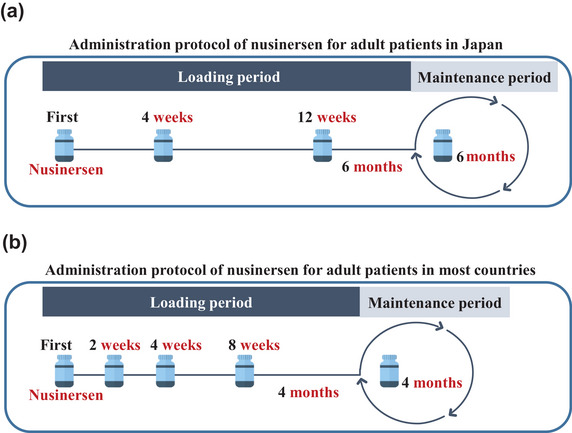 Figure 3
Peer Reviews
No public reviews on file for this paper yet. If you reviewed it on a platform where reviews are public (OpenReview, ICLR, NeurIPS, ICML), you can paste yours below so the community can read it here.
Videos
No videos yet. Explain this paper in a talk, walkthrough, or lecture? Add one.
Taxonomy
TopicsNeurogenetic and Muscular Disorders Research · Congenital Anomalies and Fetal Surgery · RNA modifications and cancer