Risk Factors and Prognostic Implications of Tumor‐Related Epilepsy in Diffuse Glioma Patients: A Real‐World Multicenter Study
Yao Xiao, Zhuang Nie, Jinsha Huang, Jie Zhao, Chengjun Dong, Yan Zou, Zikai Li, Bingqing Yan, Yue Hu, Fan Yang, Jong Woo Lee, Alexander P. Lin, Steven Tobochnik, Min Zhou, Ziqiao Lei

TL;DR
This study finds that tumor-related epilepsy in brain cancer patients may not independently predict survival, but is linked to other factors like age and tumor location.
Contribution
The study provides new insights into how tumor-related epilepsy correlates with survival outcomes in different glioma subtypes using a large multicenter dataset.
Findings
TRE incidence was highest in lower-grade oligodendroglioma/astrocytoma (44.4%) and lowest in high-grade gliomas (16.5%).
Age was an independent predictor of TRE in lower-grade gliomas, while absence of deep structure involvement was linked to TRE in unclassified and high-grade gliomas.
TRE was associated with longer survival in univariate analysis but not in multivariate models, suggesting it is not an independent prognostic factor.
Abstract
The relevance of tumor‐related epilepsy (TRE) to glioma survival is controversial. This study aimed to assess the risk factors and prognostic impact of TRE in adult patients with diffuse gliomas by integrating clinical, radiological, and molecular data. This multicenter retrospective study included 1036 adult patients with diffuse gliomas from local hospitals and the POLA Network. Patients were categorized into three prognostic groups: lower‐grade oligodendroglioma/astrocytoma (OD/AC, II–III, IDH‐MT), not otherwise specified or not elsewhere classified (NOS/NEC, II–III, IDH‐WT), and high‐grade gliomas (HGG, IV). Clinico‐radiological, molecular, and therapeutic factors were analyzed using univariate and multivariate logistic regression, with the Cox proportional hazards model applied to identify independent prognostic factors for progression‐free survival (PFS) and overall survival…
Genes, proteins, chemicals, diseases, species, mutations and cell lines named across the full text — each resolved to its canonical identifier and authoritative record.
Click any figure to enlarge with its caption.
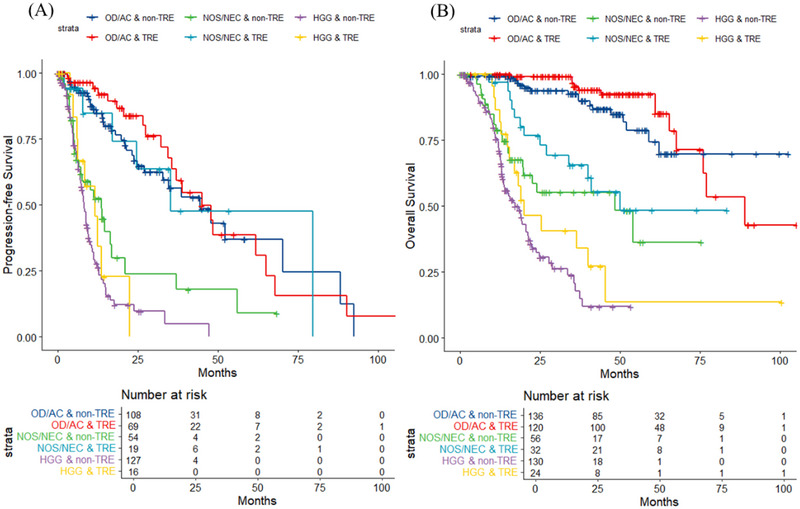 Figure 1
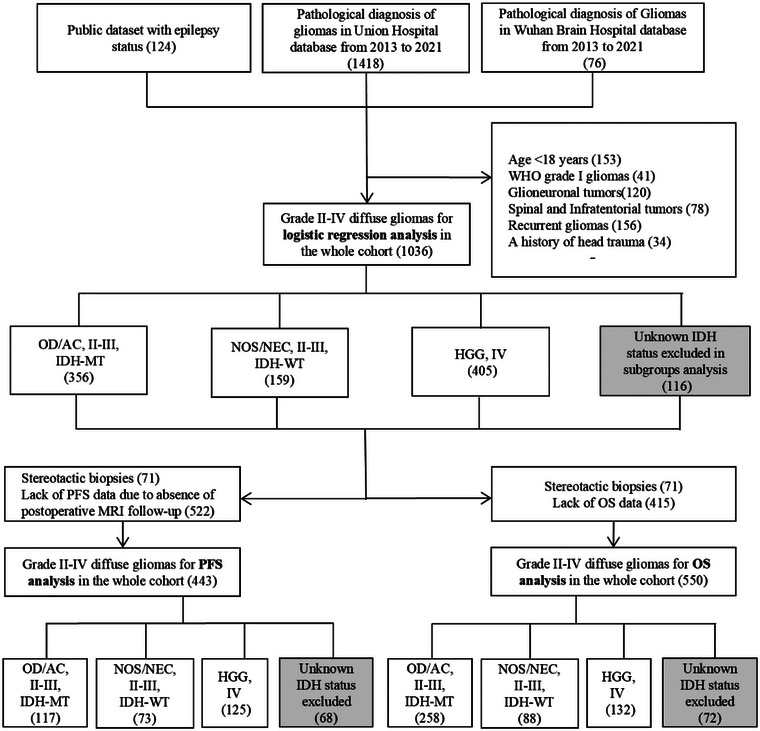 Figure 2
 Figure 3
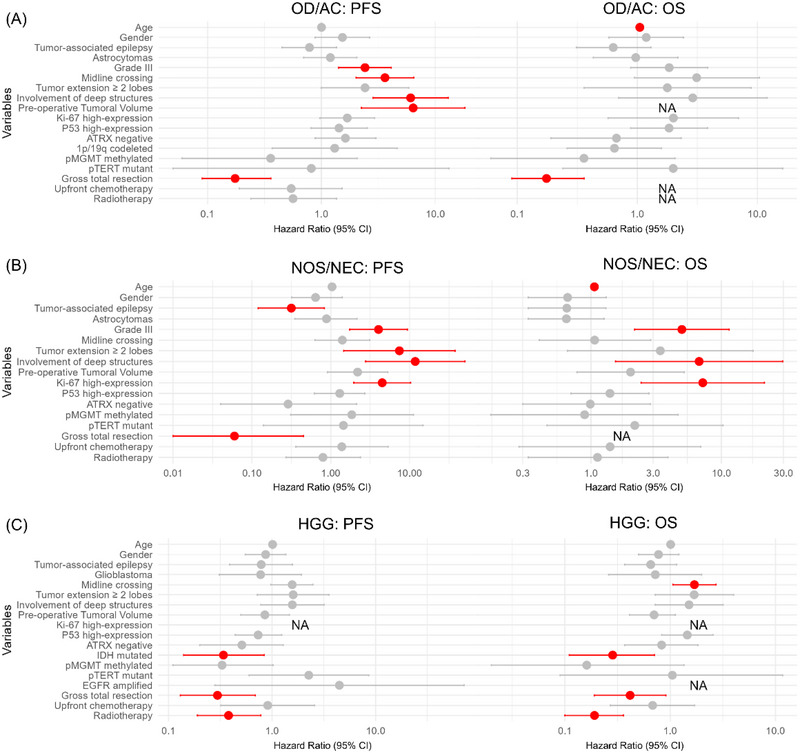 Figure 4
Peer Reviews
No public reviews on file for this paper yet. If you reviewed it on a platform where reviews are public (OpenReview, ICLR, NeurIPS, ICML), you can paste yours below so the community can read it here.
Videos
No videos yet. Explain this paper in a talk, walkthrough, or lecture? Add one.
Taxonomy
TopicsGlioma Diagnosis and Treatment · Pharmacological Effects and Toxicity Studies · Epilepsy research and treatment