Enhanced case finding and self-isolation measures in the early phase of SARS-CoV-2 Omicron transmission, Osaka, Japan, December 2021–January 2022
Miho Kobayashi, Kensaku Kakimoto, Yuichiro Yahata, Yusuke Kobayashi, Hitomi Nagai, Chisato Tanikake, Kazumi Fukumura, Keiko Date, Hiromi Murata, Sae Kitagawa, Yuki Yoshida, Yui Kamoda, Miho Akazaki, Masaaki Tanabe, Chika Shirai, Tomoe Shimada, Taro Kamigaki, Tsuyoshi Sekizuka

TL;DR
This study shows that active case finding and self-isolation helped control the spread of the Omicron variant in Osaka during late 2021 and early 2022.
Contribution
The study evaluates the effectiveness of public health measures in containing the Omicron variant during its early phase in a specific region.
Findings
The basic reproduction number (R) for Omicron was initially 3.2 but dropped to 0.1 in the second generation due to interventions.
Genomic analysis showed that the clusters were contained and not part of the nationwide Omicron spread.
Most cases were young individuals, indicating community transmission among younger populations.
Abstract
The severe acute respiratory syndrome coronavirus 2 (SARS-CoV-2) variant B.1.1.529 (Omicron) was first detected in Japan in November 2021. In Osaka, public health centres subsequently increased active case finding and encouraged self-isolation. This study investigated the effectiveness of these countermeasures. Cases targeted for analysis were persons who had neither recently travelled abroad nor had contact with foreign tourists but tested positive for SARS-CoV-2 between 24 November 2021 and 4 January 2022 and were suspected or confirmed to have the Omicron variant. We performed a descriptive analysis and calculated the reproduction number (R) for each generation using the branching process method. Genomic sequencing data were analysed to plot a haplotype network. A total of 251 cases were analysed. The median age was 30 years, and 46% (115/251) were in their 20s or younger. The…
Genes, proteins, chemicals, diseases, species, mutations and cell lines named across the full text — each resolved to its canonical identifier and authoritative record.
Click any figure to enlarge with its caption.
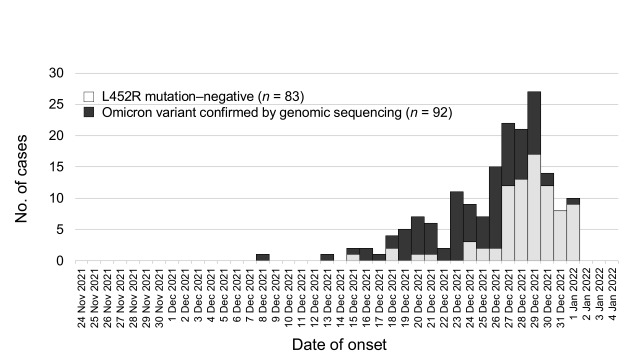 Figure 1
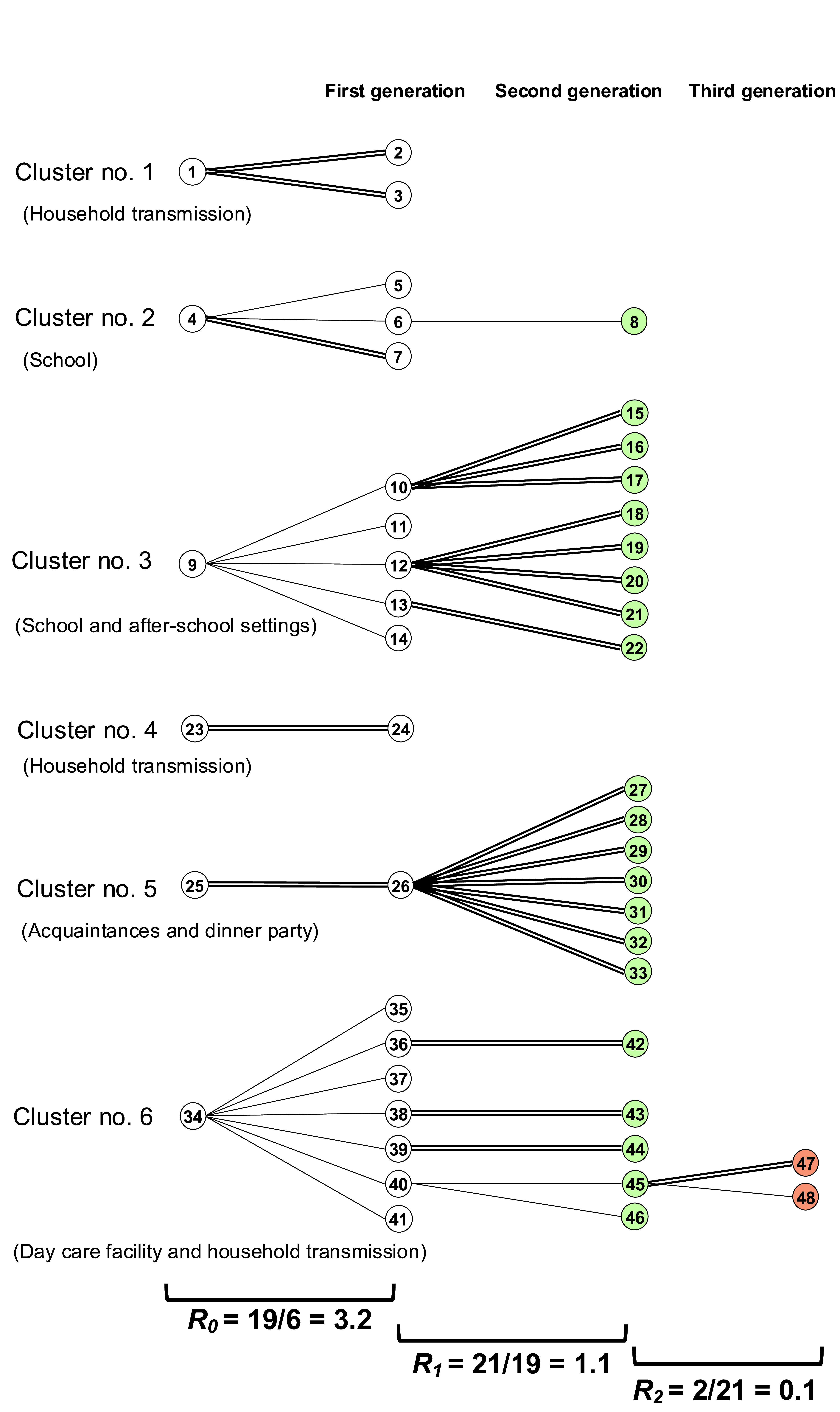 Figure 2
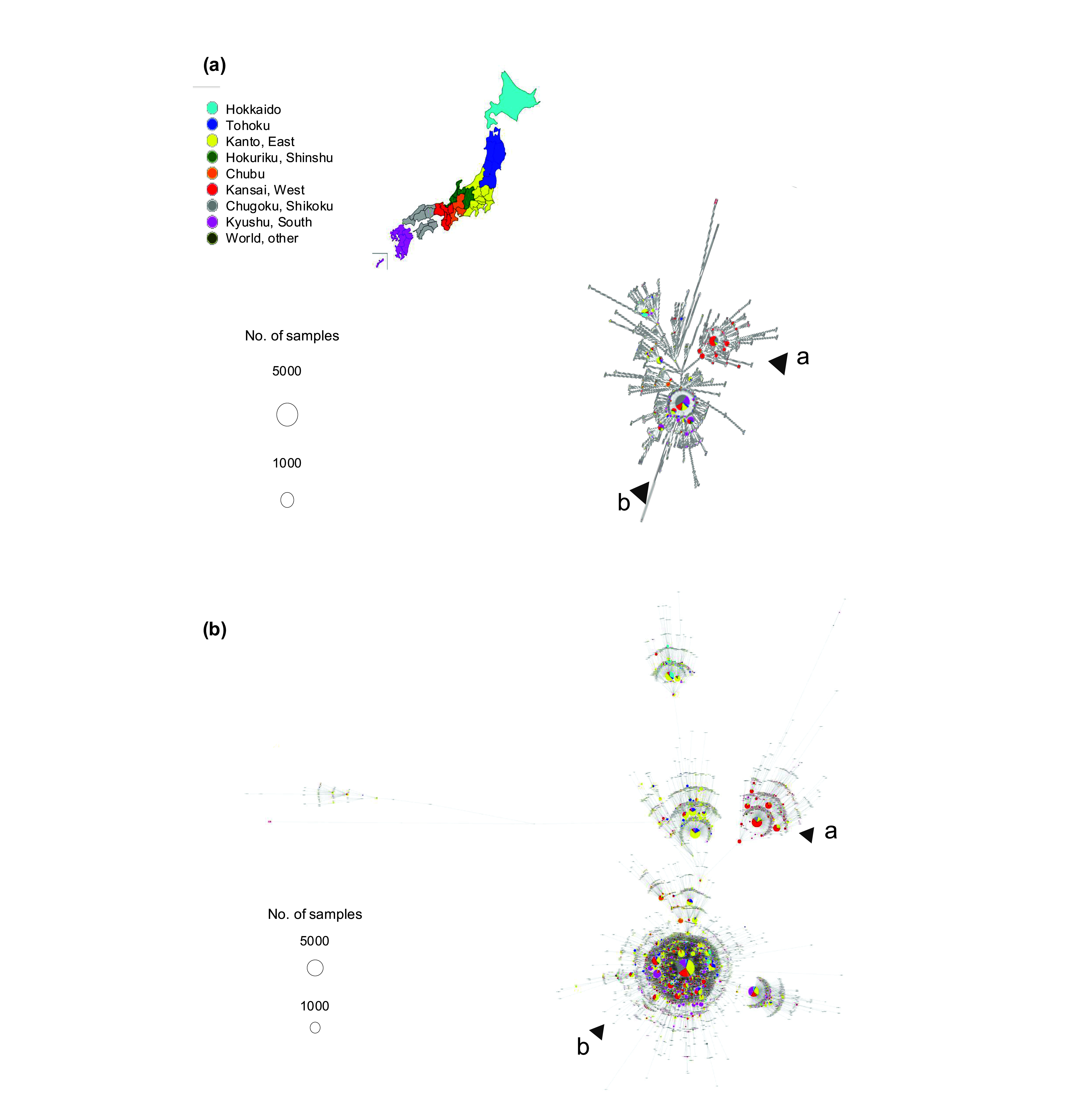 Figure 3
Peer Reviews
No public reviews on file for this paper yet. If you reviewed it on a platform where reviews are public (OpenReview, ICLR, NeurIPS, ICML), you can paste yours below so the community can read it here.
Videos
No videos yet. Explain this paper in a talk, walkthrough, or lecture? Add one.
Taxonomy
TopicsSARS-CoV-2 detection and testing · COVID-19 diagnosis using AI