Evaluation of Oxford Nanopore Technologies MinION Sequencer as a Novel Short Amplicon Metabarcoding Tool Using Arthropod Mock Sample and Irish Bat Diet Characterisation
James M. Nolan, Ilze Skujina, Gwenaëlle Hurpy, Andrew J. Tighe, Conor Whelan, Emma C. Teeling

TL;DR
This study compares the MinION sequencer to Illumina for analyzing bat diets and arthropod biodiversity, showing MinION can be effective with the right tools and databases.
Contribution
Demonstrates the feasibility of using MinION with a simplified pipeline for metabarcoding, particularly for bat diet analysis.
Findings
MinION provided similar taxonomic results to Illumina when using a comprehensive reference database.
NanoPipe effectively processed MinION data to identify host species and diet composition from bat droppings.
Higher sample numbers, not sequencing depth, were needed for complete species detection with MinION.
Abstract
Biodiversity monitoring using metabarcoding is now widely used as a routine environmental management tool. However, despite the rapid advancement of third‐generation high‐throughput sequencing platforms, there are limited studies assessing the most suitable tools and approaches for environmental metabarcoding studies. We tested the utility of Oxford Nanopore Technologies MinION sequencing for short‐read amplicon sequencing of mitochondrial COI mini‐barcodes from a known composition of arthropod species and compared its performance with more commonly used Illumina NovaSeq sequencing. The mock arthropod species assemblage allowed us to optimise a bioinformatic filtering pipeline to identify arthropod species using MinION long reads. Using this pipeline, we identified host species and diet composition by sequencing droppings collected from five individual Irish brown long‐eared bats (…
Genes, proteins, chemicals, diseases, species, mutations and cell lines named across the full text — each resolved to its canonical identifier and authoritative record.
Click any figure to enlarge with its caption.
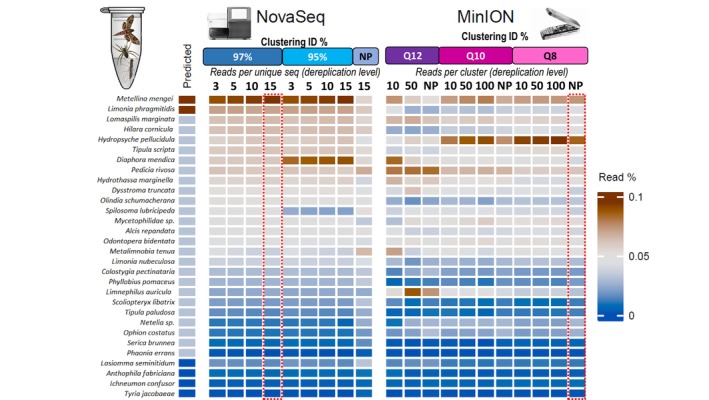 Figure 1
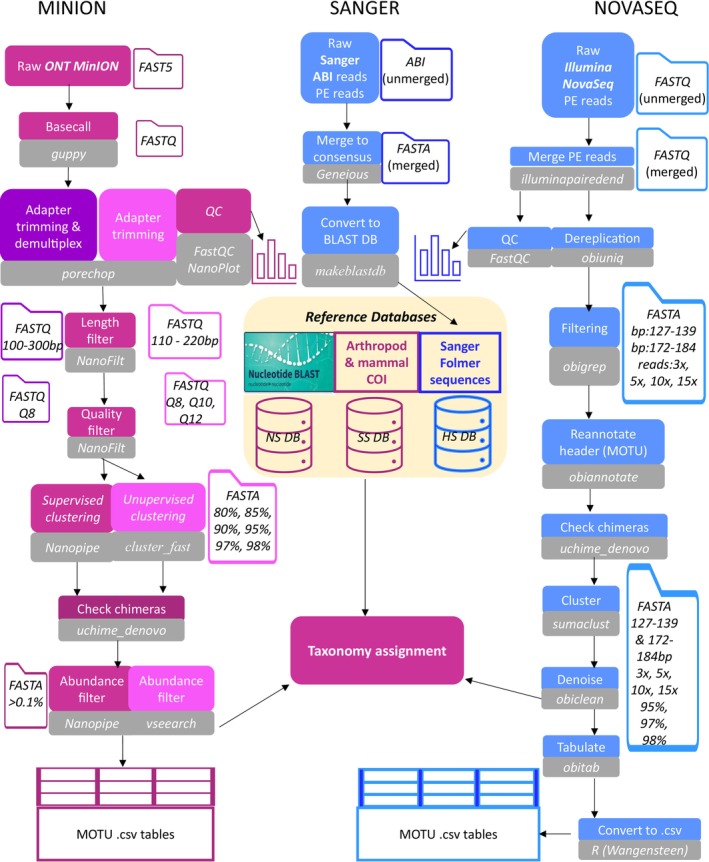 Figure 2
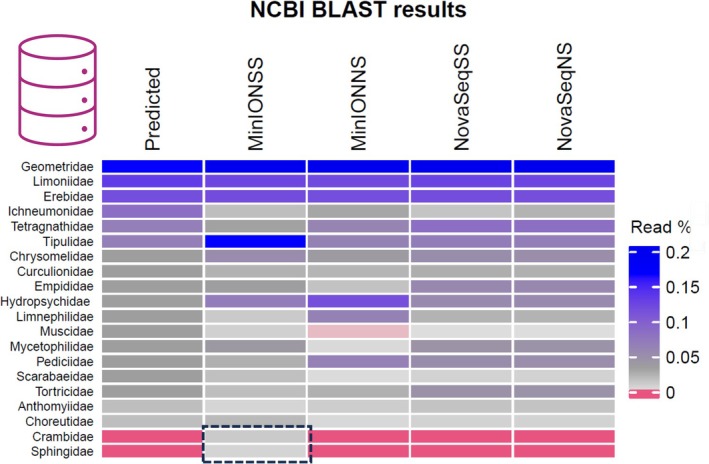 Figure 3
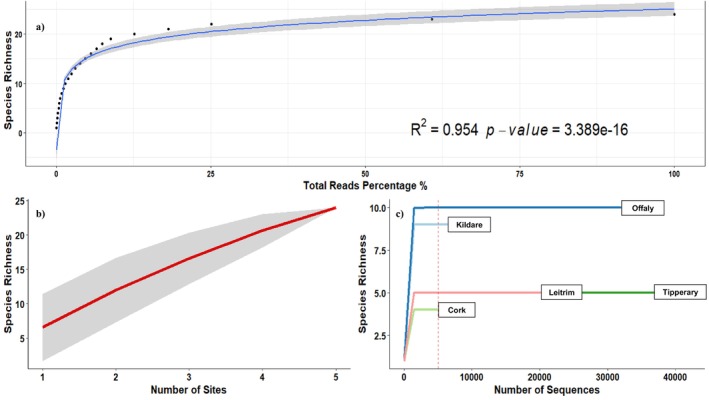 Figure 4
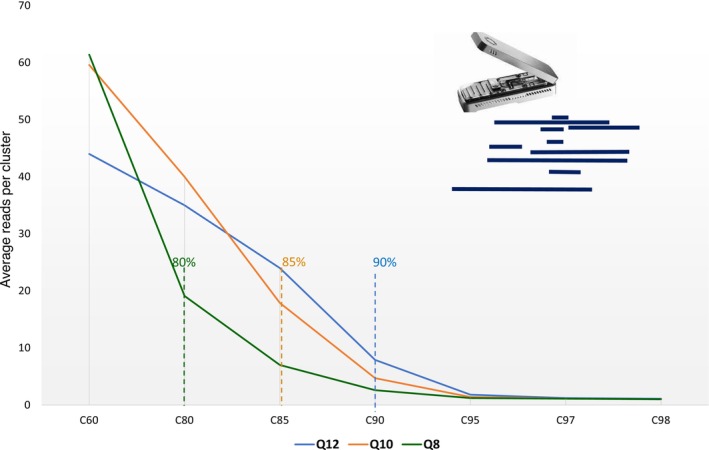 Figure 5
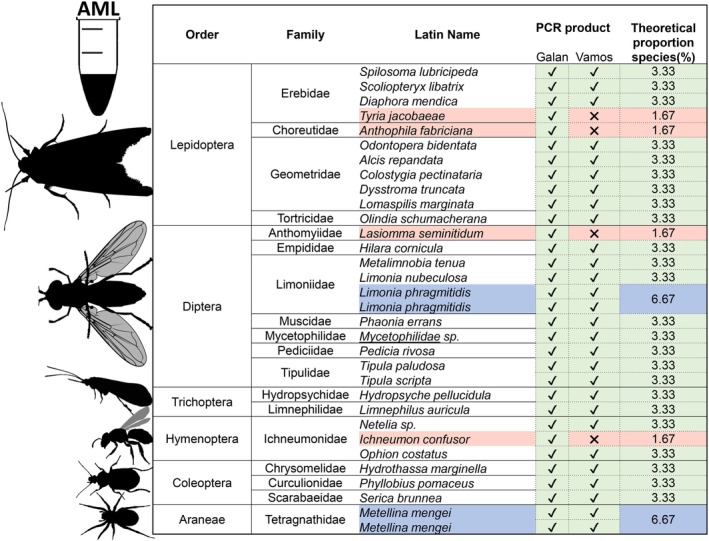 Figure 6
 Figure 7
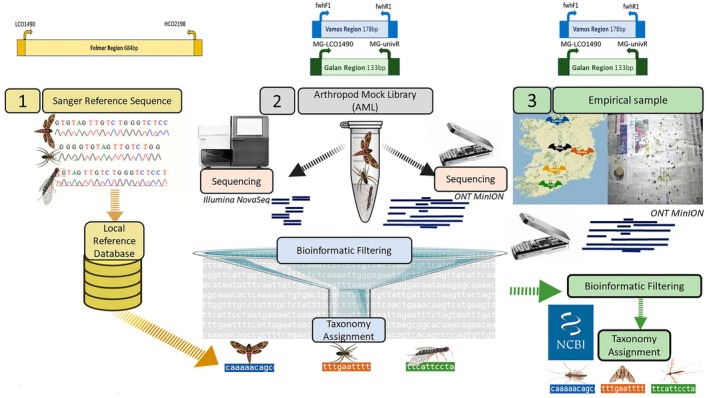 Figure 8
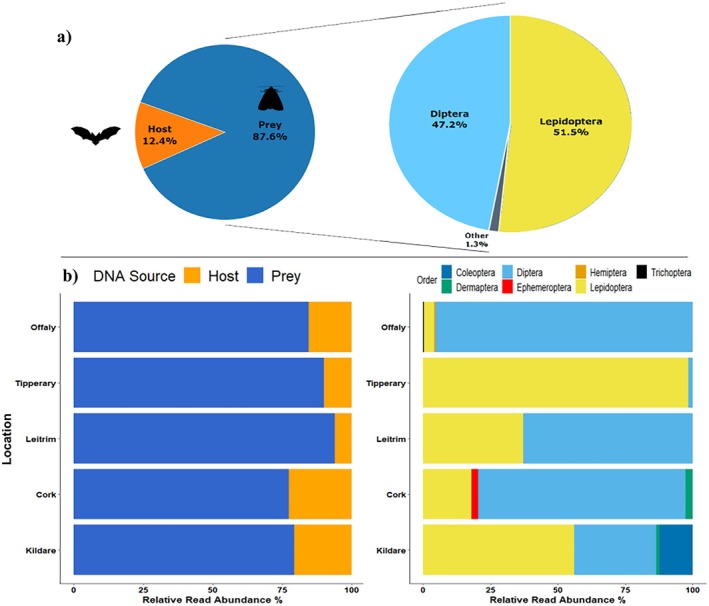 Figure 9
Peer Reviews
No public reviews on file for this paper yet. If you reviewed it on a platform where reviews are public (OpenReview, ICLR, NeurIPS, ICML), you can paste yours below so the community can read it here.
Videos
No videos yet. Explain this paper in a talk, walkthrough, or lecture? Add one.
Taxonomy
TopicsEnvironmental DNA in Biodiversity Studies · Species Distribution and Climate Change · Microbial Community Ecology and Physiology