Effective management of acute hemorrhage using an SL One® rapid infusion device in a pediatric patient undergoing nephrectomy for Wilms tumor with inferior vena cava extension: a case report
Shoko Fujioka, Yusuke Miyazaki, Hinako Furuya, Chika Miyazaki, Nobuyuki Katori, Yoshie Taniguchi

TL;DR
A 2-year-old boy with a kidney tumor and blood vessel extension was successfully treated with a rapid infusion device during surgery to manage sudden bleeding.
Contribution
Demonstrates successful use of the SL One® rapid infusion device in a pediatric patient at high risk for acute hemorrhage.
Findings
The SL One® device enabled rapid transfusion at rates up to 150 mL/min during acute bleeding in a 2-year-old patient.
Hemodynamic stability was achieved without complications like hyperkalemia or hypothermia.
The postoperative recovery was uneventful, suggesting the device's safety in pediatric use.
Abstract
Wilms tumor is the most common pediatric renal tumor. Tumor extension into the inferior vena cava (IVC) can increase hemorrhage risk during surgical resection, necessitating rapid transfusion. Pediatric patients have lower circulating blood volume, heightening their susceptibility to hemodynamic instability. A 2-year-old boy with an IVC-extending Wilms tumor underwent nephrectomy. Anticipating hemorrhage, we employed an SL One® rapid infusion device via a Broviac™ central venous catheter. During a sudden, high-volume bleeding, transfusion was initiated at 23 mL/min and intermittently increased to 150 mL/min while preload was evaluated using transesophageal echocardiography, rapidly stabilizing hemodynamics. No rapid-transfusion-related complications, such as hyperkalemia or hypothermia, were observed, and the postoperative course was uneventful. In this pediatric case at high risk for…
Genes, proteins, chemicals, diseases, species, mutations and cell lines named across the full text — each resolved to its canonical identifier and authoritative record.
Click any figure to enlarge with its caption.
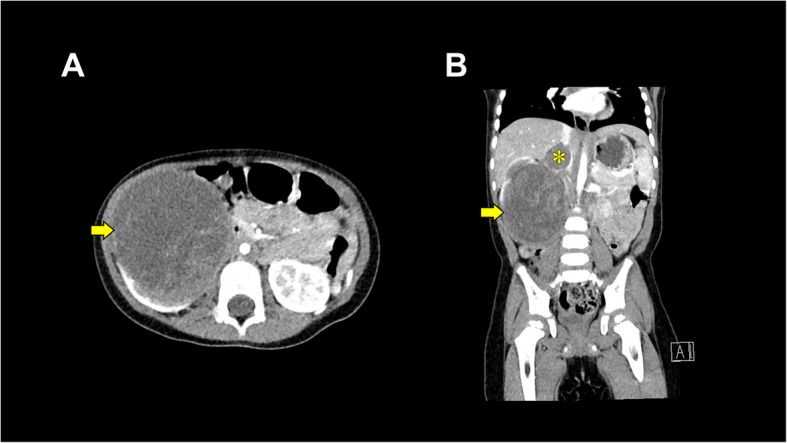 Figure 1
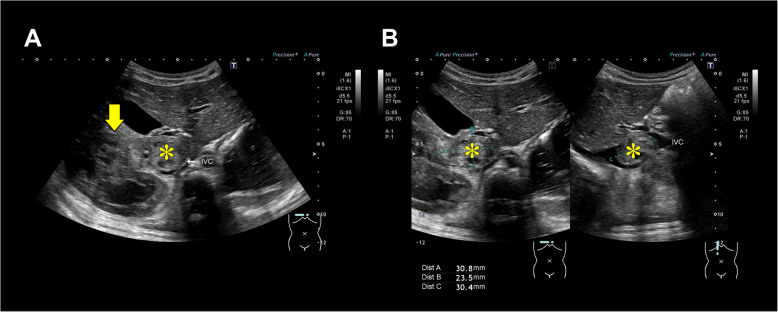 Figure 2
Peer Reviews
No public reviews on file for this paper yet. If you reviewed it on a platform where reviews are public (OpenReview, ICLR, NeurIPS, ICML), you can paste yours below so the community can read it here.
Videos
No videos yet. Explain this paper in a talk, walkthrough, or lecture? Add one.
Taxonomy
TopicsRenal and related cancers · Renal cell carcinoma treatment · Organ Donation and Transplantation