A Neural Network Model for Intelligent Classification of Distal Radius Fractures Using Statistical Shape Model Extraction Features
Xing‐bo Cai, Ze‐hui Lu, Zhi Peng, Yong‐qing Xu, Jun‐shen Huang, Hao‐tian Luo, Yu Zhao, Zhong‐qi Lou, Zi‐qi Shen, Zhang‐cong Chen, Xiong‐gang Yang, Ying Wu, Sheng Lu

TL;DR
This paper introduces a new AI system that accurately classifies types of wrist fractures using CT scans and statistical shape models, helping improve diagnosis in emergency settings.
Contribution
A novel AI method combining statistical shape models and neural networks for both detection and classification of distal radius fractures.
Findings
The classifier achieved 97.5% accuracy in classifying normal bones and three types of distal radius fractures.
The system used PCA to extract 15 key features with over 75% cumulative variance for optimal performance.
The model demonstrated excellent discrimination with a mean AUC of 0.95 in cross-validation.
Abstract
Distal radius fractures account for 12%–17% of all fractures, with accurate classification being crucial for proper treatment planning. Studies have shown that in emergency settings, the misdiagnosis rate of hand/wrist fractures can reach up to 29%, particularly among non‐specialist physicians due to a high workload and limited experience. While existing AI methods can detect fractures, they typically require large training datasets and are limited to fracture detection without type classification. Therefore, there is an urgent need for an efficient and accurate method that can both detect and classify different types of distal radius fractures. To develop and validate an intelligent classifier for distal radius fractures by combining a statistical shape model (SSM) with a neural network (NN) based on CT imaging data. From August 2022 to May 2023, a total of 80 CT scans were collected,…
Genes, proteins, chemicals, diseases, species, mutations and cell lines named across the full text — each resolved to its canonical identifier and authoritative record.
Click any figure to enlarge with its caption.
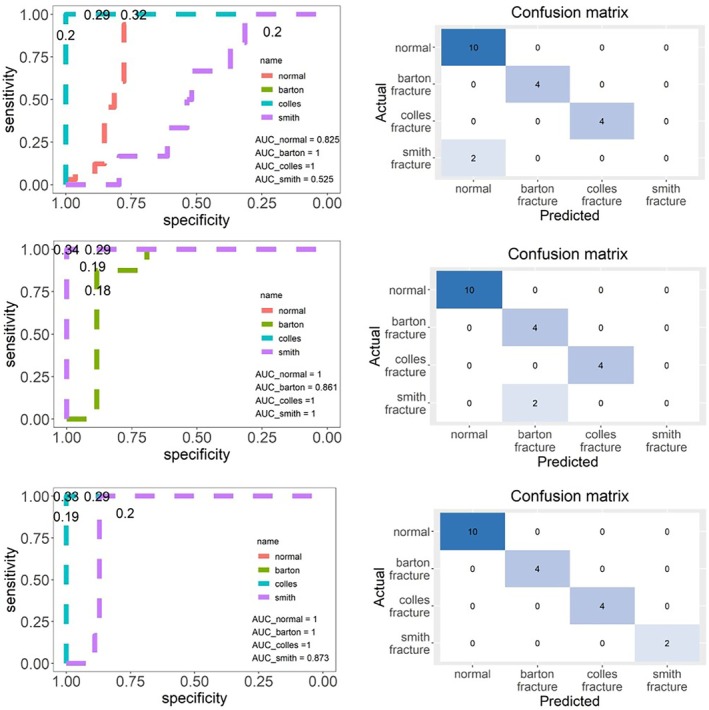 Figure 1
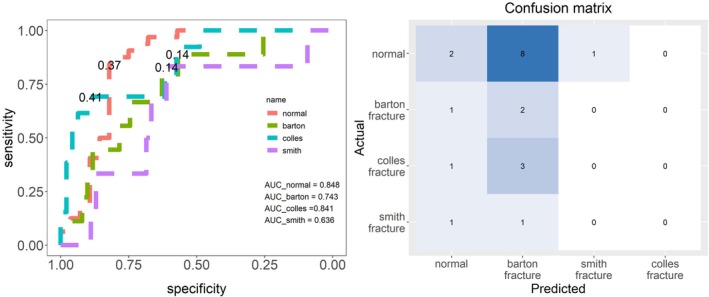 Figure 2
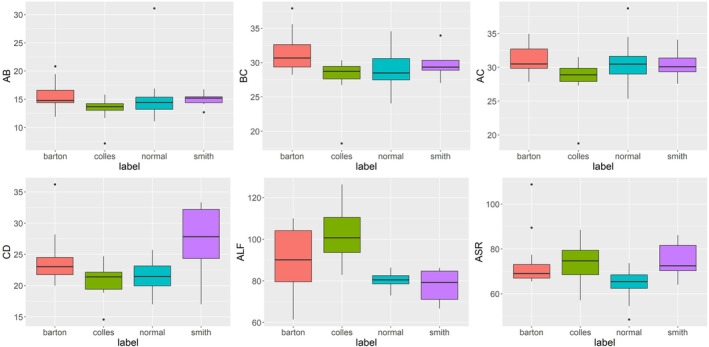 Figure 3
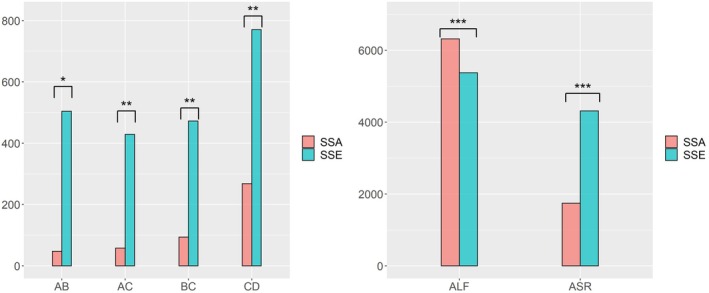 Figure 4
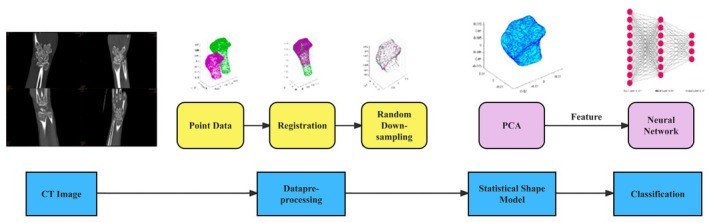 Figure 5
 Figure 6
 Figure 7
 Figure 8
Peer Reviews
No public reviews on file for this paper yet. If you reviewed it on a platform where reviews are public (OpenReview, ICLR, NeurIPS, ICML), you can paste yours below so the community can read it here.
Videos
No videos yet. Explain this paper in a talk, walkthrough, or lecture? Add one.
Taxonomy
TopicsMedical Imaging and Analysis · Orthopedic Surgery and Rehabilitation · Artificial Intelligence in Healthcare and Education